Overview
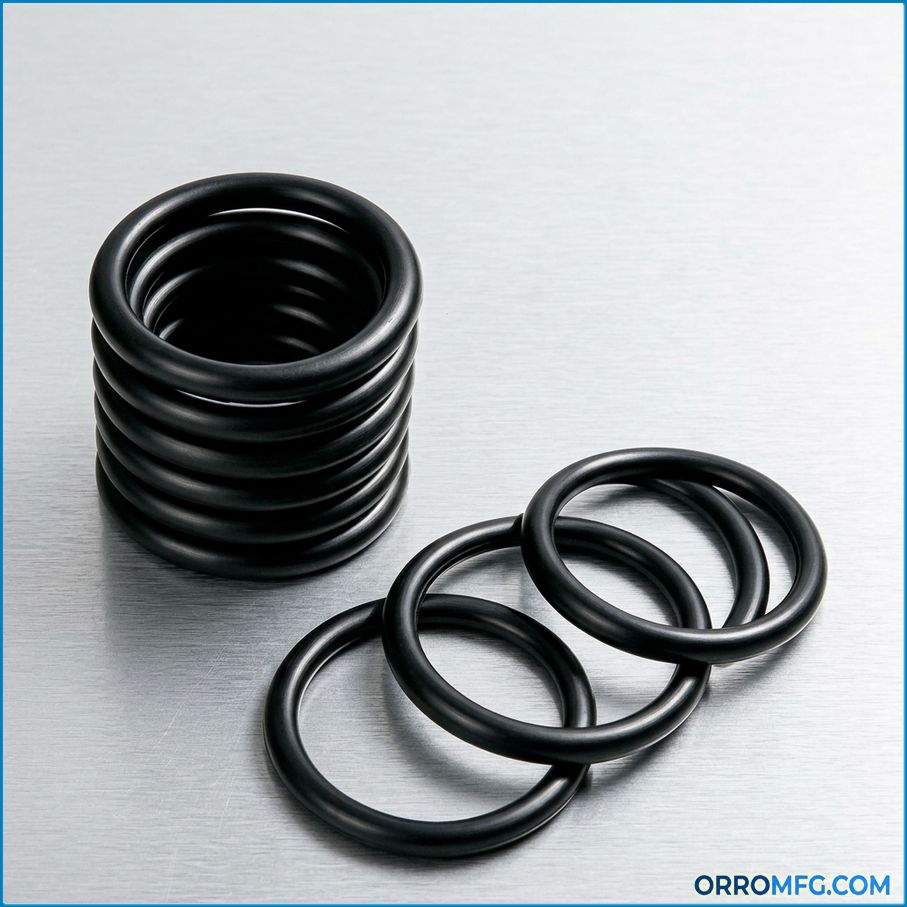
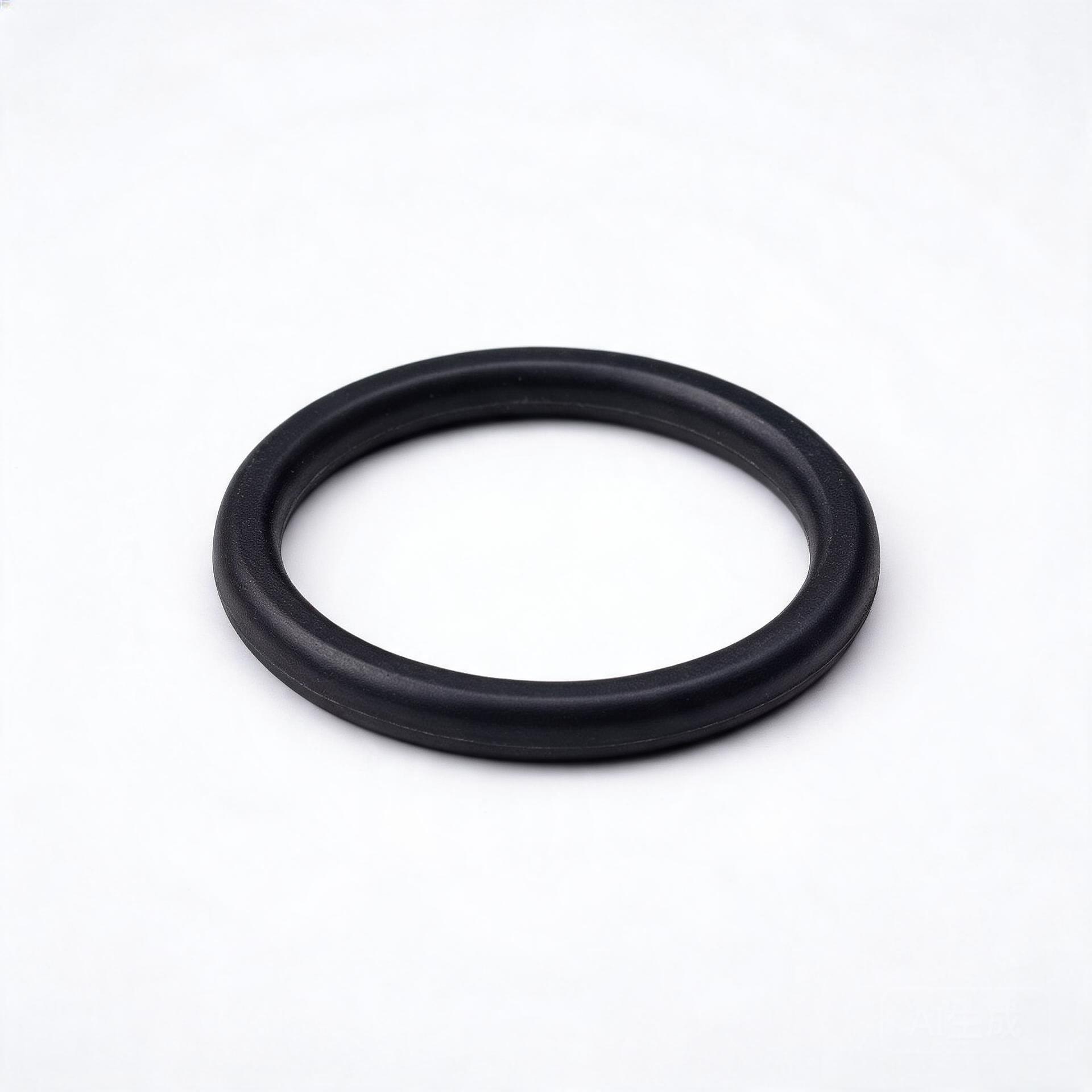
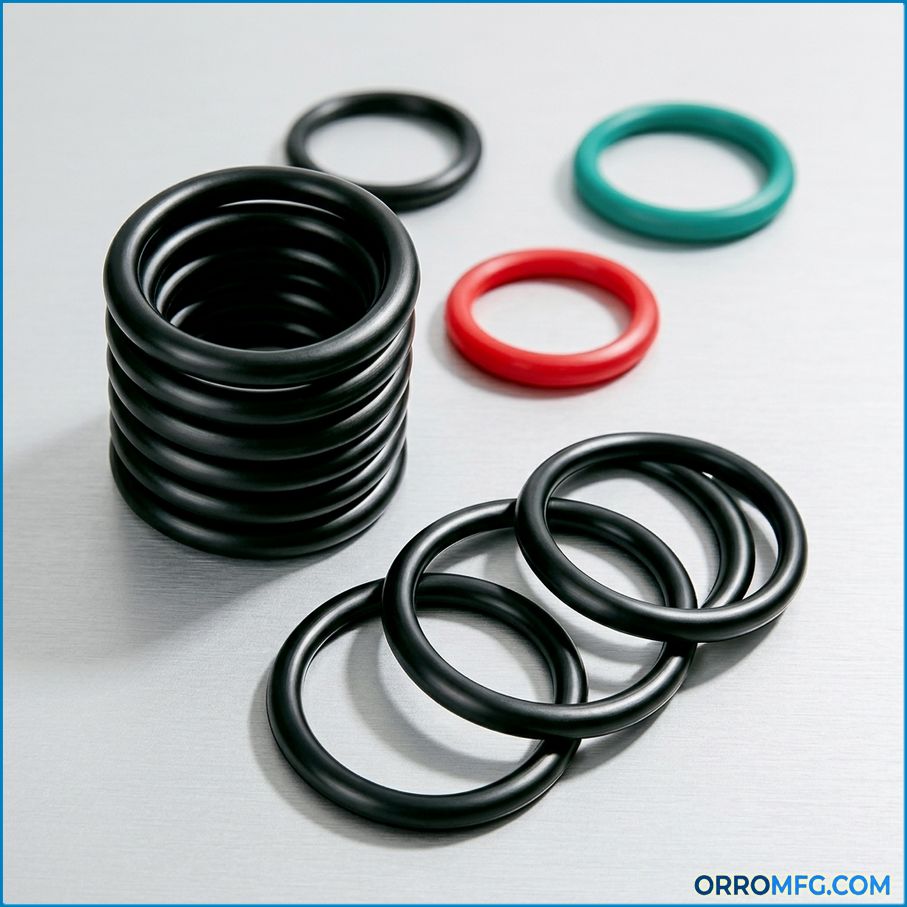
An NBR O-ring is a nitrile rubber torus that seals by elastic squeeze rather than by force. It is pressed into a groove slightly smaller than its cross-section, so it deforms against both mating surfaces and holds the seal with its own stored energy — the system pressure only adds to that.
NBR is the default choice for anything that touches mineral oil: hydraulic cylinders, gearboxes, pump housings, valve bodies, fuel and lubricant lines. It is not the most temperature-resistant rubber and it is not the most chemically resistant, but for oil, grease, hydraulic fluid and water up to about 100 °C it is the cheapest reliable seal available, and it is the material most sealing hardware is designed around.
What matters when you order is not the material name alone but four numbers: inside diameter, cross-section, hardness, and the acrylonitrile content of the compound. The first three decide whether it fits; the fourth decides whether it survives the fluid.
Key Features
- Oil and fuel resistance — swells little in mineral oils, hydraulic fluids, greases and diesel; the reason NBR dominates hydraulic sealing.
- Wide hardness range — 40 to 90 Shore A, with 70 Shore A as the standard for both static and dynamic grooves.
- Good compression set — keeps its squeeze under sustained load, so the seal does not take a permanent set and start weeping.
- High tensile and tear strength — resists nibbling and extrusion better than softer elastomers of the same hardness.
- Abrasion resistance — handles rod sealing in contaminated hydraulic systems better than EPDM or silicone.
- Temperature range — −40 °C to +120 °C continuous, with short excursions to +130 °C.
- Bondable and machinable — can be bonded to metal inserts or machined for large-diameter rings where no standard mould exists.
- Cost — the lowest-cost oil-resistant elastomer in common use, which is why it is the baseline against which other seals are quoted.
Material Specifications
Typical values for a 70 Shore A NBR compound. The compound datasheet governs the final design.
| Property | Typical value |
|---|---|
| Polymer | Nitrile butadiene rubber (NBR), acrylonitrile 18–50 % |
| Hardness | 70 Shore A standard; 40–90 Shore A available |
| Tensile strength | 15–20 MPa |
| Elongation at break | 300–400 % |
| Compression set (70 h at 100 °C) | 15–25 % |
| Service temperature | −40 °C to +120 °C (peaks to +130 °C) |
| Low-temperature flexibility | −40 °C standard; −55 °C with low-ACN compound |
| Oil resistance | Excellent to mineral oils, hydraulic oils, greases, diesel |
| Water resistance | Good to 100 °C |
| Ozone / weathering | Poor — use EPDM or FKM outdoors |
| Ketones, esters, brake fluid | Poor — use EPDM (brake fluid) or FKM |
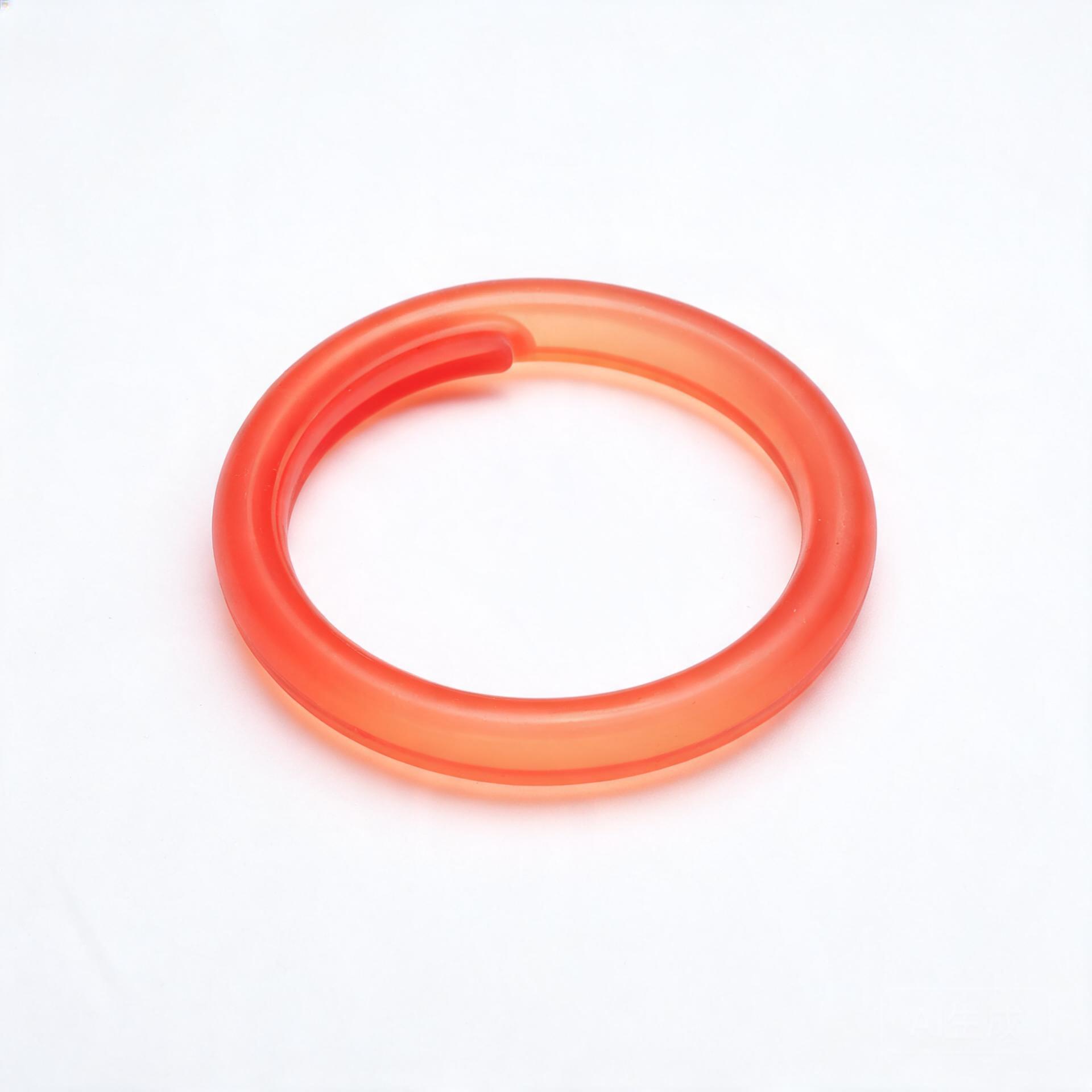
| Colours | Black standard; red, green, blue, yellow, white and custom on request |
| Certification | ISO 9001; RoHS declaration supplied with each batch |
ACN content matters. Low-acrylonitrile (18–25 %) gives better low-temperature flexibility but swells more in aromatic oils. High-acrylonitrile (35–45 %) resists fuels and aromatic solvents but stiffens earlier in the cold. If the application sits near either limit, say so at quotation — the compound changes, the mould does not.
Sizes and Standards
| Parameter | Range |
|---|---|
| Inside diameter | 1.5–1000 mm (larger by machined or spliced construction) |
| Cross-section (CS) | 1.0–20 mm |
| Standards | AS568 (inch series), ISO 3601 / DIN 3771 (metric series) |
| Non-standard | Any ID/CS combination from drawing or sample |
| Tolerance | ISO 3601 class A or class B, or to your drawing |
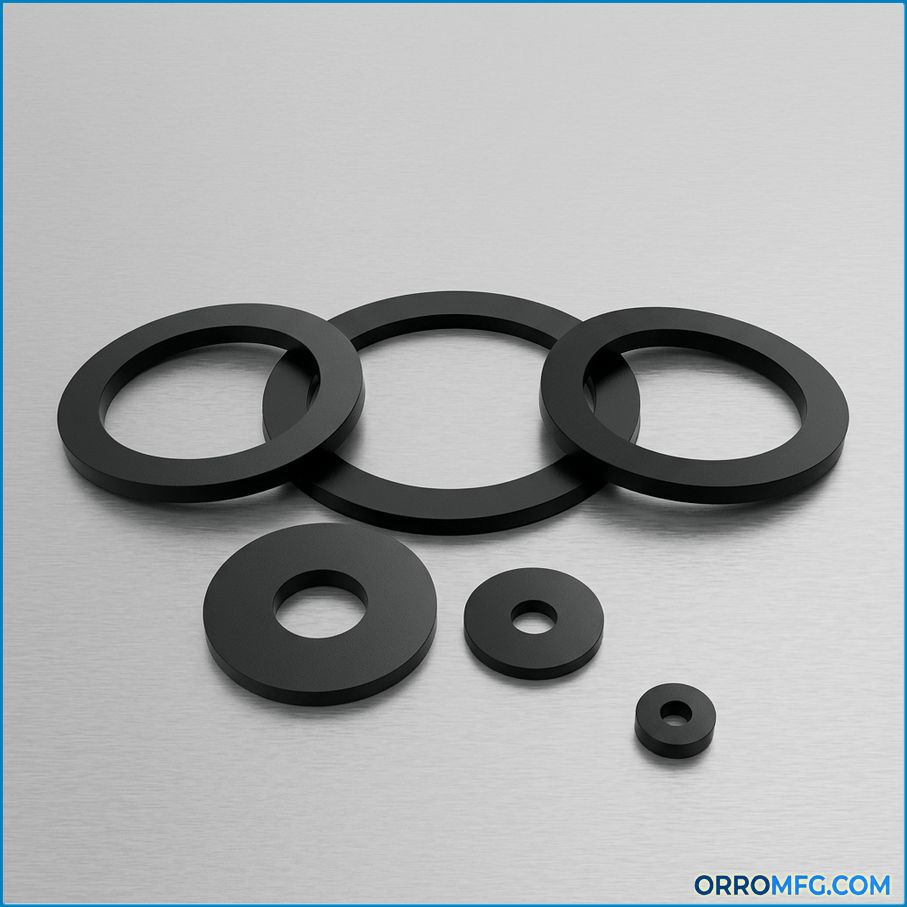
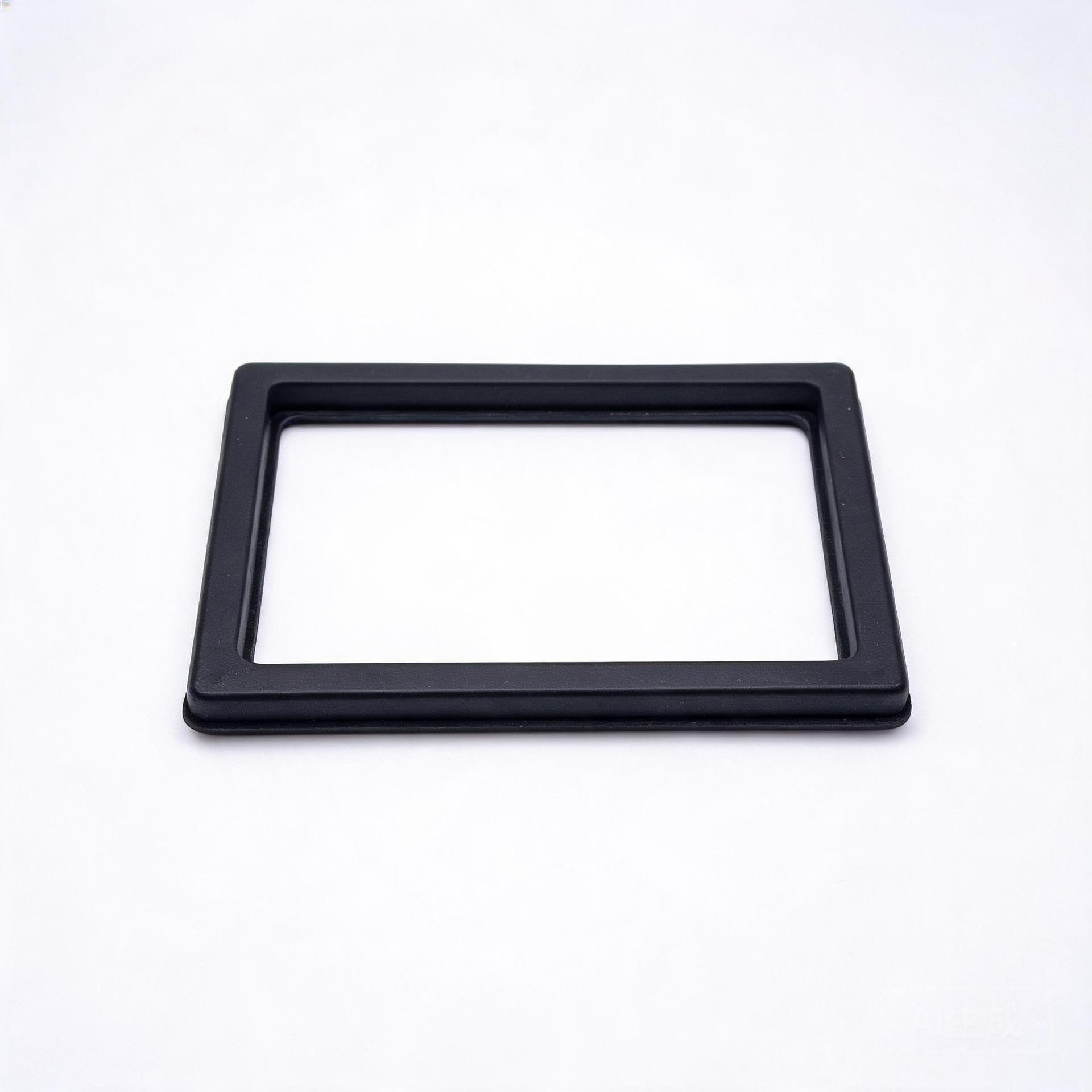
| Custom shapes | Square, rectangular, encapsulated and bonded rings |
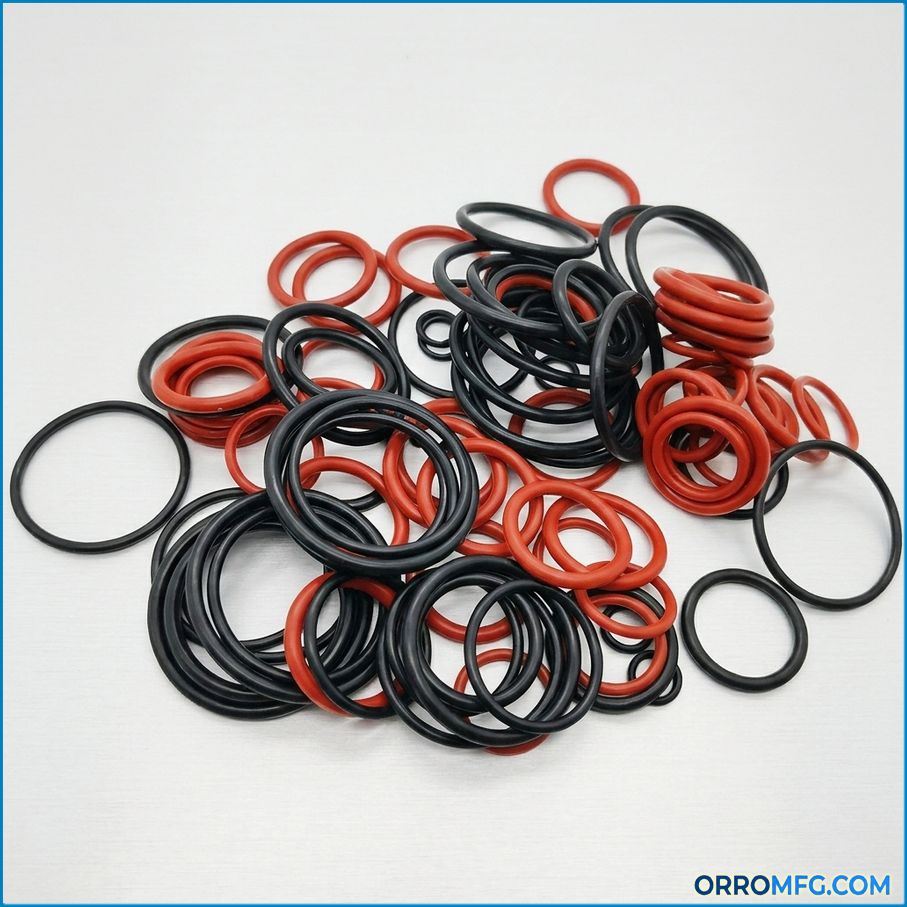
Standard AS568 sizes cover most hydraulic and pneumatic hardware, so quoting from a dash number is fastest. For metric housings, send the groove dimensions — bore diameter, groove width and depth — and we will match the ring to the groove rather than to a nominal size.
Hardness Selection
Hardness is the first decision after size, because it sets both sealing and extrusion behaviour.
| Hardness | Best for | Watch out for |
|---|---|---|
| 40–50 Shore A | Fragile housings, low pressure, plastic covers | Extrudes at pressure above ~5 MPa; not for dynamic rods |
| 70 Shore A | Most static and dynamic seals | The default; balances squeeze and extrusion |
| 80 Shore A | Hydraulic rod and piston seals, higher pressure | Needs a flatter groove and better surface finish |
| 90 Shore A | High-pressure static joints, extrusion-prone gaps | Poor low-temperature sealing; slow to seat |
Below 50 Shore A an O-ring behaves more like a gasket than a seal: it fills the groove but extrudes through the gap once pressure rises. Above 90 Shore A the ring resists extrusion but cannot conform to a rough surface. If a supplier offers “30 to 93 Shore A” for O-rings, the 30 end is a gasket material, not a pressure seal — we quote from 40 Shore A upward for sealing duty.
Fluid Compatibility
| Medium | NBR performance | Alternative when NBR is unsuitable |
|---|---|---|
| Mineral hydraulic oil | Excellent | — |
| Gear oil, grease | Excellent | — |
| Diesel, kerosene | Good | FKM for hot fuel systems |
| Gasoline | Fair — swelling with aromatics | FKM |
| Water, coolant | Good to 100 °C | EPDM for steam or glycol |
| Dilute acids and bases | Fair | EPDM, FKM |
| Brake fluid (glycol) | Poor | EPDM |
| Ketones, esters, solvents | Poor | FKM, PTFE |
| Ozone, sunlight, outdoor | Poor | EPDM, FKM |
| Steam above 100 °C | Poor | EPDM, FKM |
If the fluid is not on this list, send the fluid name and operating temperature — compatibility is checked against the compound datasheet, not guessed.
Applications
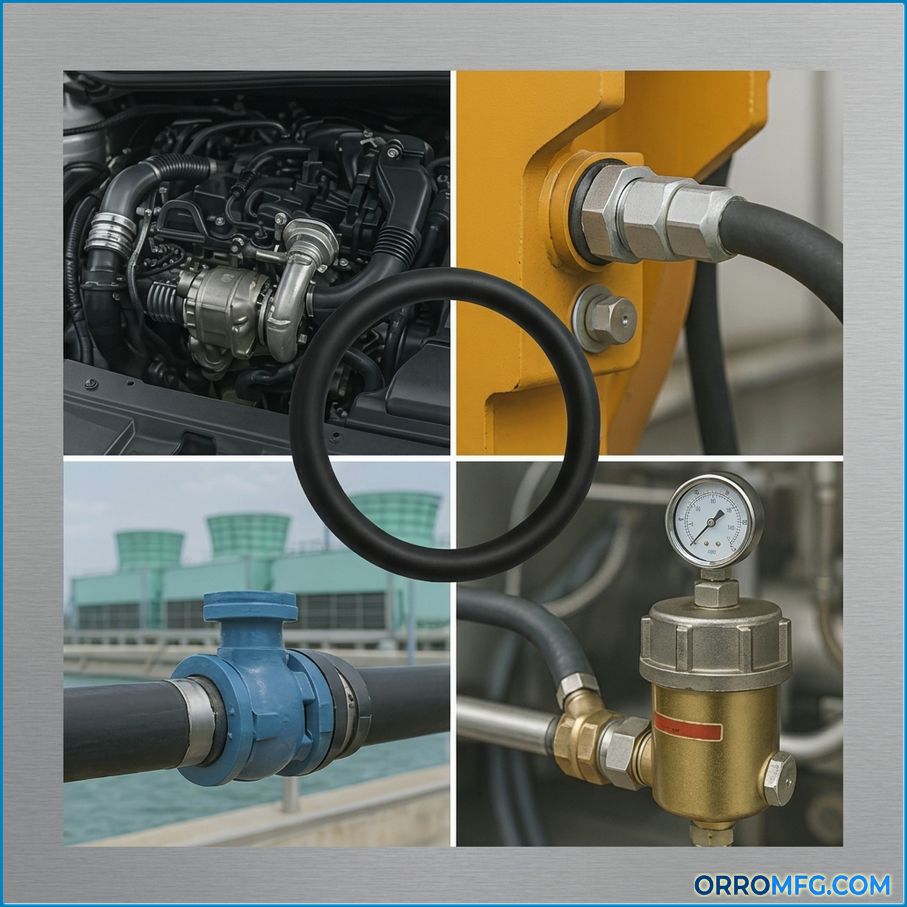
- Hydraulics — cylinder piston and rod seals, valve spools, pump covers, accumulator joints.
- Pneumatics — cylinder end caps, valve bodies, fittings, quick couplers.
- Pumps and valves — housing joints, bonnet seals, flange faces, filter housings.
- Automotive — engine oil circuits, transmission and power-steering lines, fuel-system seals at moderate temperature.
- Oil and gas equipment — lubricant and hydraulic circuits, wellhead accessory seals at surface temperature.
- Industrial machinery — gearbox covers, bearing housings, pipe flanges and manifold joints.
Material Comparison
| Property | NBR | FKM (Viton) | EPDM | Silicone | PU |
|---|---|---|---|---|---|
| Oil / fuel resistance | Very good | Excellent | Poor | Poor | Good |
| Water / steam | Good | Fair | Excellent | Fair | Fair |
| Brake fluid (glycol) | Poor | Poor | Excellent | Poor | Poor |
| Max continuous temperature | +120 °C | +200 °C | +150 °C | +200 °C | +80 °C |
| Low-temperature limit | −40 °C | −20 °C | −50 °C | −60 °C | −35 °C |
| Abrasion resistance | Good | Good | Fair | Poor | Excellent |
| Compression set | Good | Good | Good | Fair | Fair |
| Relative cost | Low | High | Medium | Medium | Medium |
| Typical use | Oil hydraulics | Hot fuel, chemicals | Water, steam, outdoor | Static, high temp | Rod wipers, wear rings |
The rule of thumb: oil and moderate heat — NBR. Oil and heat above 150 °C — FKM. Water, steam, glycol or outdoor — EPDM. Static joints at extreme temperature — silicone. Sliding wear with contamination — PU.
Quality Control
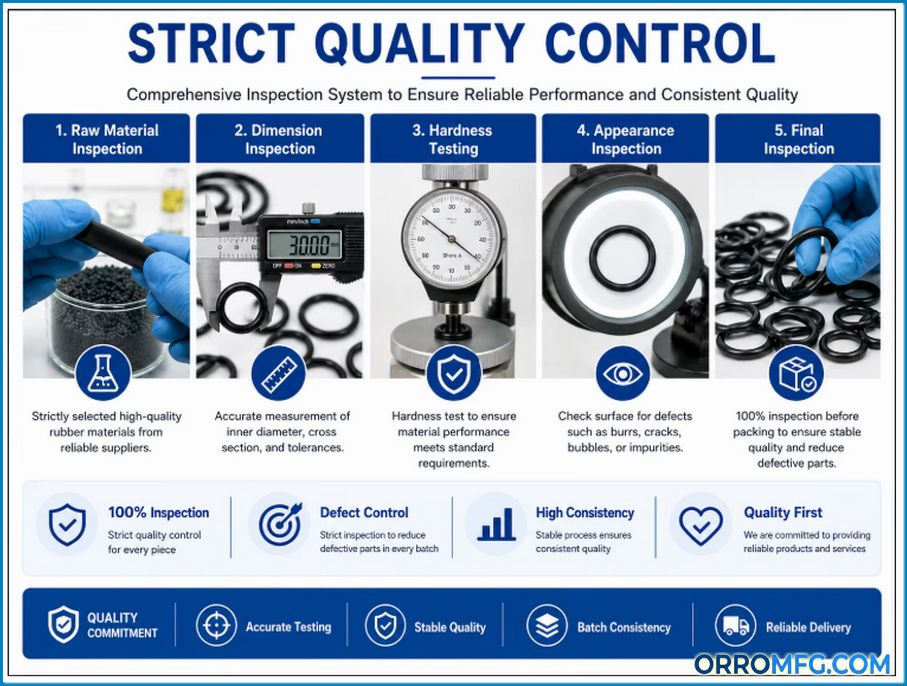
Each batch is checked before packing: compound hardness by durometer, specific gravity, tensile and elongation on a cured test sheet, compression set on a sampled ring, and dimensions against the drawing or the AS568 table. Visual inspection covers flash, backrind, blisters, contamination, weld lines and dimensional ovality. Where the application requires it, we supply a batch measurement report, compound datasheet, RoHS declaration and material certificate.
Lead time: standard AS568 and metric sizes 7–15 days from stock or short-run moulding; custom compounds, colours and non-standard sizes 15–25 days. Samples 3–7 days.
FAQ
What is the minimum order quantity?
100 pieces per size. Mixed sizes in one order are acceptable, and sample quantities are quoted separately as sample orders.
Why does my O-ring swell and go soft?
Two common causes: the compound is not compatible with the fluid (aromatic fuel or glycol brake fluid attacking an NBR ring), or the seal is running above its temperature limit. Swelling is a chemical attack; hardening and cracking is usually heat ageing. Send the fluid and temperature and we will specify a compound that survives it.
Can I use NBR for brake fluid?
No. Glycol-based brake fluid attacks NBR. EPDM is the correct material for brake and clutch hydraulic systems. This is one of the most common sealing failures in automotive repair, and no amount of hardness change fixes it.
What hardness should I specify?
70 Shore A unless you have a reason not to. Go to 80–90 Shore A for high pressure or a large extrusion gap; go down to 50–60 Shore A only for fragile housings or very low pressure. Stepping outside that band needs a groove redesign, not just a harder ring.
AS568 or metric — how do I know which I have?
Measure the bore, groove width and groove depth, and send them to us. If the groove matches an AS568 dash number, we quote to that number. If it matches nothing in the table, we mould or machine to your drawing. Asking for “a 20 mm O-ring” is ambiguous: 20 mm could be the inside diameter, the outside diameter, or the groove diameter.
What temperature can an NBR O-ring take?
−40 °C to +120 °C continuous, with short peaks to +130 °C. Above that the compound hardens, takes a compression set and starts to leak; sustained operation above 120 °C calls for FKM.
Can I get food-contact or drinking-water grades?
Yes, to order. White and translucent NBR compounds are available with food-contact documentation, and the compound datasheet and batch certificate are supplied so your auditor can trace the material. Tell us the standard you must meet and we will confirm the compound before quoting.
Do you supply custom colours and markings?
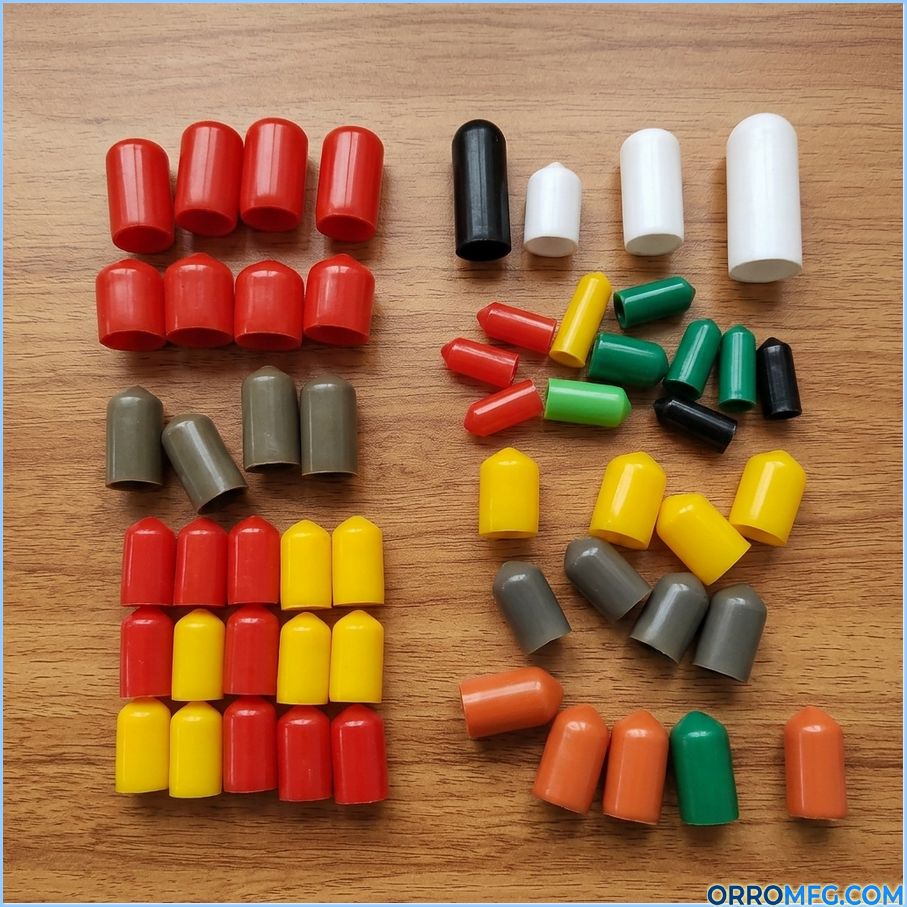
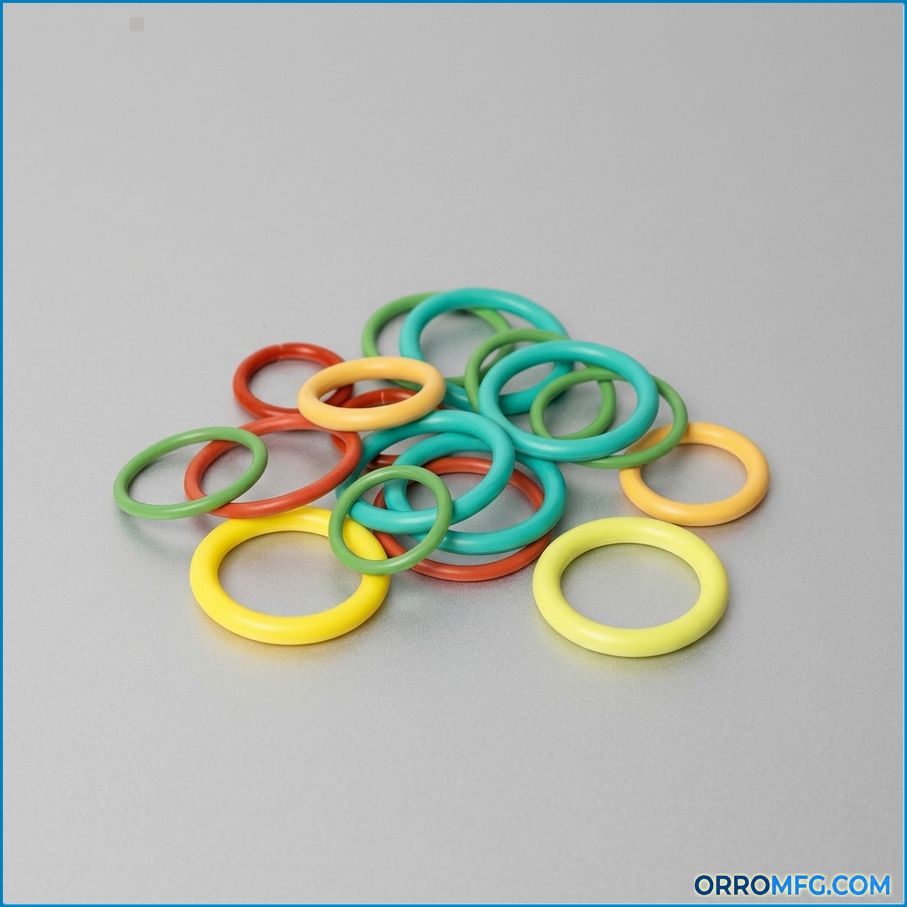
Yes. Colour is used for assembly coding — red for one circuit, green for another — and does not change the mechanical properties. Laser marking and printed part numbers are available on request.
Related Products
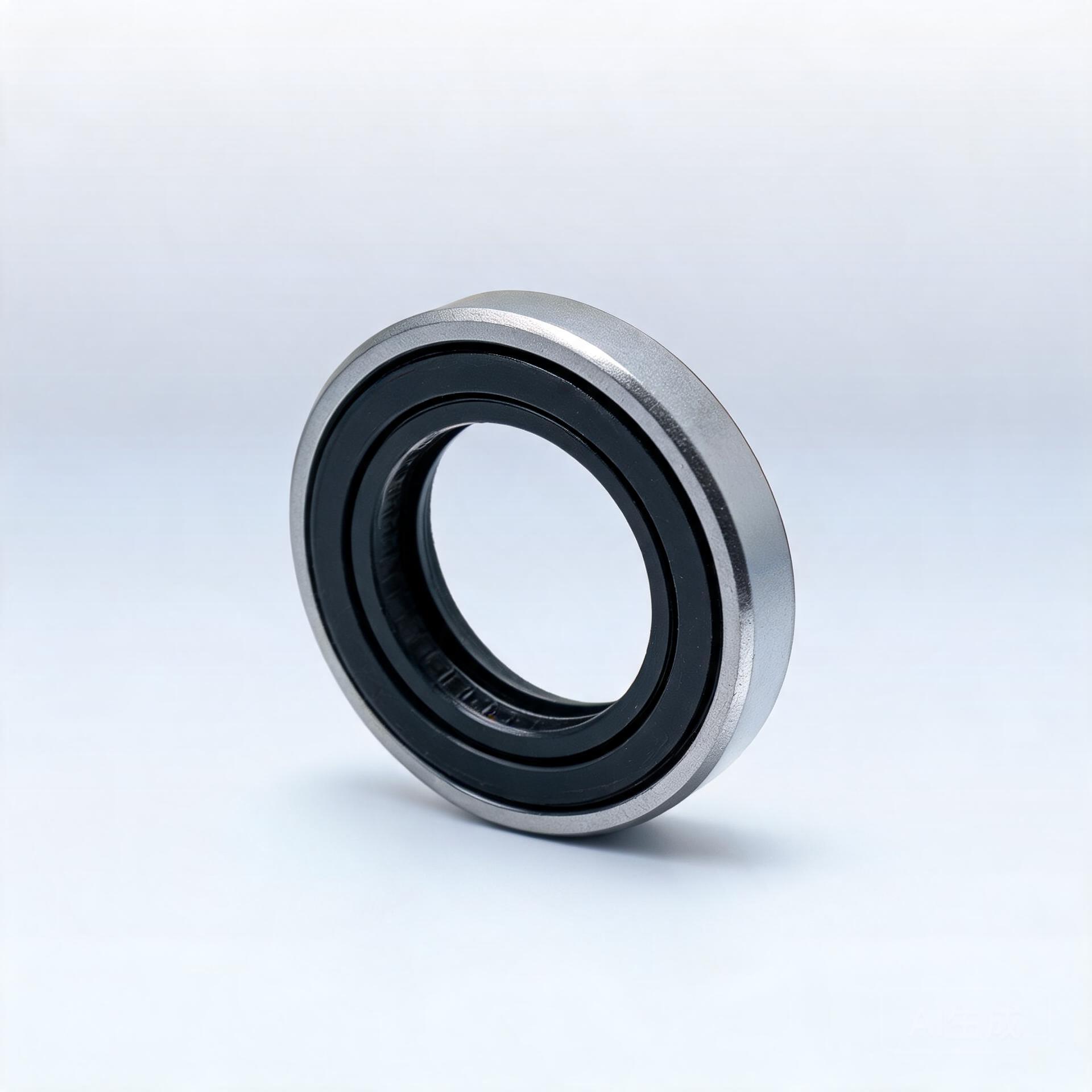
- NBR Oil Seal — rotary shaft seals in the same compound family
- NBR material guide — grades, ACN content and selection
- Silicone O-Ring — when temperature, not oil, is the constraint
- EPDM Gasket — water, steam, glycol and outdoor sealing
- Seals & Gaskets — standard and custom sealing hardware
- Rubber moulding capability — compression and injection moulding
Send your size list, groove drawing or fluid details for a quote within 24–48 hours. Standard sizes are quoted from the AS568 or metric table; non-standard rings from your drawing or a sample.