Overview
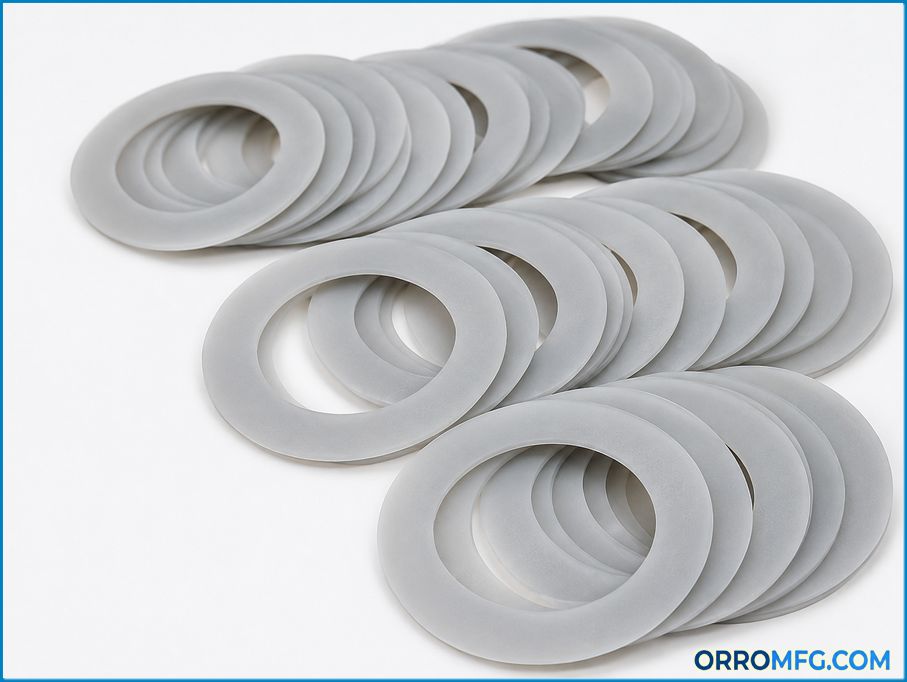
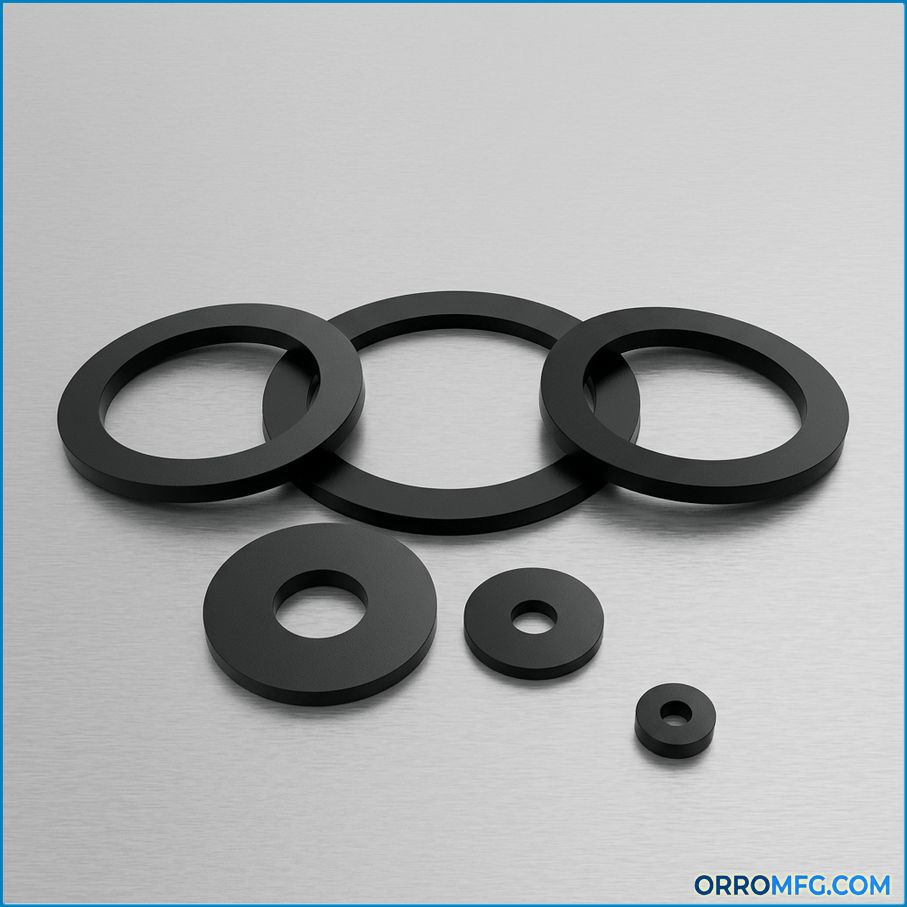
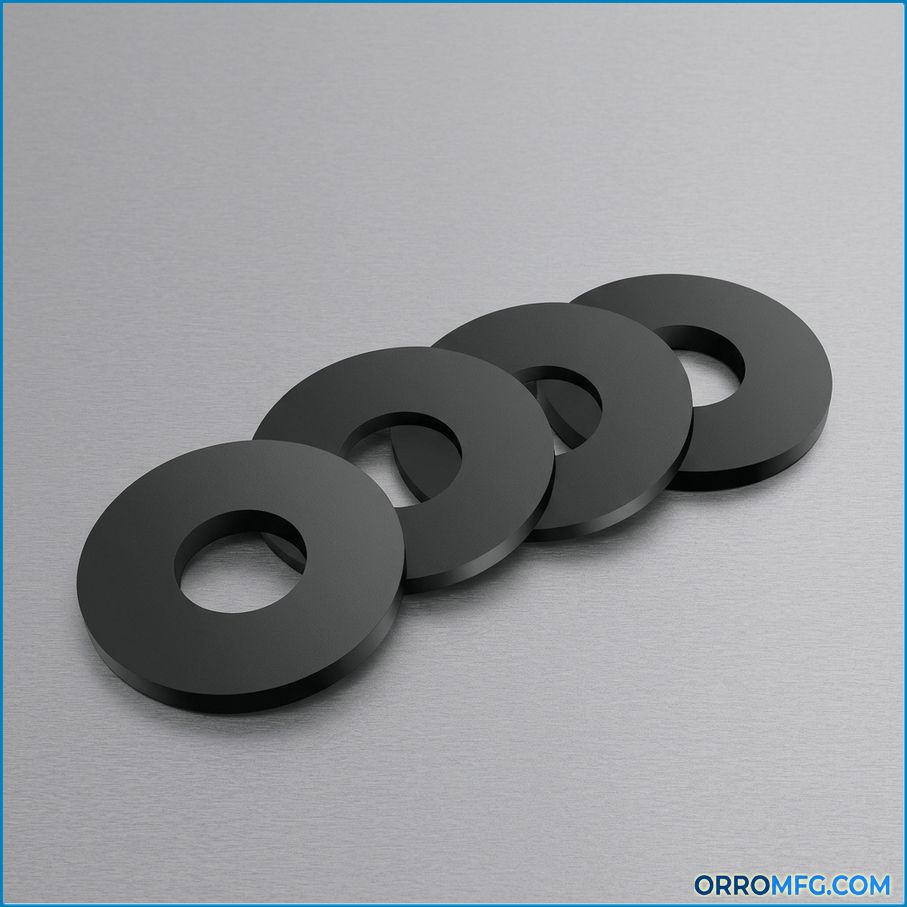
NBR flat gaskets — also called nitrile flat washers — are ring-shaped rubber seals cut or moulded from nitrile butadiene rubber. They sit between two faces, compress under bolt load, and fill the gap so that oil, fuel, grease or hydraulic fluid cannot pass. Black is the standard colour, 1.5 mm is the most common thickness, and the bore is usually sized to the bolt: M6 to M15 covers most small flanges, pump covers, gearbox housings and valve bodies.
The material choice is what makes NBR the default for oil. Nitrile rubber resists mineral oils, hydraulic fluid, diesel, petrol (within limits), grease and many industrial solvents far better than EPDM or silicone, and it holds its shape under compression at a fraction of the cost of FKM. What it does not resist is weather: ozone, UV and long outdoor exposure crack it, and polar solvents such as ketones, esters and brake fluid swell or dissolve it. That boundary is the first thing to check before specifying this gasket.
ORRO supplies NBR flat gaskets die-cut from 1-20 mm sheet or compression moulded to your drawing, in 65-90 Shore A, from a few hundred pieces to production volumes. Because the same sheet stock is used, dimensions and hardness stay consistent from batch to batch — which matters when the gasket has to fit a groove you did not design and cannot change.
Key Features
- Oil and Fuel Resistance: Nitrile is the standard elastomer for mineral oil, hydraulic fluid, diesel and grease — the reason these gaskets dominate automotive and hydraulic sealing.
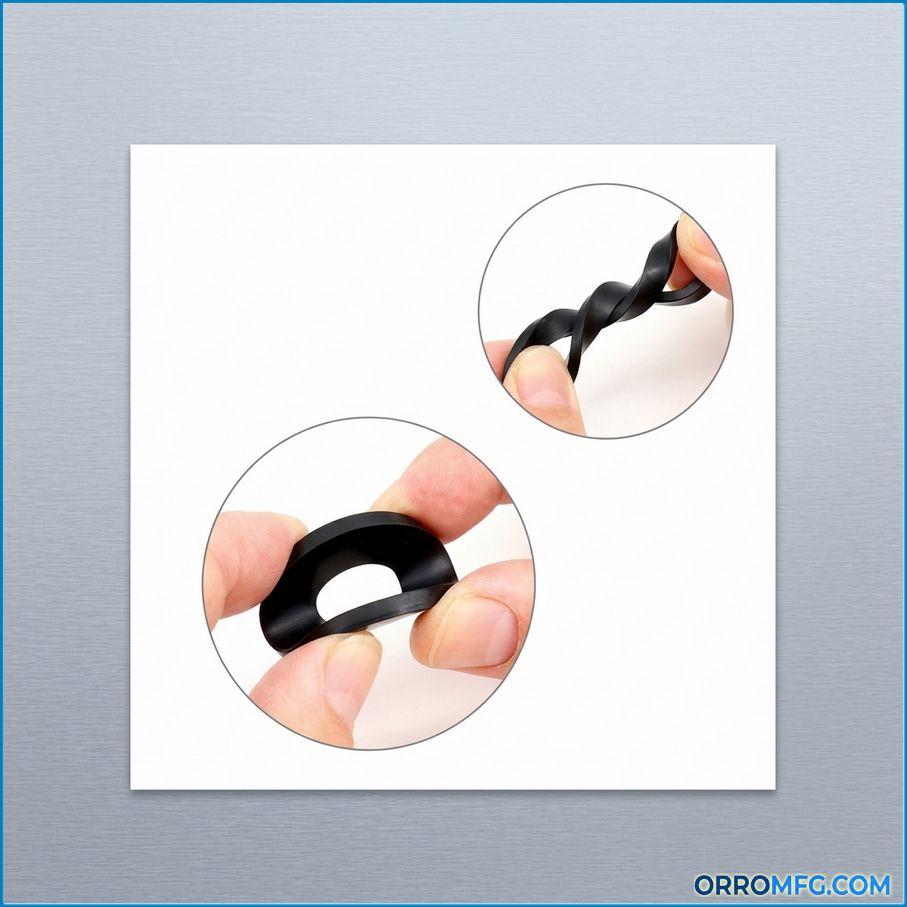
- Reliable Compression Set: Recovers after compression so the joint keeps sealing through pressure and temperature cycling, instead of taking a set and leaking.
- Wide Hardness Range: 65-90 Shore A lets you match the gasket to the bolt load — soft for light covers, harder for high-pressure flanges.
- Consistent Thickness: Sheet is calendered and cut to a controlled thickness, so the gasket compresses evenly and does not load the flange unevenly.
- Low Cost, High Volume: Nitrile sheet is inexpensive and die cutting is fast, which is why NBR flat washers are the cheapest way to seal a low-pressure oil joint.
- Easy Field Replacement: Non-metallic, non-stick and simple to remove — no scraping, no residue on the flange face.
Material Specifications
| Property | NBR (Nitrile) | Test / Note |
|---|---|---|
| Hardness (Shore A) | 65 - 90 | 70 ± 5 standard for flat gaskets |
| Tensile Strength (MPa) | 8 - 18 | Depends on compound and filler |
| Elongation at Break (%) | 250 - 450 | |
| Compression Set (%) | 15 - 30 | 22 h at 100 °C |
| Continuous Service Temp (°C) | -40 to +120 | Short excursions to +130 °C |
| Density (g/cm³) | 1.20 - 1.35 | Carbon black filled |
| Tear Strength (kN/m) | 25 - 45 | |
| Oil Resistance | Excellent | ASTM IRM 903, 70 h at 100 °C |
| Fuel Resistance | Good | Not for high-aromatic fuels |
| Weather / Ozone Resistance | Poor | Do not use outdoors |
| Water / Steam Resistance | Fair | Not a steam gasket |
| Standard Thickness | 1, 1.5, 2, 3, 5, 6, 8, 10, 12 mm | Custom up to 20 mm |
Standard Sizes and Thickness
| Dimension | Range | Notes |
|---|---|---|
| Bore (inside diameter) | 3 - 300 mm | M6-M15 (6-15 mm) covers most bolt-mounted covers |
| Outside diameter | 8 - 500 mm | Any outer profile: round, square, rectangular, custom |
| Thickness | 0.5 - 20 mm | 1.5 mm standard; 3 mm for rougher cast faces |
| Tolerance | ±0.1 mm thickness, ±0.2 mm profile | Tighter on request |
| Hardness | 65 - 90 Shore A | 70 A standard |
| Colour | Black standard; white, red, green available | Colour coding for line or size identification |
A 1.5 mm gasket is thin enough to fit a shallow groove and thick enough to absorb a slightly wavy flange. Go to 3 mm where the casting is rough or the joint sees thermal cycling, and stay at 1 mm only for machined faces and low pressure.
Applications
Automotive and Engine Sealing
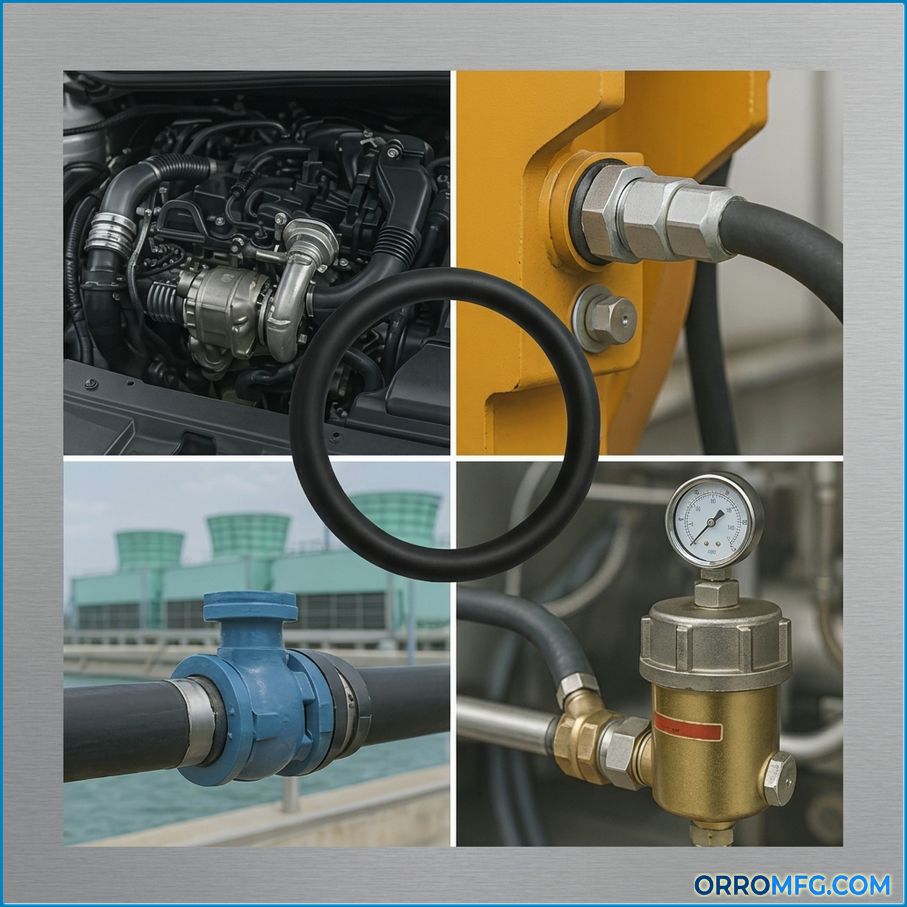
NBR flat gaskets seal oil pans, valve covers, fuel pump bodies, oil filter housings and gearbox covers. Nitrile tolerates hot engine oil and the constant thermal cycling of a vehicle, and the low unit cost suits high-volume assembly.
Hydraulic Systems
On hydraulic manifolds, cylinders, pumps and valve blocks, NBR washers seal port connections and end covers. The material holds up in mineral hydraulic oil to about 90 °C, and harder 80-90 A grades resist extrusion better at higher pressure.
Pumps, Valves and Compressors
NBR flat gaskets seal casing joints, inspection covers and flange faces on oil-handling pumps, air compressors and process valves. Where the medium is oil-bearing air or lubricant, nitrile is the economical choice.
General Industrial and Maintenance
In workshops and MRO stores, NBR flat washers are the go-to item for sealing a leaking joint on a machine that must be back in service the same shift. Assorted boxes covering M6-M15 bores are standard stock items.
Where NBR Is the Wrong Choice
Outdoor equipment, steam lines, brake systems (glycol or ester fluids), ketone and ester solvents, and anything that must survive ozone or UV. For those, use EPDM for water and weather, FKM for aggressive chemicals and heat, or silicone for wide temperature range and food contact.
Operating Conditions
- Temperature: -40 °C to +120 °C continuous; brief excursions to +130 °C. Above that, the compound hardens and compression set rises.
- Pressure: Low to medium flange pressure — typically up to 10-16 bar in a properly bolted joint. For higher pressure, use a harder grade, a thinner gasket, or move to FKM.
- Media: Mineral oils, hydraulic oil, diesel, grease, mild aqueous solutions, compressed air with oil. Not for brake fluid, ketones, esters, strong acids, ozone or steam.
- Flange Faces: Works on machined and reasonably flat cast faces. Heavily scored or warped faces need a thicker, softer gasket, not a thinner one.
- Bolt Load: Do not over-compress. Squeeze beyond roughly 25-30% of thickness and the gasket takes a permanent set and leaks on the next cycle.
- Outdoors: Not recommended. Ozone cracking appears at the exposed edge within months; specify EPDM instead.
Material Comparison
| Material | Oil and Fuel | Water and Steam | Weather / Ozone | Temp Range | Cost | Best For |
|---|---|---|---|---|---|---|
| NBR (Nitrile) | Excellent | Fair | Poor | -40 to +120 °C | Low | Oil, fuel and hydraulic joints |
| HNBR | Excellent | Good | Good | -40 to +150 °C | Medium-High | Hot oil, longer life, higher pressure |
| EPDM | Poor | Excellent | Excellent | -50 to +150 °C | Low | Water, steam, outdoor and HVAC |
| Silicone (VMQ) | Fair | Good | Excellent | -60 to +230 °C | Medium | Heat, food contact, electrical insulation |
| FKM (Viton) | Excellent | Good | Excellent | -20 to +200 °C | High | Aggressive chemicals, high temperature |
| PTFE | Excellent | Excellent | Excellent | -200 to +260 °C | Medium-High | Nearly all chemicals, high purity |
Choose NBR flat gaskets when:
- The medium is mineral oil, hydraulic fluid, diesel, grease or oil-bearing air
- The joint runs below about 120 °C and at low-to-medium pressure
- Cost per piece matters, because the joint is small and the volume is high
- The flange is machined flat and the gasket needs to be thin
- The part is indoors and protected from ozone and UV
Customization Options
- Compounds: Standard NBR, low-temperature NBR, high-hardness NBR, white or coloured NBR, and HNBR for hot oil duty
- Hardness: 65, 70, 75, 80, 85 and 90 Shore A standard; intermediate values on request
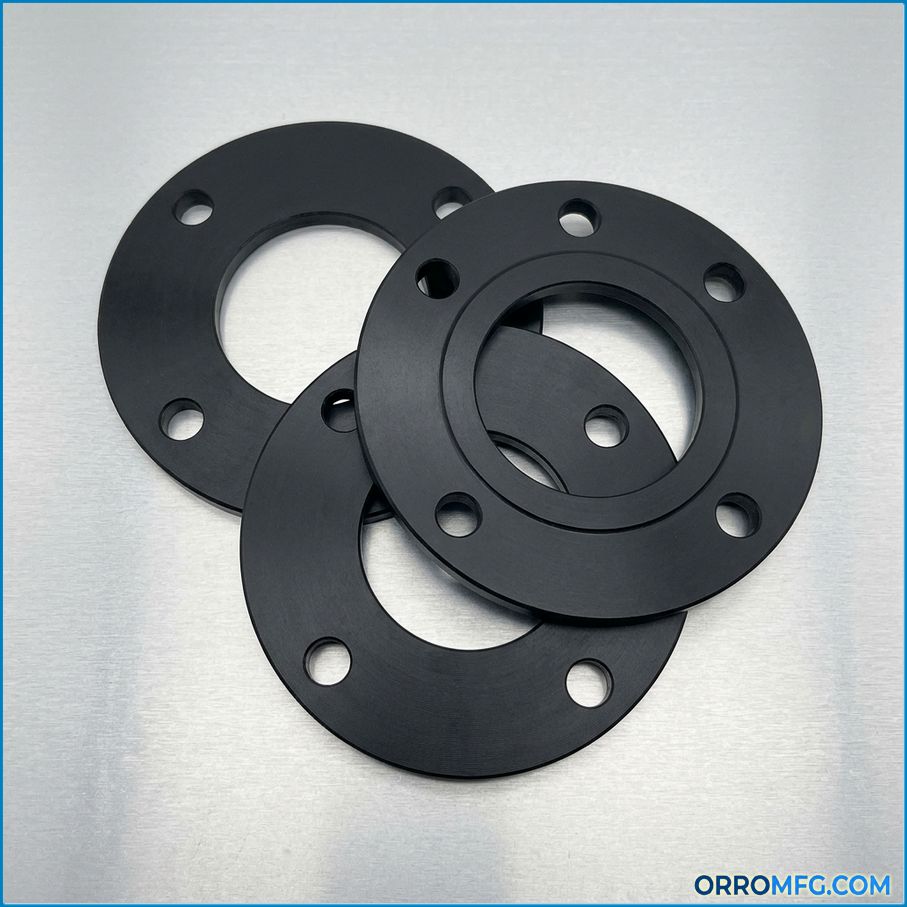
- Shapes: Circular, square, rectangular, oval, multi-hole and irregular profiles cut to drawing
- Thickness: 0.5-20 mm; 1.5 mm is the stock thickness for most flat washers
- Tolerance: ±0.1 mm on thickness, ±0.2 mm on profile; tighter by negotiation
- Surface: Plain, talc-free, or with a thin adhesive backing for assembly
- Marking: Laser or ink marking of size, batch and material on request
- Packaging: Bulk bags, assorted boxes by bore size, or labelled kits for maintenance stores
Quality Assurance
ORRO manufactures NBR flat gaskets within an ISO 9001:2015 certified quality management system. Sheet stock is checked on receipt for thickness, hardness and compound identity, and each production batch is traceable to its material lot. Die-cut and moulded parts are inspected for bore and outside diameter, thickness uniformity and edge quality, with hardness verified per batch.
Compression set, tensile strength and oil-resistance data are available from the compound data sheet, and RoHS declarations can be supplied on request. Dimensional reports are issued with production lots, and first article inspection is available for new tools.
Ordering Information
- Send a drawing, a sample, or the bore, outside diameter and thickness you need.
- Tell us the medium, the temperature and the bolt load, or the equipment the gasket fits.
- We confirm compound, hardness and thickness, then quote against the drawing.
- Standard thicknesses ship from stock; custom sizes and profiles are tooled to order.
Frequently Asked Questions
What is the difference between a flat gasket and a flat washer?
A flat washer spreads load under a bolt or nut and is usually a simple ring. A flat gasket seals a joint between two faces, so its bore, outside diameter and thickness are chosen to match a specific flange, cover or port. The same NBR ring can serve both purposes, which is why the two terms are often used interchangeably.
What is the minimum order quantity?
100 pieces per size. Standard 1.5 mm sheet sizes ship from stock; custom shapes, colours and compounds are quoted at the same 100-piece minimum.
Can I use NBR outdoors?
No. Nitrile has poor ozone and UV resistance and will crack at the exposed edge within months outdoors. Use EPDM for outdoor, water and weather-exposed joints, or FKM where oil resistance is also required.
Which thickness should I choose — 1 mm, 1.5 mm or 3 mm?
1 mm for machined faces and low pressure, 1.5 mm as the general-purpose standard, 3 mm where the casting is rough, warped or sees thermal cycling. A thicker gasket compensates for face irregularity; a thinner one compresses more evenly at high bolt load.
What hardness do I need?
70 Shore A is the standard for flat gaskets. Go softer (65 A) for light covers and low bolt load, harder (80-90 A) for higher pressure where the gasket could extrude into the gap. Tell us the pressure and the gap width and we will confirm.
Is NBR suitable for brake fluid or glycol?
No. Brake fluid, glycol ethers and ester-based fluids attack nitrile. Use EPDM for glycol and brake systems, and FKM for aggressive or high-temperature fluids.
Can you cut a non-round gasket, or one with several holes?
Yes. Square, rectangular, oval, multi-hole and fully irregular profiles are die-cut or waterjet cut from the drawing. Send DWG, DXF, STEP, IGES or a scanned sample with a known dimension.
What warranty and support do you provide?
Gaskets are warranted for 12 months against material and dimensional defects under the stated operating conditions. We answer material and fitment questions within 24 hours and can review a joint design before you commit to tooling.
Related Products
- EPDM Flat Gasket — water, steam and outdoor sealing
- Custom Silicone Gasket — high temperature and food contact
- PTFE Gasket — chemical piping and aggressive media
- NBR O-Ring — the same nitrile compound in a round profile
- NBR Oil Seal — rotary shaft sealing
- Gasket material guide — soft or hard, and which material for which medium
Send your drawing or the bore and thickness you need for a quote. Tell us the fluid, the temperature and the bolt load, and we will confirm compound and hardness.