Overview
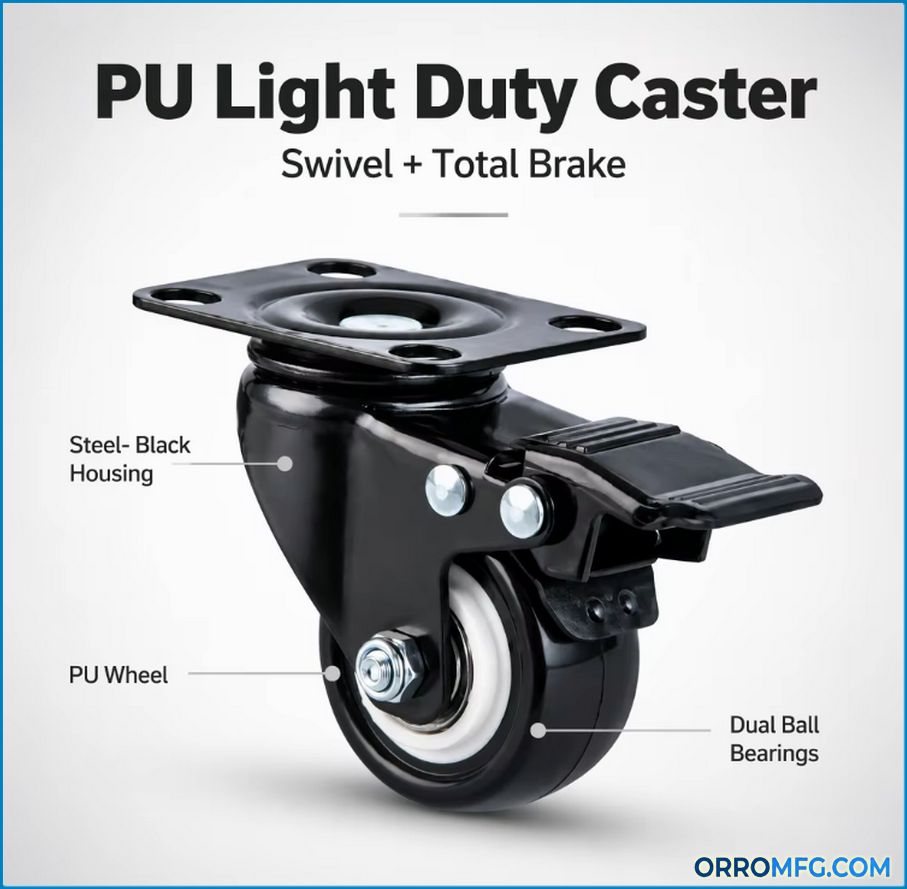
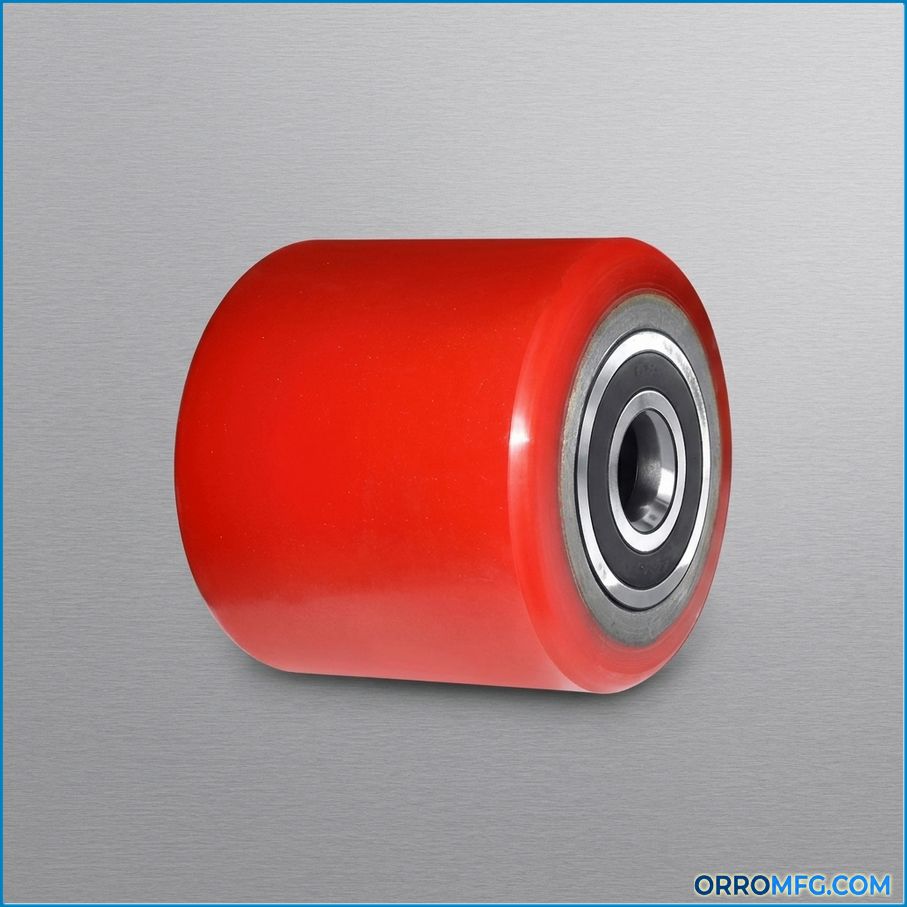
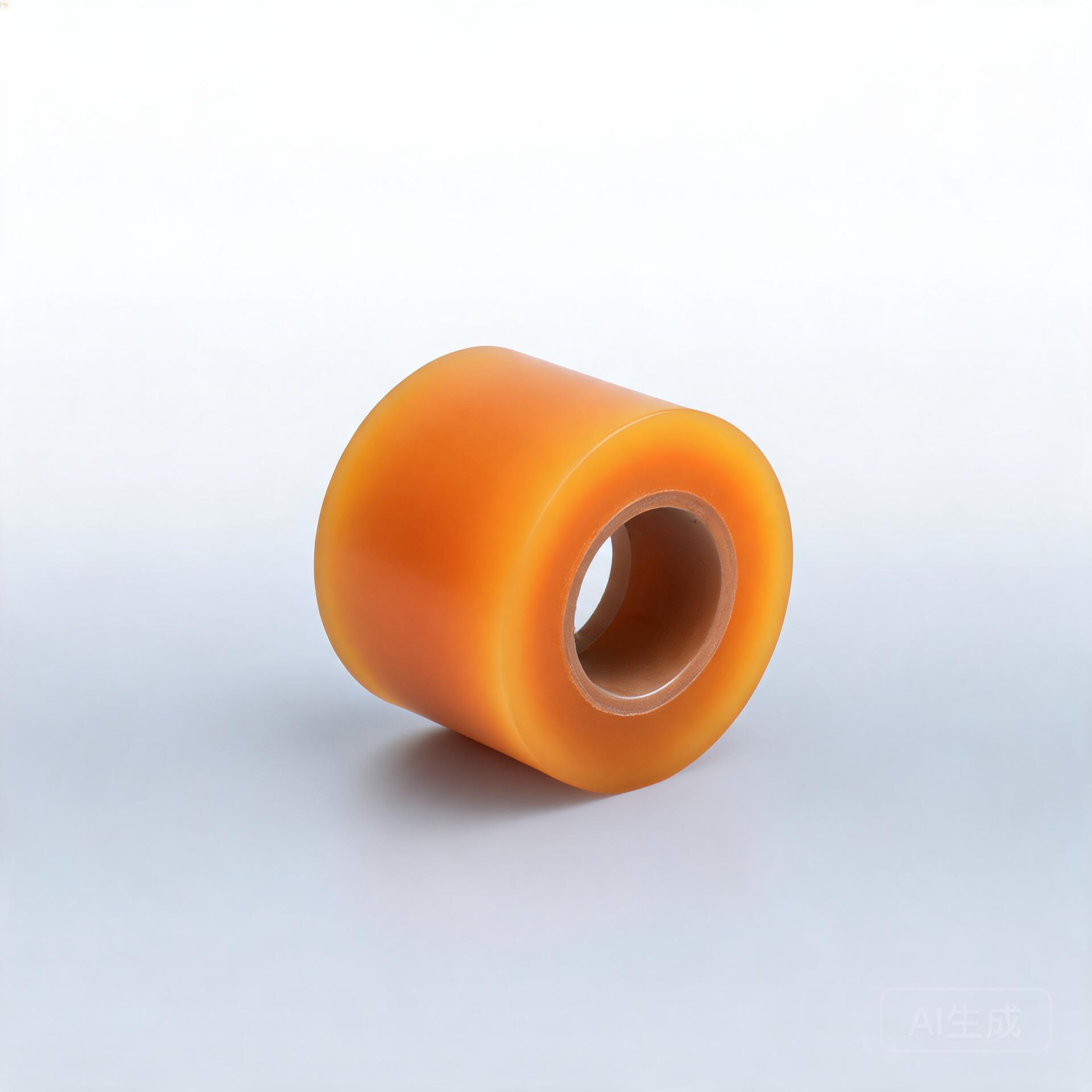
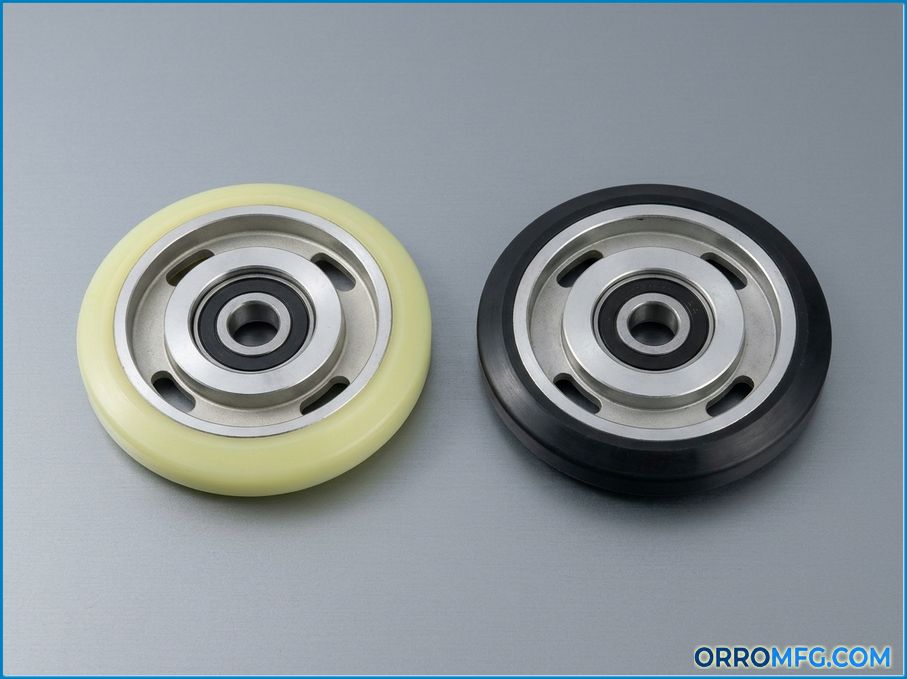
PU guide wheels are rolling components in which a high-performance polyurethane (PU) elastomer is bonded to a metal or engineering plastic hub, producing a wheel that guides, aligns, tensions, or drives belts, webs, chains, and products in machinery. The polyurethane tyre provides high grip, excellent abrasion resistance, and shock absorption, while the rigid hub delivers structural strength and accurate mounting. ORRO produces PU guide wheels in a wide range of diameters, widths, and durometers, machined and ground to tight tolerances for smooth, consistent rotation in demanding industrial equipment.
Polyurethane is valued for combining the resilience of rubber with the toughness and load capacity of engineering plastics. Compared with rubber wheels, PU guide wheels offer significantly higher abrasion resistance, greater load capacity, and better resistance to oils and many chemicals, while remaining non-marking and quiet in operation. The hardness of the PU can be tailored from soft, high-grip compounds to hard, low-rolling-resistance compounds, allowing the same wheel design to be optimised for traction, wear life, or precise guidance. ORRO offers both polyester-based PU for excellent wear resistance and mechanical strength and polyether-based PU for superior hydrolysis resistance in wet or humid environments. Wheels can be supplied with crowned, flat, or grooved running surfaces and with bearing bores, integrated shafts, or keyed hubs.
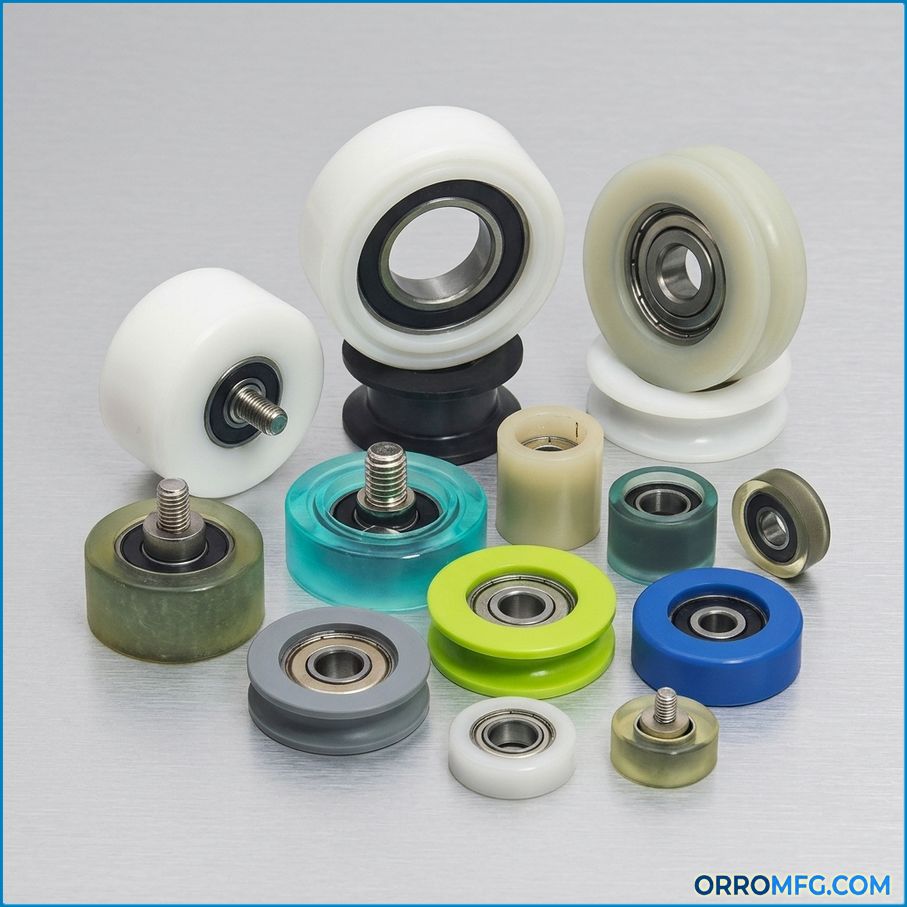
In automation and robotics the same construction is scaled down: a compact 7-90 mm wheel with a ball bearing moulded into the hub, mounted on a plain bore or an integral threaded stud, guides rails, transfer units and AGV steering modules where a standard conveyor roller will not fit.
Key Features
- High Traction and Grip: The high coefficient of friction of polyurethane ensures positive drive and reliable guidance without slippage on belts, webs, and chains.
- Exceptional Abrasion Resistance: PU delivers several times the wear resistance of rubber, extending wheel service life and reducing replacement frequency.
- Shock and Vibration Absorption: Elastic polyurethane cushions impact and vibration, protecting products and machine components and reducing operating noise.
- Wide Hardness Range: Available from soft, high-grip compounds to hard, low-rolling-resistance compounds to suit specific traction and load requirements.
- Non-Marking and Quiet: Non-marking PU formulations protect delicate product surfaces and run quietly compared with metal or hard plastic wheels.
- Oil and Chemical Resistance: Resistant to oils, greases, and many industrial chemicals, maintaining grip and dimensional integrity in contaminated environments.
Material Specifications
| Property | Polyester PU (90A) | Polyester PU (95A) | Polyether PU (90A) | Food-Grade PU (85A) |
|---|---|---|---|---|
| Hardness (Shore A) | 90 ± 5 | 95 ± 5 | 90 ± 5 | 85 ± 5 |
| Tensile Strength (MPa) | 35 - 50 | 40 - 55 | 25 - 40 | 25 - 40 |
| Elongation at Break (%) | 400 - 600 | 350 - 500 | 450 - 650 | 400 - 600 |
| Tear Strength (kN/m) | 80 - 120 | 90 - 130 | 60 - 100 | 50 - 90 |
| Compression Set (%) | ≤ 20 | ≤ 25 | ≤ 25 | ≤ 20 |
| Abrasion Resistance (DIN 53516, mm³) | ≤ 30 | ≤ 25 | ≤ 40 | ≤ 40 |
| Rebound Resilience (%) | 30 - 50 | 25 - 45 | 35 - 55 | 35 - 55 |
| Continuous Service Temp (°C) | -20 to +80 | -20 to +80 | -40 to +70 | -20 to +70 |
| Density (g/cm³) | 1.10 - 1.20 | 1.10 - 1.25 | 1.05 - 1.15 | 1.05 - 1.15 |
| Hydrolysis Resistance | Fair | Fair | Excellent | Good |
| Oil Resistance | Excellent | Excellent | Good | Good |
Automation and Robotics Guide Wheels
Compact guide wheels are the variant this range is built around: small-diameter PU, POM or nylon wheels with the bearing already fitted, used to guide, align and steady moving parts in automation equipment. They run on linear guide rails, transfer units, conveyor side guides, AGV steering and drive modules, robot arms and other narrow spaces where a standard conveyor roller will not fit.
| Feature | Standard range |
|---|---|
| Outside diameter | 7 - 90 mm |
| Bore / inside diameter | 3 - 36 mm |
| Width | 3 - 36 mm |
| Groove profile | V-groove, U-groove, flat |
| Tyre hardness | 70 - 95 Shore A |
| Bearing | MR, 6xx and 62x miniature ball bearings, or plain sleeve bushings |
| Mounting | Plain bore for shaft mounting, or integral threaded stud |
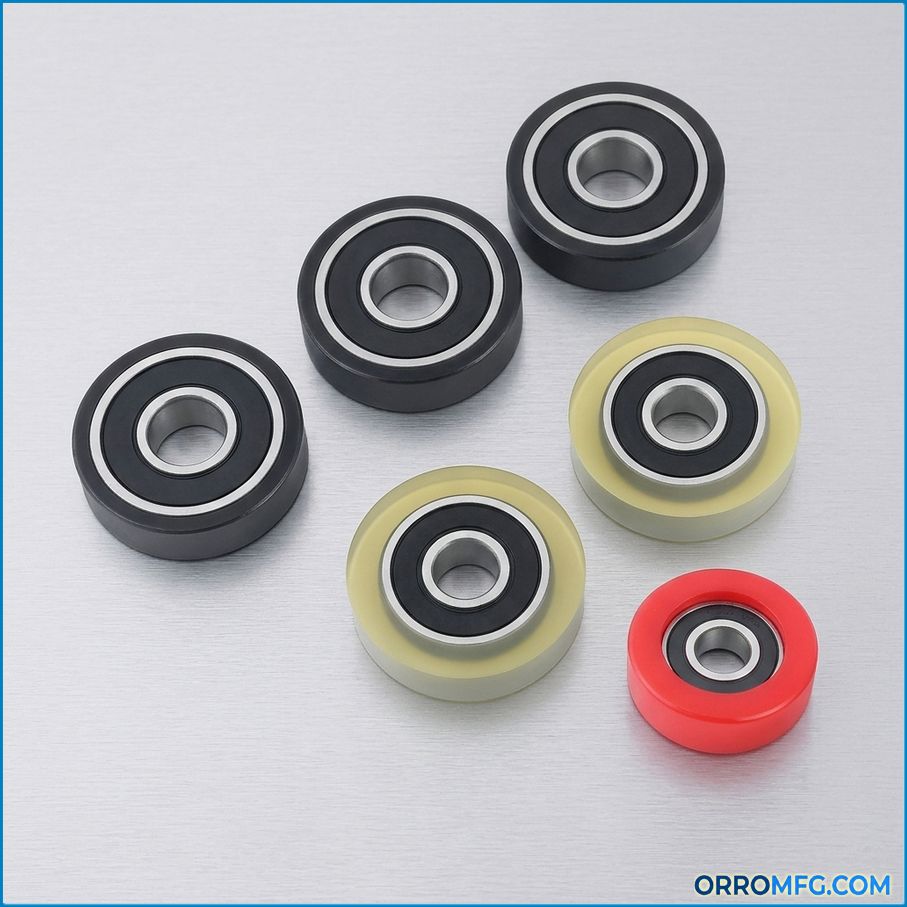
The bearing is the reason these wheels exist as a separate product. A miniature ball bearing (MR, 6xx or 62x series) or a plain sleeve bushing is assembled into the wheel before it ships, with shielded and sealed variants for dusty or washdown environments. That removes the separate bearing housing, the press fit and the alignment step from your assembly line — the wheel arrives as one part.
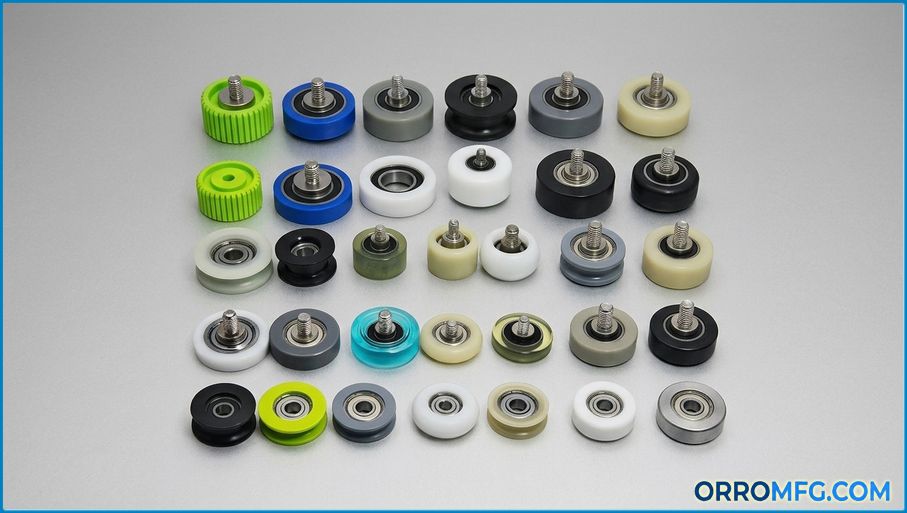
Two mounting styles cover most automation builds. A plain through bore suits shaft-mounted sliding systems and adjustable idler stations. An integral threaded stud — the axle and the wheel in one piece — bolts directly to an AGV chassis, a robot arm bracket or a conveyor module, and both thread size and stud length can be customised to your existing fixing.
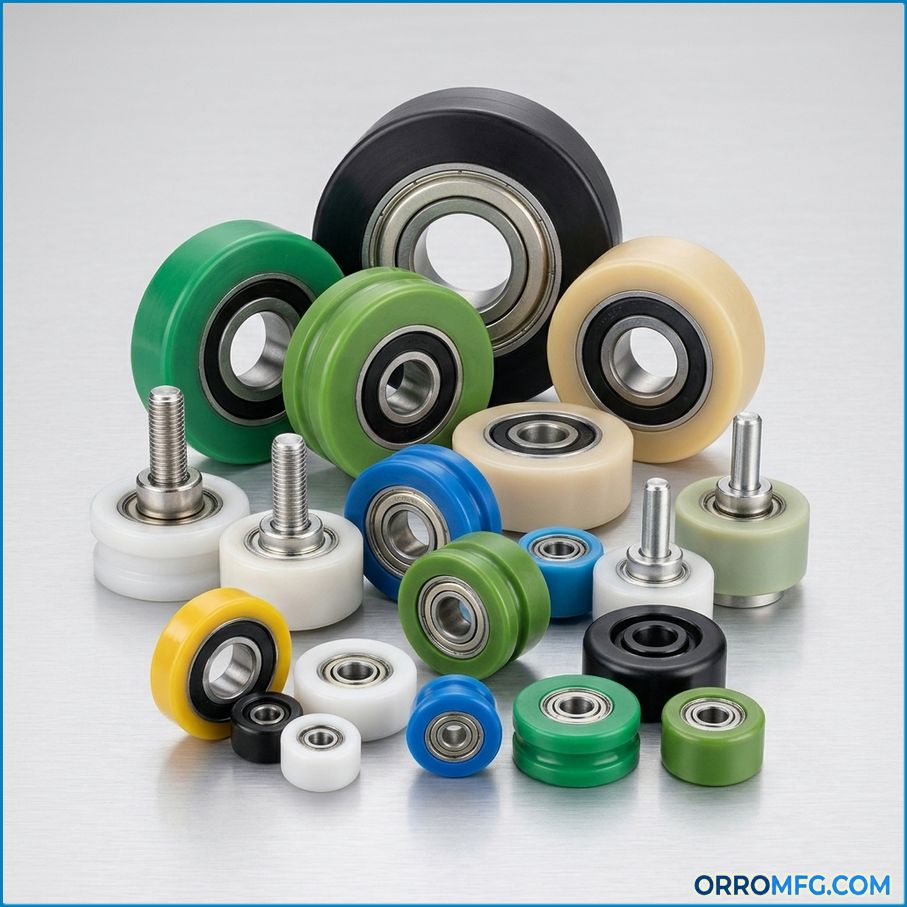
Groove form decides how the wheel meets its track. A V-groove self-centres on a matching V rail and absorbs small misalignment, a U-groove runs on round bar or tube, and a flat tyre suits flat track, belt back-up and friction-driven duty. For general guide-rail work we recommend 85-90 Shore A; softer 70-80 A compounds hold position better on start-stop duty, while 90-95 A tyres last longer in high-cycle systems.
Applications
Material Handling
PU guide wheels are used in conveyors, transfer units, and guided cart systems to steer, align, and drive loads with high grip and low noise. Their abrasion resistance withstands continuous contact with belts, rails, and chains, while their shock absorption protects products and reduces vibration. Because they are non-marking, they are suitable for handling finished goods, glass, and delicate items where surface protection matters.
Industrial Automation
In automated machinery, PU guide wheels serve as guide, tension, and pinch wheels that keep belts and webs tracking accurately through high-speed processes. Their high friction provides reliable traction without slipping, and their resilience damps vibration that could affect positioning accuracy. ORRO machines wheels to precise diameters and profiles so that multiple wheels run in alignment for consistent product guidance.
Packaging Industry
PU guide wheels guide film, foil, labels, and cartons through form-fill-seal machines, wrappers, and labelers. Their grip maintains consistent web tension, while their non-marking surface protects printed packaging and clear film from scuffing. Their quiet running and wear resistance support reliable, high-throughput packaging with minimal maintenance.
Woodworking Machinery
PU guide wheels are used in feed systems, edge banders, and panel handling equipment to drive and guide boards with firm, even traction. Their abrasion resistance tolerates the dust and constant contact typical of woodworking lines, and their resilience absorbs shock from irregular workpieces. Their non-marking behaviour helps protect finished panel surfaces during transport.
Printing and Converting
In printing and converting equipment, PU guide wheels guide and tension paper, film, and web material through press, coating, and slitting stations. High grip maintains accurate web control, while shock absorption and quiet operation reduce vibration and noise at high speeds. Oil- and chemical-resistant formulations suit environments exposed to inks and solvents.
Operating Conditions
- Temperature Range: -40°C to +80°C (-40°F to +176°F) depending on formulation; polyether PU offers the best low-temperature flexibility
- Load Capacity: Suitable for light-to-medium loads; higher-durometer grades carry greater load with lower rolling resistance
- Speed Rating: Well suited to moderate surface speeds typical of conveyor, packaging, and web-handling equipment; consult ORRO for high-speed duty
- Traction Requirements: High-grip soft compounds maximise traction; harder compounds minimise rolling resistance for idler and guide duty
- Chemical Compatibility: Excellent resistance to oils and greases; polyester PU performs well with hydrocarbons, while polyether PU is preferred for wet and humid service
- Hydrolysis and Moisture: Polyether PU is recommended for washdown, humid, and wet environments; polyester PU suits dry, oil-exposed duty
- Lubrication: Normally run dry; bearings or bushings may be lubricated separately as required by the application
- Environment: Non-marking and quiet; food-grade formulations available for food-adjacent and clean environments
Material Comparison
| Material | Traction | Temp Range | Wear Resistance | Cost | Best For |
|---|---|---|---|---|---|
| Polyurethane (PU) | Excellent | -40 to +80°C | Excellent | Medium | High-grip guide, drive, and tension wheels |
| Rubber | Very Good | -40 to +100°C | Fair | Low-Medium | General grip and vibration damping |
| Nylon (PA6/PA66) | Fair | -40 to +120°C | Good | Low-Medium | Low-friction, load-bearing guide rollers |
| POM (Acetal) | Fair | -40 to +100°C | Very Good | Medium | Low-friction, dimensionally stable guide rollers |
| Steel (Coated) | Moderate | -40 to +250°C | Good | Low | Heavy-load, high-temperature, high-rigidity duty |
Choose PU guide wheels when:
- High traction and positive grip are required for guiding, tensioning, or driving
- Abrasion resistance and long wear life are important for continuous contact duty
- Shock absorption and quiet operation are needed to protect products and reduce noise
- Non-marking, product-safe contact surfaces are essential
- Resistance to oils, greases, and many industrial chemicals is required
- A softer, higher-grip alternative to nylon, POM, or metal wheels is preferred
Customization Options
- Material Grades: Polyester PU, polyether PU, food-grade PU, oil-resistant PU, and anti-static PU formulations
- Hardness Range: 70-95 Shore A as standard for guide wheels; softer 20-60 A and harder grades up to 75 Shore D available for specialist duty
- Size Range: Outside diameters from 7 mm to 90 mm; bores from 3 mm to 36 mm; widths from 3 mm to 36 mm; larger guide wheels on request
- Tolerances: Machined and ground to IT7-IT9 for diameters and bores; concentricity and runout controlled to customer requirements
- Wheel Profiles: V-groove, U-groove and flat running surfaces as standard; crowned, flanged and custom contours available
- Hub and Bore Options: Metal or plastic hubs, through bores, bearing and bushing seats, integral threaded studs, and keyed hubs
- Surface Finishes: Ground and polished running surfaces for smooth, consistent contact and reduced wear
- Color Options: Natural amber, black, white, and custom colours for identification or food-zone coding
- Bonding Options: Chemically bonded or mechanically keyed PU-to-hub construction for maximum shear strength
- Secondary Operations: Bearing assembly, thread and stud machining, dynamic balancing and clean packaging on request
Quality Assurance
ORRO manufactures PU guide wheels within an ISO 9001:2015 certified quality management system, applying documented controls that ensure consistent material quality and precise geometry. Incoming polyurethane and hub materials are verified against supplier certificates, with hardness and cure checks performed to confirm the specified durometer and formulation. Process control plans define casting, bonding, machining, and grinding parameters so that critical characteristics such as hardness, diameter, groove profile, and bond integrity are monitored throughout production.
In-process inspection verifies durometer, dimensions, and bond quality using calibrated gauges and hardness testers, while final inspection includes 100% verification of critical features and sampling of surface finish and visual quality. Coordinate measuring machine (CMM) reports are available for precision programs, and bond shear testing is performed on critical wheels. Finished wheels are supplied with material certificates, inspection reports, and batch traceability documentation, and first article inspection (FAI) reports are provided for new or high-value programs on request. This disciplined quality process ensures that every PU guide wheel delivers reliable grip, wear resistance, and quiet operation in continuous industrial service.
Ordering Information
- Send a drawing or sample, or specify outside diameter, bore, width, groove profile, hardness, bearing type and mounting style.
- Tell us the guided part, moving mass, speed, cycle count and the rail or track material it runs against.
- We confirm PU chemistry, hardness, bearing and stud length, and return a matched drawing for approval.
- Quote within one working day, with sample and production lead times stated separately.
Frequently Asked Questions
What is the minimum order quantity for PU and plastic guide wheels?
100 pieces per size for a trial order. Production volumes typically run 2,000-10,000 pieces depending on material, bearing type and size complexity. Small pilot batches are accepted, so you can validate the wheel on your automation equipment before committing to a bulk purchase.
Should I choose PU, POM or nylon for a guide wheel?
PU for quiet running and high grip on robot guide rails. POM for the best wear resistance and dimensional stability in high-cycle automation. Nylon for impact resistance and long fatigue life. Tell us the load, speed and environment and we will recommend one within 24 hours.
Can you customise the outside diameter, bore and groove profile?
Yes — every dimension is custom: outside diameter 7-90 mm, bore 3-36 mm, width 3-36 mm, V-groove, U-groove or flat running surface, and hardness 70-95 Shore A. Send a drawing or sample and we return a matched design within 48 hours. New tooling for a custom profile takes 10-15 days to develop.
What built-in bearing options are available for compact automation?
Miniature ball bearings (MR, 6xx and 62x series) and plain sleeve bushings, assembled into the wheel before shipment. Shielded and sealed variants suit dusty environments, and custom bearing brands can be specified. You do not need to source or fit a bearing separately.
Do you offer bolt stud mounting or only a plain bore?
Both. Plain bore for shaft-mounted sliding systems, and an integral threaded stud for direct bolt-on mounting on AGVs, robot arms and conveyor modules — the axle and wheel are one part, which simplifies assembly. Custom thread sizes and stud lengths are supported.
What is the typical lead time for custom-size wheels?
Standard stock sizes ship within 5-7 working days. Custom orders that need new tooling ship within 15-20 working days after drawing approval; repeat custom orders without new tooling ship within 10-12 working days. Express air freight (3-7 days) is available for urgent prototypes.
How do I choose the right hardness for my automation application?
70-80 Shore A is softer and holds position better on start-stop duty. 85-90 Shore A is the balanced choice for general guide rails. 90-95 Shore A is harder and more wear-resistant for high-cycle systems. Share the load, speed and surface material and we will recommend a hardness within 24 hours.
Which PU chemistry should I specify — polyester or polyether?
Polyester PU for dry, oily or abrasive duty, where wear resistance and mechanical strength matter most. Polyether PU where the wheel sees washdown, humidity or coolant, because polyester PU degrades at the bond line in persistent moisture. This is the single most common cause of premature guide wheel failure in the field.
Do you provide warranty and after-sales technical support?
Yes. Wheels are warranted for 12 months against material defects and premature wear under the stated operating conditions. Bulk orders ship with an inspection report carrying dimensional and hardness data, and technical support answers within 24 hours. For OEM programmes we also carry out material compatibility assessment and wear-life prediction for your operating conditions.
Related Products
- PU Roller — coated conveyor drive, idler and nip rollers
- PU Roller Sleeve — replaceable sleeves for existing roller cores
- PU Flexible Bushing — shock-isolating sleeves and bushings
- PU Sleeve Bearing — load-bearing sleeves for rotating shafts
- PU Scraper Blade — wear-resistant blades for packaging lines
- Polyurethane material guide — hardness, chemistry and selection advice
Send your wheel drawing or sample for a same-day quote. Tell us the guided part, load, speed and rail material, and our engineering team will confirm hardness, groove profile, bearing and mounting style.