Overview
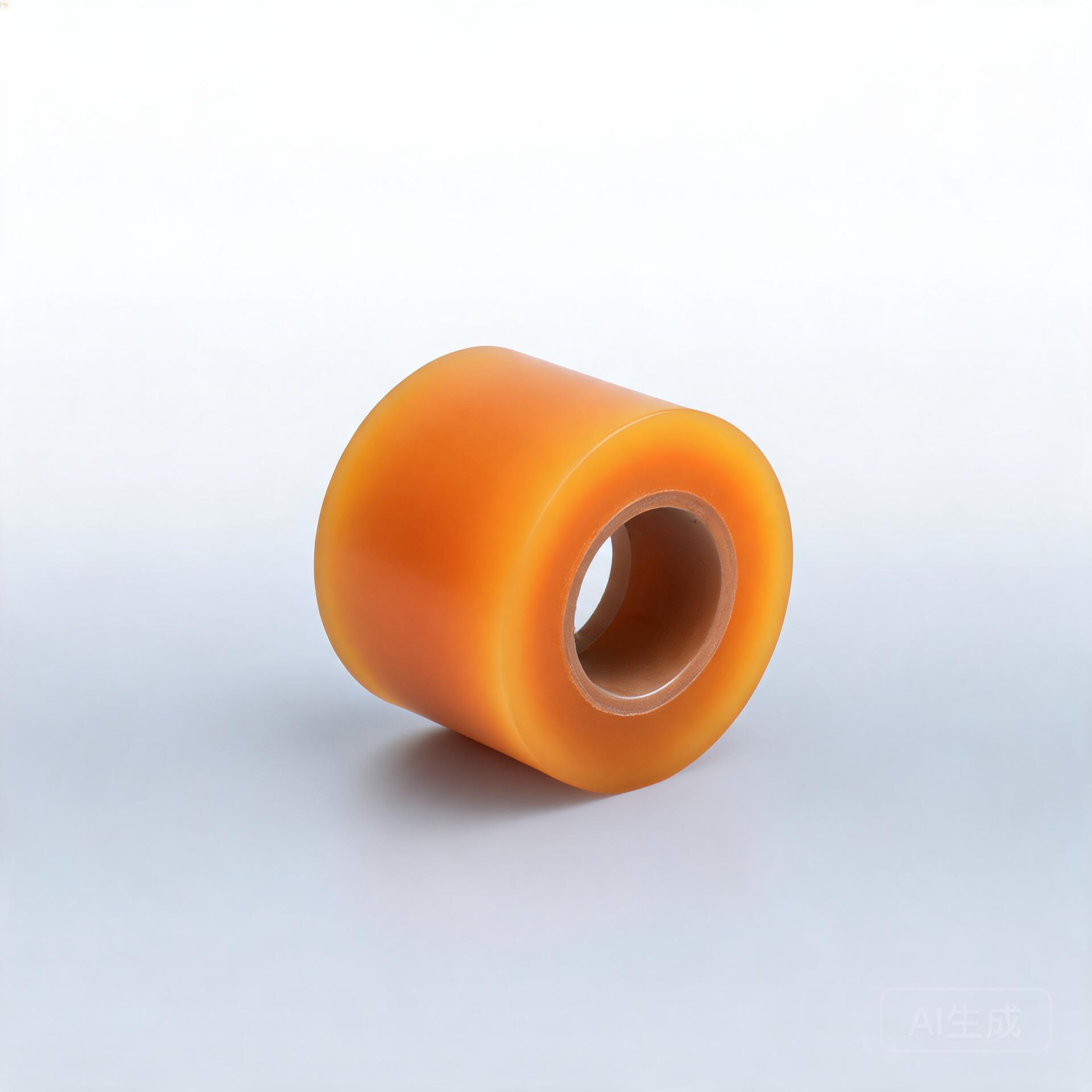
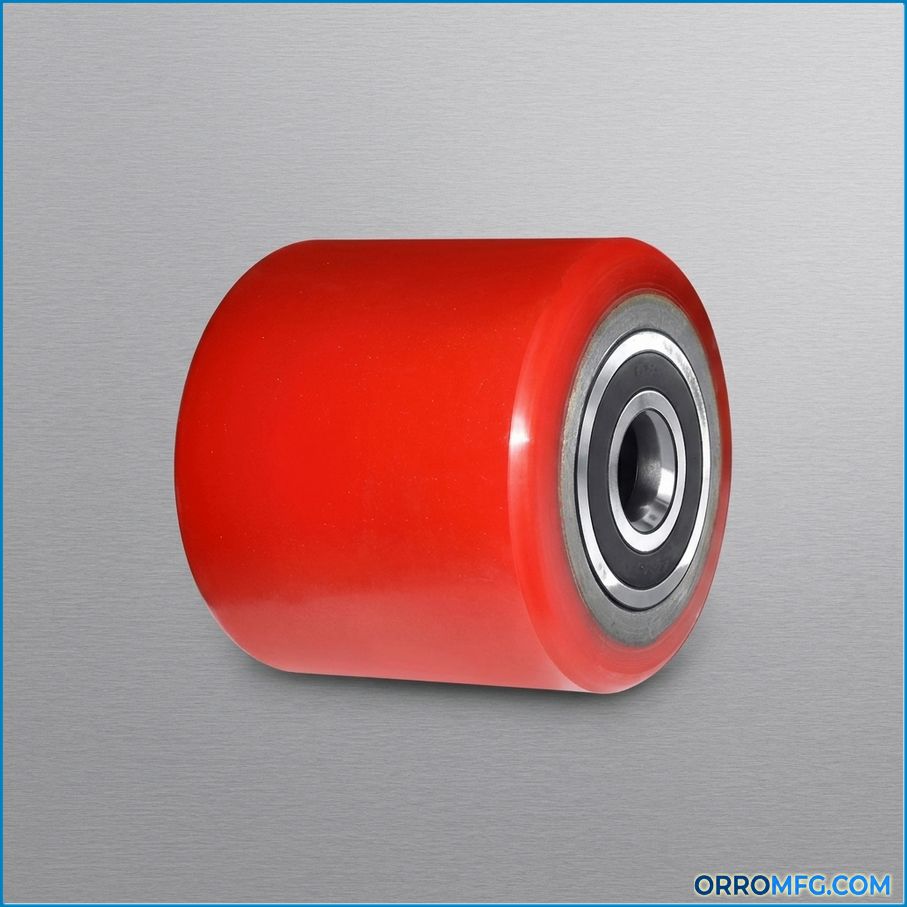
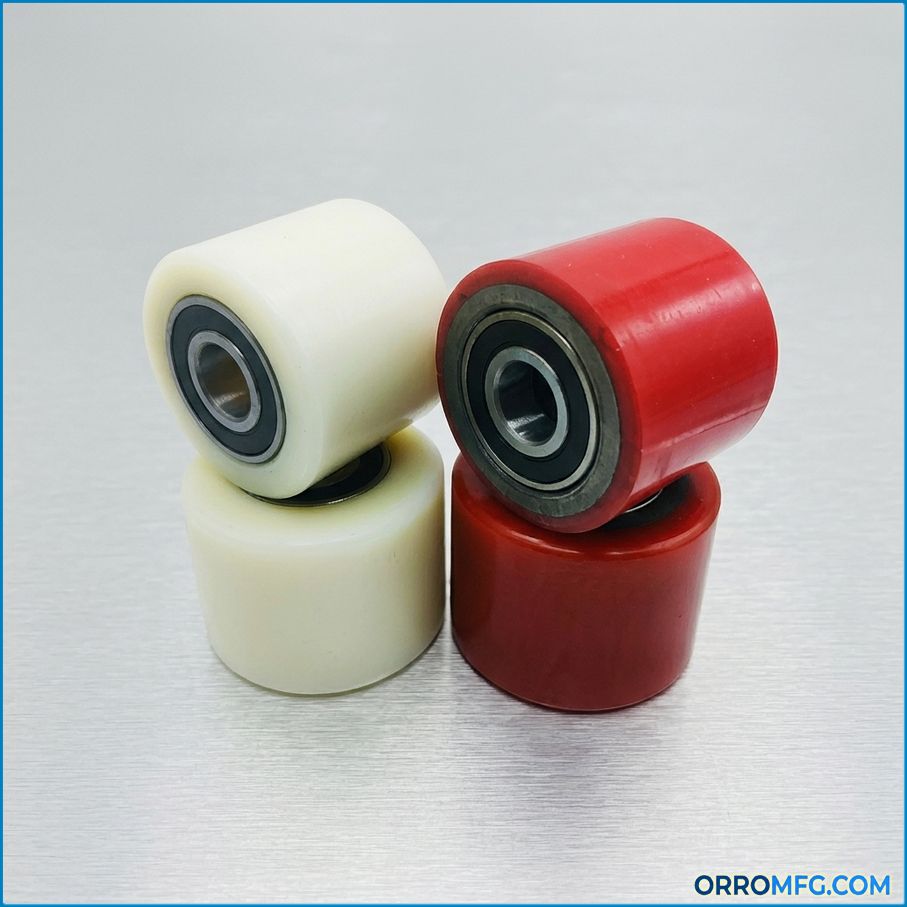
PU pallet truck wheels are the load wheels that carry the forks of hand pallet trucks, electric pallet trucks, stackers and other warehouse handling equipment. A hard polyurethane tyre is cast onto a cast iron core, the core is machined to take a sealed 6204 ball bearing, and the tread is ground flat so that the wheel rolls squarely on the floor. The result is a wheel that carries a heavy load, protects the floor, and needs no lubrication for its whole service life.
The cast iron core is what gives this wheel its load capacity. PU alone would deform; a solid iron hub carries the vertical load and transfers it through the bearing to the truck’s axle, while the PU layer takes the contact with the floor. That division of labour lets the tyre stay relatively thin — which keeps rolling resistance low and the overall wheel light enough to handle during maintenance — without the hub distorting under a full 80 mm × 100 mm load.
Compared with nylon or steel load wheels, PU is quieter, grips better on wet or oily floors, and does not mark or scratch sealed concrete, epoxy and tile. Compared with rubber, it lasts considerably longer under continuous warehouse duty and resists oils, hydraulic fluid drips and washdown water. ORRO supplies these wheels in the 80 mm platform range with widths from 60 mm to 100 mm, in red, cream, black and yellow, with OEM marking, core material and bearing options for truck builders.
Key Features
- High-Strength Core: Cast iron hub, with 45# steel as an alternative, carries the vertical load and holds the bearing seat square under impact.
- Hard PU Tread: 95 Shore A polyurethane resists abrasion, oils and hydraulic fluid, and protects sealed and coated floors from marking.
- Sealed 6204 Ball Bearing: Pre-greased and sealed on both sides, giving low rolling resistance from the first push and no lubrication schedule.
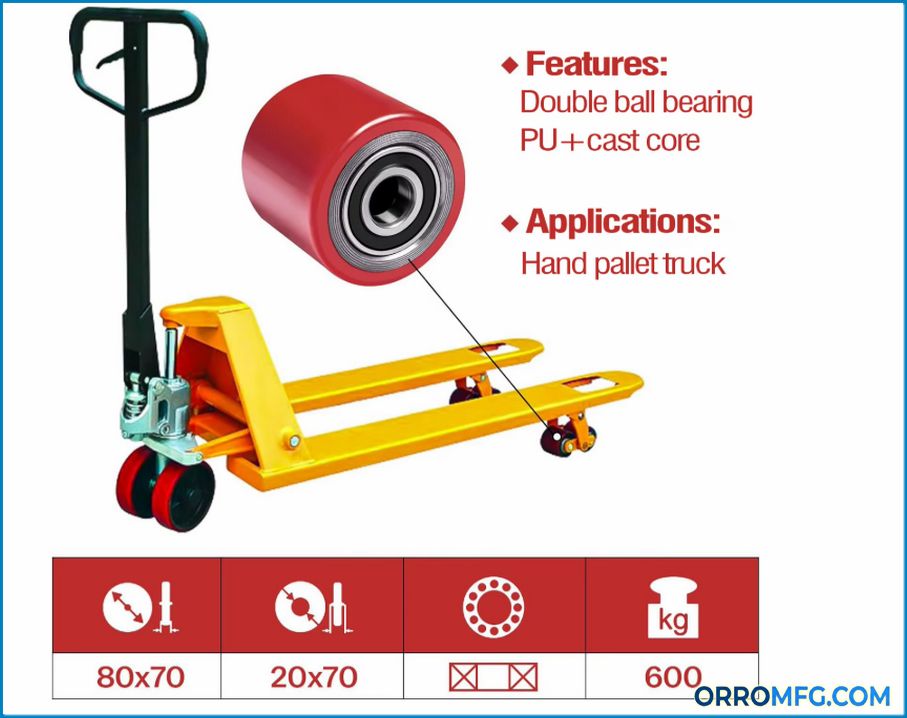
- Heavy Load Capacity: The 80 mm series is rated up to 600 kg per wheel, which covers standard 2-3 tonne pallet trucks sharing load across the wheels.
- Maintenance-Free: No greasing, no bearing adjustment and no re-truing — the wheel is replaced as a unit when the tread wears out.
- Flat Tread Profile: A full-width flat contact patch spreads the load, keeps the truck stable and avoids the grooving that narrow wheels cause on soft floors.
Specifications
| Parameter | Standard | Notes |
|---|---|---|
| Wheel outside diameter | 80 mm | |
| Wheel width | 60 / 70 / 80 / 90 / 100 mm | Select to match the truck hub and fork width |
| Hub width | 80 mm | |
| Bearing | 6204 sealed ball bearing | 20 mm bore, 47 mm outside diameter, 14 mm width |
| Bearing seat | 47 mm | Machined into the cast iron hub |
| Shaft bore | 20 mm | Matches a 20 mm axle or spindle |
| Core material | Cast iron | 45# steel available |
| Tyre material | Polyurethane, 95 Shore A | 93-98 A available on request |
| Tread profile | Flat | |
| Load capacity | Up to 600 kg per wheel | Series maximum; confirm for your speed and duty cycle |
| Wheel weight | Approx. 1.3-1.5 kg | Depends on width |
| Colour | Red, cream, black, yellow | Colour coding for fleet or size identification |
| Brake | Not included | Wheel only; brake assemblies quoted separately |
| Thread guard | Not included | Available as an accessory |
Build and Bearing
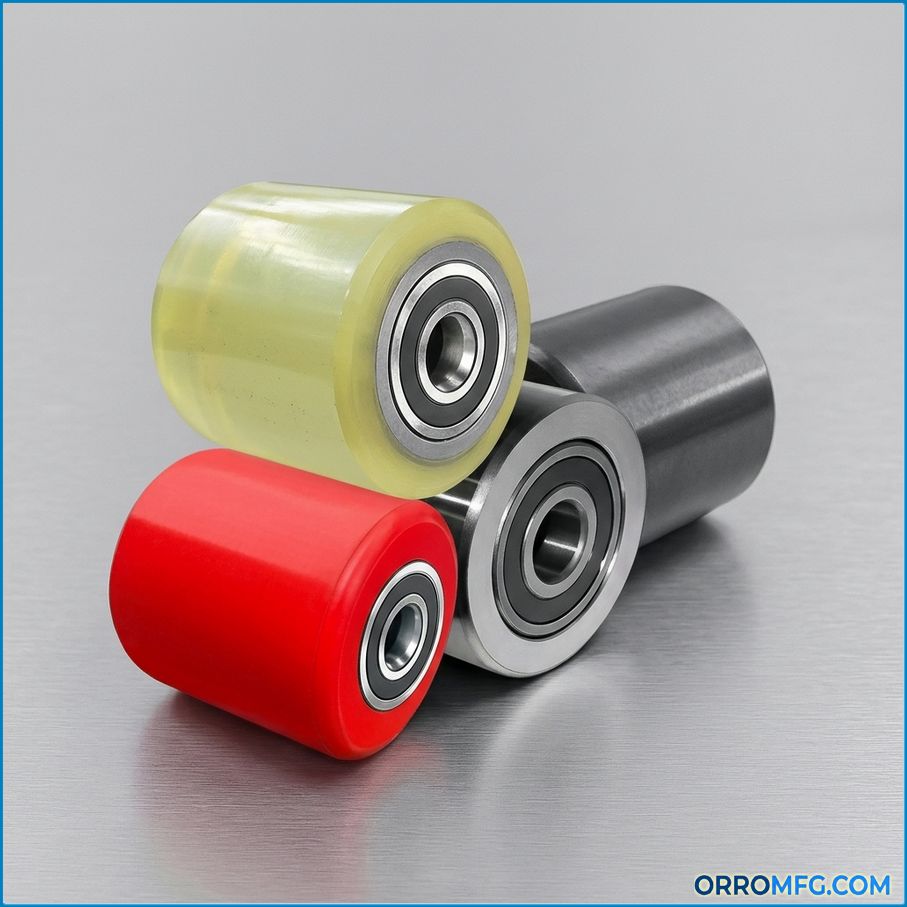
Each wheel starts as a cast iron hub that is turned to the final hub width, faced on both sides and bored for the bearing seat. The bore has to be square to the tread face: a bearing that sits a fraction of a degree off-axis makes the wheel run at an angle, and on a pallet truck that shows up as a truck that crabs sideways and a tyre that wears on one edge.
The hub is then grit-blasted and primed before the PU is cast around it. Bond strength comes from that preparation, not from the polyurethane itself, which is why debonding is almost always a process fault rather than a material fault. After curing, the tread is ground flat to the finished diameter and the edges are cleaned up, so the contact patch is even across its full width.
The 6204 bearing is a 20 mm bore, 47 mm outside diameter, 14 mm width deep-groove ball bearing — the size most pallet truck and stacker axles are built around, and the reason this wheel drops into existing trucks without an adapter. Bearings are sealed and pre-greased, so the wheel runs dry. On 80 mm and wider wheels the hub is normally built to take a bearing at each side, sharing the load and keeping the tread square to the floor.
Sizes and Width Selection
| Width (mm) | Typical use | Character |
|---|---|---|
| 60 | Light hand pallet trucks, low-clearance forks | Narrowest contact patch, easiest turning |
| 70 | Standard hand pallet trucks | The most common replacement size |
| 80 | Hand and electric pallet trucks | Balanced contact area and capacity |
| 90 | Electric pallet trucks, stackers | Better stability under off-centre loads |
| 100 | Heavy electric trucks, rough or uneven floors | Widest patch, lowest floor pressure |
All widths share the same 80 mm outside diameter and 20 mm shaft bore, so a truck can be re-wheeled to a wider size where floor pressure is the problem, as long as the fork and hub width allow it. Wider is not automatically better: a wider wheel carries more load per unit of floor pressure but adds rolling resistance and scrub when the truck turns, which matters on tight aisles.
Applications
Manual and Electric Pallet Trucks
The core application: 80 mm load wheels under the forks of hand pallet trucks, electric pallet trucks and semi-electric stackers. The hard PU tread rolls easily on sealed concrete and epoxy, carries the pallet load without flat-spotting, and leaves no rubber marks in the aisle.
Warehouse and Logistics Equipment
In distribution centres the same wheel is used on towing tractors, order pickers, scissor lifts and cart casters. Sealed bearings tolerate dust and cardboard debris, and the non-marking tread keeps pick-face floors presentable.
Manufacturing Plants
On production floors, PU load wheels move stillages, die carts and assembly fixtures. They resist swarf, coolant and oil spills that would swell a rubber wheel, and their flat tread keeps the cart stable when it is pushed over floor joints and drainage covers.
Food and Beverage Plants
Washdown areas, cold rooms and bottling halls are hard on wheels: water, cleaning chemicals and temperature swings. PU holds its hardness in wet service better than rubber, does not leave marks, and can be supplied in light colours so that debris is visible during hygiene checks.
Construction Sites and Workshops
Abrasive grit, expansion joints and offcuts are the enemies of soft wheels. The cast iron core takes the impact and the hard PU tread takes the abrasion, which is why these wheels also turn up on site trolleys, generator carts and mobile scaffolding.
Floor and Operating Conditions
- Floors: Sealed concrete, epoxy, tile, vinyl and steel plate. Avoid running PU over loose gravel or exposed aggregate, which cuts the tread.
- Temperature: -20°C to +70°C continuous; PU stiffens in cold stores and softens above 70°C. Hot washdown and steam cleaning directly on the wheel are not recommended.
- Load: Up to 600 kg per wheel for the 80 mm series. Capacity falls with speed, uneven floors and high duty cycles — a wheel that carries 600 kg in a slow hand truck is not rated the same on a fast electric truck.
- Speed: Walking speed and low-speed electric truck duty. Above roughly 6 km/h, heat build-up and scrub increase wear sharply.
- Chemicals: Resistant to mineral oils, greases, hydraulic fluid and most cleaning detergents; not for ketones, strong acids or continuous hot water.
- Maintenance: No lubrication. Inspect for tread wear and bearing noise; replace the wheel as a unit when the tread is visibly worn or the bearing feels rough.
- Floor protection: Non-marking and non-scratching. Hard PU is quieter than steel and nylon and does not leave the black rubber transfer that soft rubber wheels do.
Material Comparison
| Material | Floor Protection | Rolling Resistance | Noise | Load Capacity | Wet / Oily Floors | Best For |
|---|---|---|---|---|---|---|
| Polyurethane (PU) | Excellent | Low | Low | High | Excellent | General warehouse duty with floor protection |
| Nylon (PA) | Good | Very Low | Medium-High | High | Fair (slips when wet) | Smooth floors, low rolling resistance, high push loads |
| Rubber | Good | High | Very Low | Medium | Fair | Quiet transport on smooth floors, light loads |
| Cast Iron / Steel | Poor | Low | High | Very High | Fair | Rough floors, high temperature, heaviest loads |
Choose PU pallet truck wheels when:
- The floor must stay unmarked — sealed concrete, epoxy, tile or showroom surfaces
- The truck runs on wet, oily or washdown floors and must keep grip
- Noise needs to stay low in a warehouse or retail back-of-house
- Loads are heavy but the floor is not rough enough to justify steel
- Long tread life matters more than the lowest possible rolling resistance
Customization Options
- Tyre Hardness: 93-98 Shore A standard range; softer compounds for very smooth floors, harder for abrasive sites
- Width: 60, 70, 80, 90 and 100 mm as standard; intermediate widths on request
- Core Material: Cast iron standard; 45# steel and alternative hub profiles available
- Bearing: 6204 sealed ball bearings as standard; open, shielded or branded bearings on request
- Tread: Flat as standard; slight crown for uneven floors and grooved treads for wet or contaminated floors
- Colour: Red, cream, black, yellow and custom colours for fleet or width coding
- Marking: Laser or moulded OEM marking, part numbers and batch codes
- Accessories: Thread guards, axle adapters and brake assemblies quoted alongside the wheel
- Packaging: Bulk cartons, pallet quantities and individual retail packs
Quality Assurance
ORRO manufactures PU pallet truck wheels within an ISO 9001:2015 certified quality management system. Cast iron hubs are checked for bore size, hub width and face squareness before bonding, and polyurethane prepolymer is verified for hardness and cure on receipt. Bonding, curing and grinding parameters are recorded per batch so that tread hardness, outside diameter and bond integrity can be traced back to the material lot.
Final inspection covers 100% dimensional verification of the outside diameter, hub width and bearing seat, with hardness checked on every batch and bond shear testing on sample wheels. Load and rolling tests are run on new core and tyre combinations before release, and CMM reports are available for OEM programmes. Wheels ship with material certificates, inspection reports and batch traceability, and first article inspection reports are provided for new tooling.
Ordering Information
- Confirm the truck make and model, or send the existing wheel dimensions: outside diameter, width, hub width and bearing number.
- Tell us the load per wheel, the floor type and whether the truck runs wet or oily.
- We confirm tyre hardness, core material, bearing and colour, and quote against the exact width.
- Samples can be supplied for trial fitting before a production order.
Standard widths ship in 7-15 working days from confirmed order; custom colours, marking and core profiles take 15-25 working days depending on bearing supply.
Frequently Asked Questions
Will this wheel fit my hand or electric pallet truck?
If your truck uses an 80 mm load wheel with a 20 mm axle and a 47 mm bearing seat, yes — that is the 6204 platform this wheel is built on. Check the hub width against our 60, 70, 80, 90 and 100 mm options, or send the truck model and we will confirm the match.
What does the 6204 bearing mean, and why is 47 mm quoted?
6204 is the bearing size: 20 mm bore, 47 mm outside diameter, 14 mm width. The 47 mm figure in supplier data is the bearing seat in the hub, not the shaft bore — the axle that goes through the wheel is 20 mm. Confusing the two is the most common ordering mistake on these wheels.
Which width should I choose — 60, 70, 80, 90 or 100 mm?
Match the existing hub width first, then consider duty. 70 mm is the standard hand pallet truck size. Go wider (90-100 mm) for electric trucks, off-centre loads or soft floors that need lower pressure; go narrower (60 mm) only where fork clearance is tight.
How much load can one wheel carry?
The 80 mm series is rated up to 600 kg per wheel. That rating assumes a smooth floor, low speed and normal duty; reduce it for rough ground, fast electric trucks or continuous multi-shift use. Tell us the truck capacity and number of load wheels and we will confirm a safe figure.
PU or nylon for pallet truck load wheels?
PU grips wet and oily floors, protects the floor and runs quieter. Nylon rolls with lower resistance and is harder wearing on smooth floors, but it is noisier and loses grip when the floor is wet. Most warehouse operators choose PU; pick nylon only for clean, dry, smooth floors and high push loads.
Will these wheels mark or scratch my floor?
No. PU is non-marking on sealed concrete, epoxy, tile and vinyl, and does not leave the black transfer that soft rubber wheels do. On very soft or newly laid floor coatings, a harder 98 A compound spreads the load better than a soft one.
Can the wheels run in cold stores or washdown areas?
Yes, within limits: -20°C to +70°C continuous, and water, detergents and most cleaning chemicals are acceptable. Avoid steam cleaning directly on the wheel and avoid continuous hot water above roughly 50°C, which attacks polyurethane over time.
What is the minimum order quantity and lead time?
100 pieces per size and colour for a trial order. Standard widths ship in 7-15 working days; custom colours, OEM marking or a different core profile take 15-25 working days. Sample wheels can be supplied before a production order.
What warranty applies?
Wheels carry a 12-month warranty against material defects and premature tread or bond failure under the stated operating conditions, backed by 24-hour technical support on fitment, load rating and floor selection.
Related Products
- PU Guide Wheel — compact guide wheels with built-in bearings for automation
- PU Roller — coated conveyor drive, idler and nip rollers
- PU Sleeve Bearing — load-bearing sleeves for rotating shafts
- PU Flexible Bushing — shock-isolating sleeves and bushings
- PU Scraper Blade — wear-resistant blades for packaging lines
- Polyurethane material guide — hardness, chemistry and selection advice
Send your wheel dimensions or truck model for a same-day quote. Tell us the load per wheel and the floor type, and our engineering team will confirm width, hardness, core material and bearing.