Overview
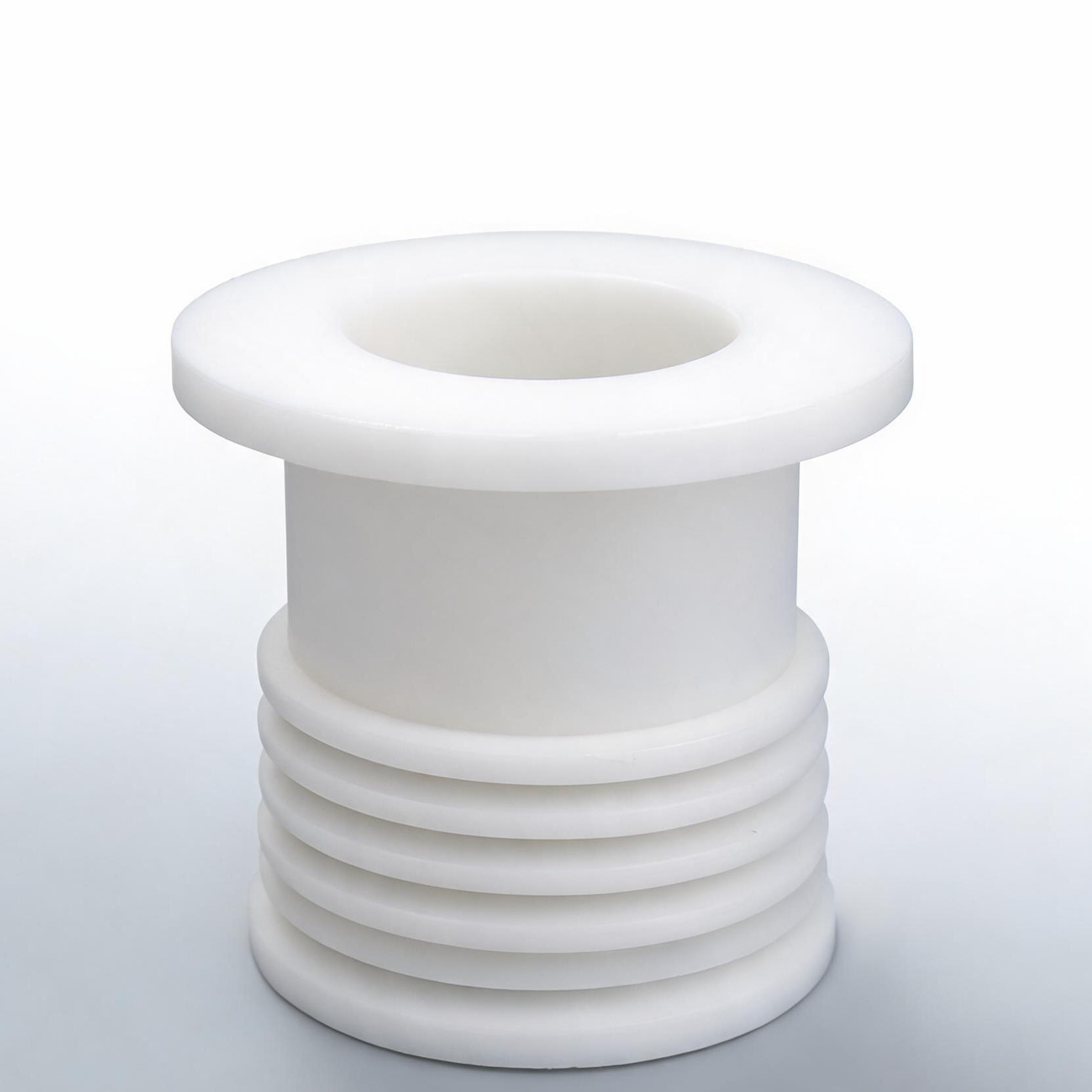
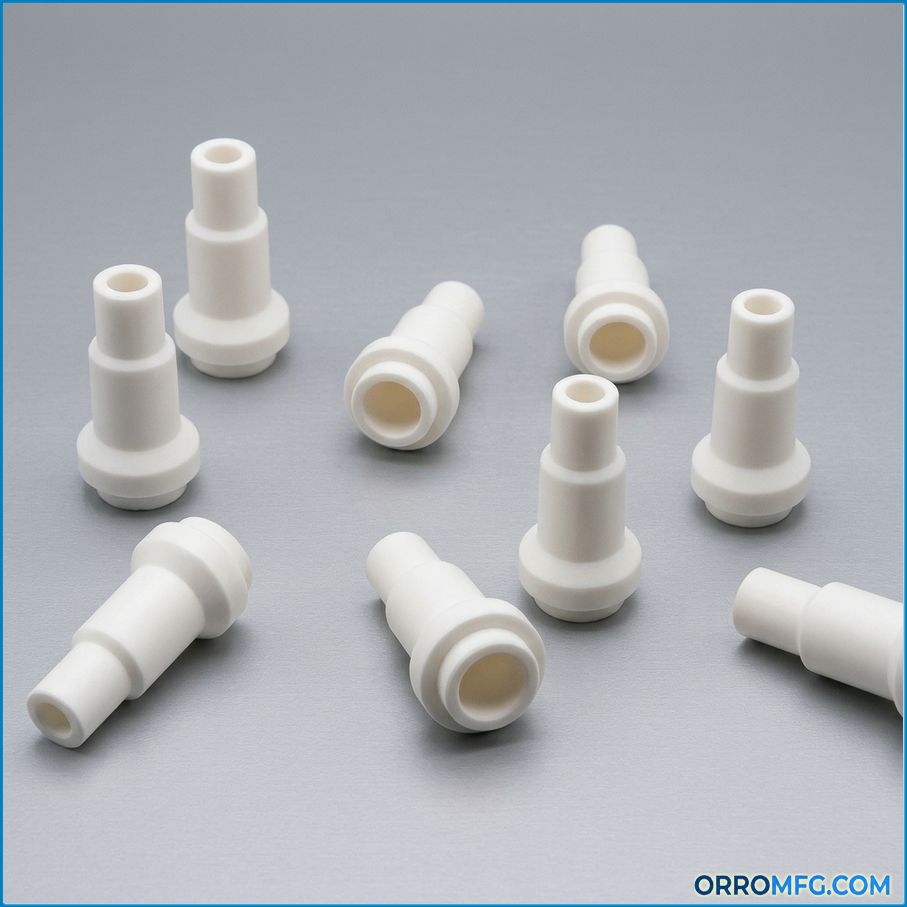
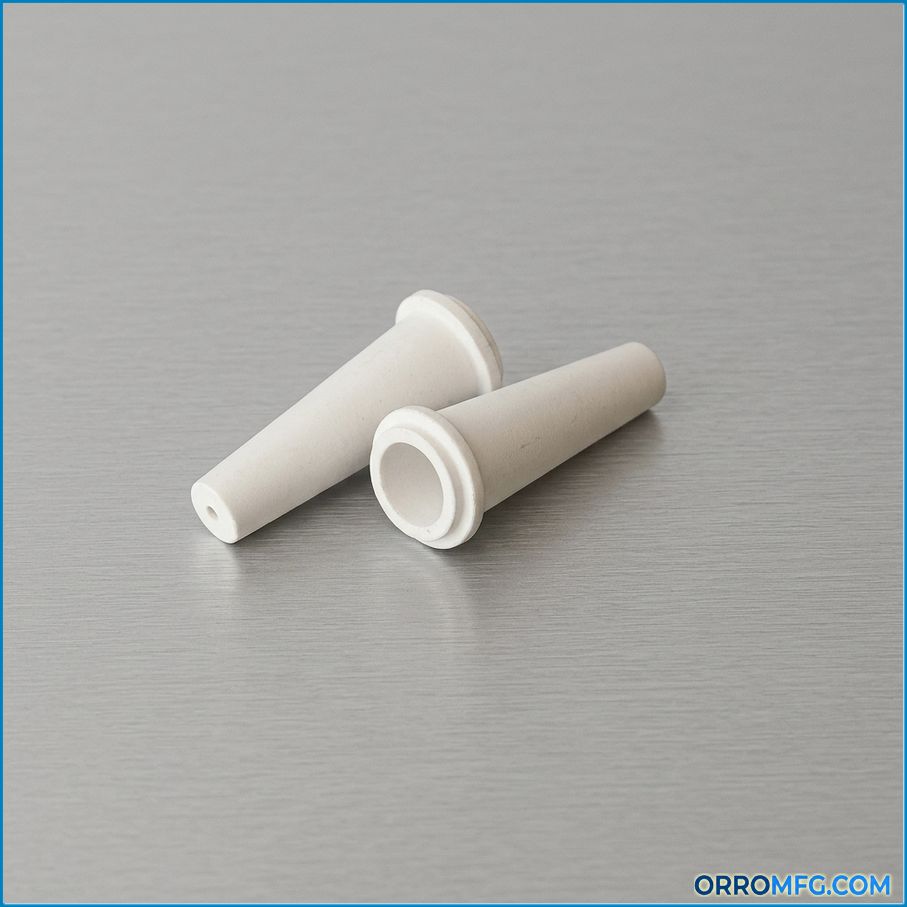
A flanged nozzle insert is a machined ceramic body that drops into a metal housing and wears instead of the housing. It has four features that matter: a neck that enters the housing bore, a shoulder that locates it, a flat seat face that seals against the body, and a flange that stops it being pushed through by the flow. The bore runs through all four and is what sets the spray or the metering.
The flange is the reason these exist. A threaded ceramic insert has to be turned into a metal thread, and every time it is removed and refitted the thread takes the wear. A flanged insert is held by the housing itself — a retaining cap, a clamp or a press fit — so nothing turns against the ceramic, and the part that wears is the bore rather than the fixing.
How the Fit Works
Each diameter does one job, and confusing them is the usual reason a replacement does not fit:
| Feature | What it does | What to specify |
|---|---|---|
| Neck | Enters the housing bore and centres the insert | Neck OD with its fit (press, slip or clearance) |
| Shoulder | Stops the insert at depth | Shoulder diameter and the depth it registers at |
| Seat face | Seals against the metal body | Flatness and surface finish |
| Flange | Retention — stops the insert being pushed out | Flange OD and thickness, and how the housing retains it |
| Bore | Flow, spray angle or metering | Diameter, tolerance, and whether straight, tapered or stepped |
Two fits are common. A press fit holds the insert on the neck alone and relies on interference; it is the cheapest and needs the housing bore and the neck OD toleranced against each other. A slip fit with a retaining cap holds the insert on the flange and lets it be changed without pressing, which is what most serviceable equipment uses.
What the Bore Controls
The bore is the working feature, and on a worn part it is usually the only dimension that has changed. Three profiles cover most of what we quote:
- Straight bore — a metering or jet orifice. Flow follows the fourth power of the diameter, so a bore that has worn from 1.00 mm to 1.05 mm passes about 21% more, which is why these parts are replaced on flow rather than on appearance.
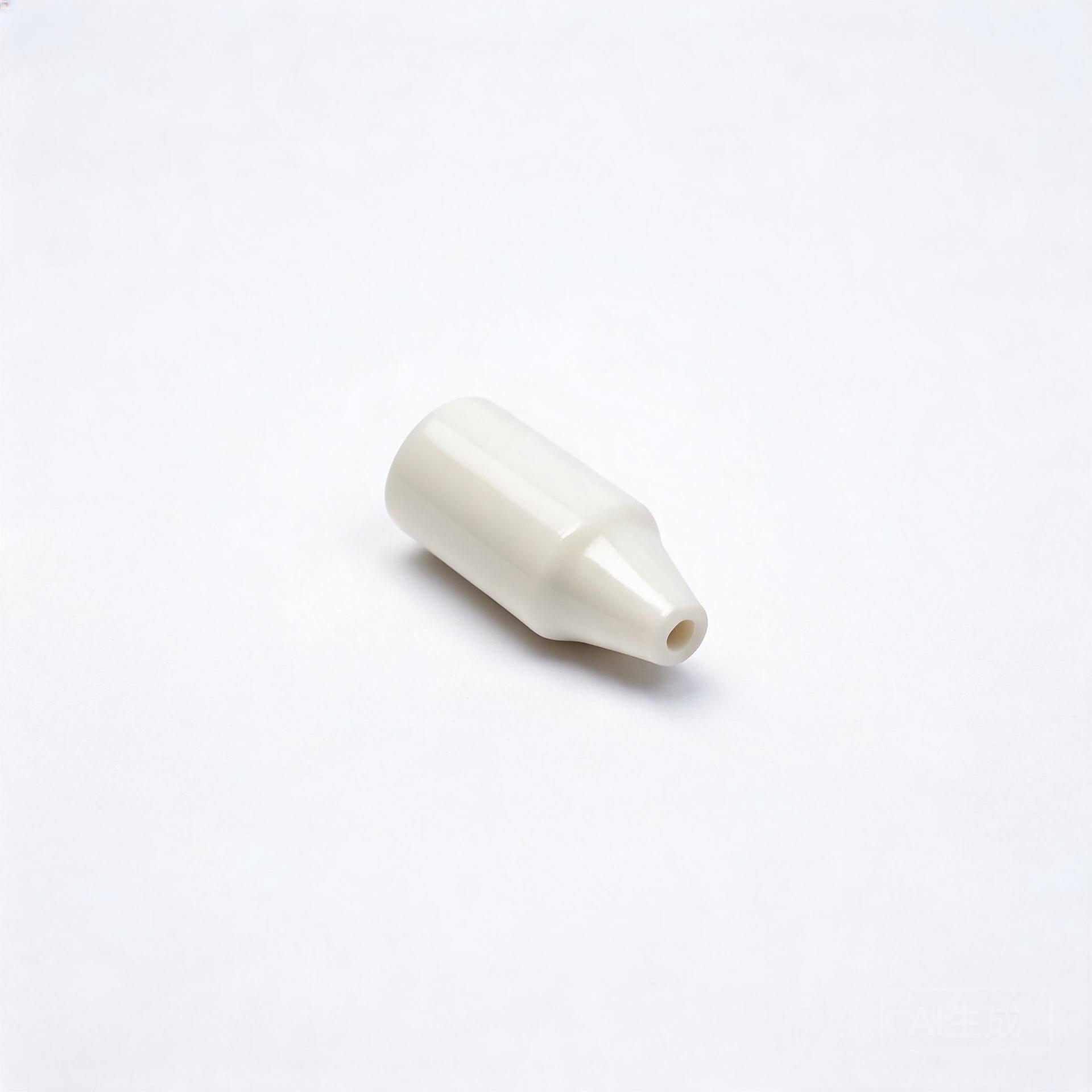
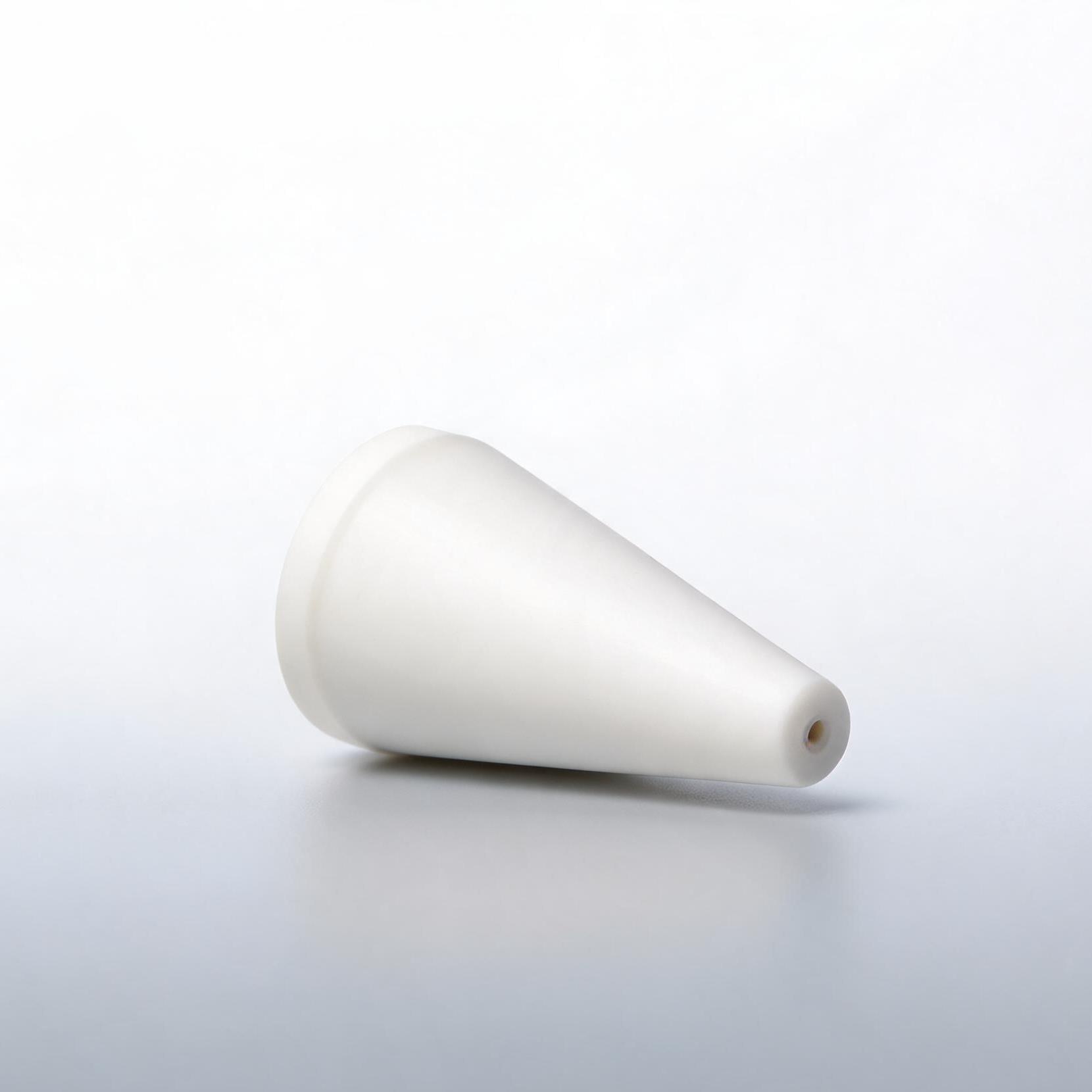
- Tapered bore — a spray or blast insert. The taper sets the spray angle and keeps the walls from being eroded at the exit.
- Stepped bore — a metering section followed by a relief. The step is where abrasive slurry or loaded liquid accelerates, so it is the first place to look when an insert fails early.
The entrance matters as much as the throat. A sharp entrance edge chips; a 0.2–0.3 mm chamfer or a small radius at the inlet is what keeps the bore intact through handling and cleaning.
Tolerances We Machine To
These are ground after sintering, not moulded, so there is no tooling charge and no minimum that comes from a mould:
| Feature | Typical tolerance | Method |
|---|---|---|
| Bore diameter | ±0.005 mm | Diamond grinding |
| Bore roundness | 0.003 mm | Ground in one pass |
| Bore surface finish | Ra 0.4 – 0.8 µm | Ground and lapped |
| Flange flatness | 0.02 mm | Lapped seat face |
| Concentricity, bore to neck OD | 0.01 mm | Ground from the bore |
| Perpendicularity, flange to bore | 0.01 mm | Ground from the bore |
The bore is ground first and the outside is turned from it, rather than the other way round. That is what keeps the bore concentric with the neck that centres the insert in the housing — if the part is held on its outside and the bore is drilled afterwards, the two are never truly aligned.
For parts that are not metering anything — a blast insert, a deflector — an as-sintered bore at ±0.02 mm is usually enough and costs less.
Materials
| Grade | Al2O3 | Density | Best for |
|---|---|---|---|
| 95% alumina | 95% | ≥3.65 g/cm³ | General spray and blast inserts, lowest cost |
| 99% alumina | 99% | ≥3.85 g/cm³ | Metering orifices, chemical and wash-down duty |
| 99.7% alumina | 99.7% | ≥3.90 g/cm³ | Semiconductor, high-purity and plasma duty |
| Zirconia (3Y-TZP) | — | 6.0 g/cm³ | Impact and thermal cycling, where alumina chips |
Alumina is the default because it is hard, cheap and electrically insulating. Zirconia is used where the insert sees impact or rapid temperature change rather than steady abrasion — its fracture toughness is roughly twice that of alumina, at about three times the price and with lower hardness.
Neither material is a wear guarantee on its own. A 99% insert running abrasive slurry at high velocity will still wear; the question is whether the bore wears evenly or chips at the entrance, and that is decided by the inlet geometry more than by the grade.
Typical Applications
- Spray nozzles — agricultural, coating and cooling heads where the insert is replaced and the body is kept
- Air and air-liquid blow-off — drying, cleaning and parts ejection lines
- Dispensing and metering — adhesives, lubricants and two-part mixing heads where the orifice sets the dose
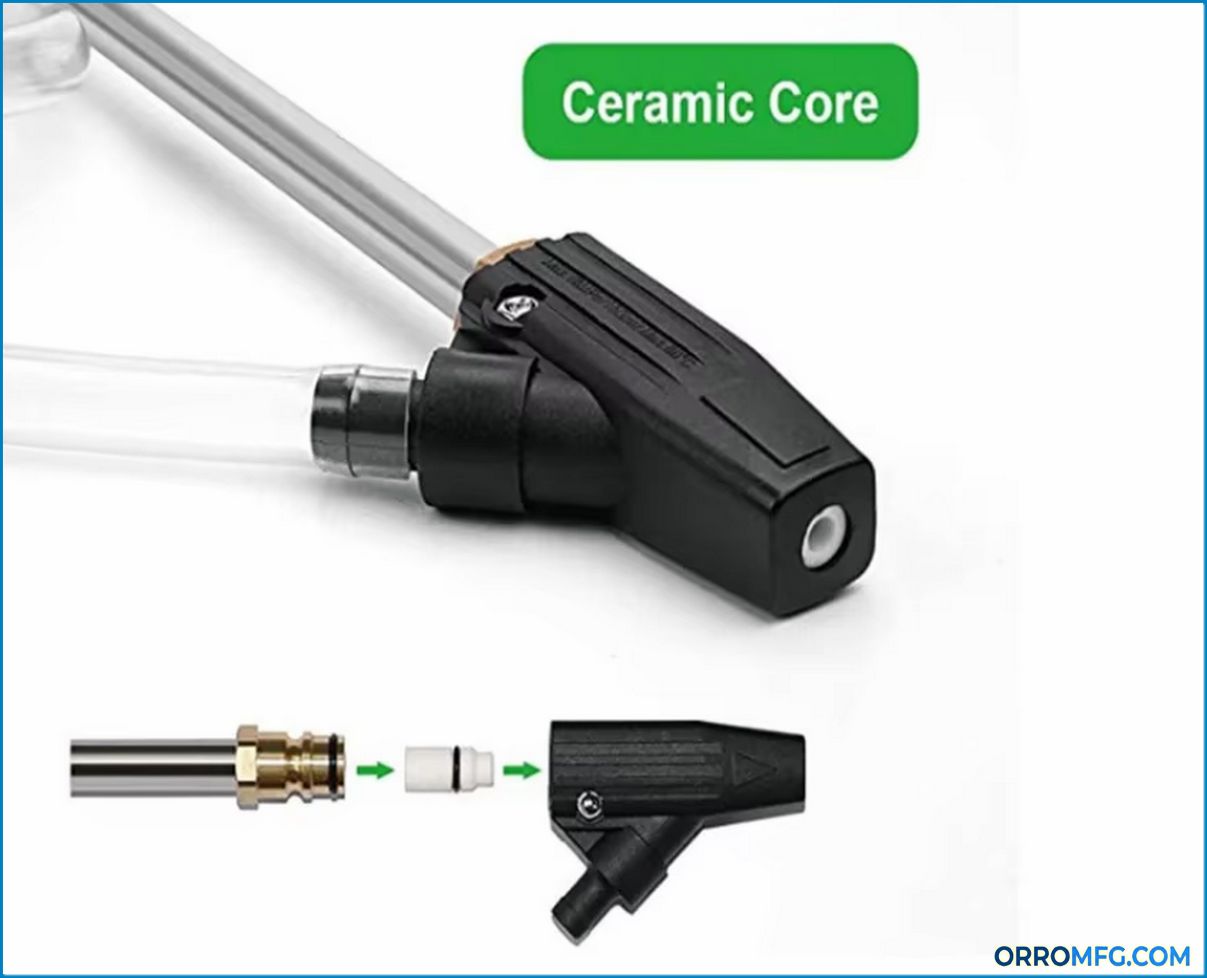
- Abrasive blasting — the insert wears instead of the nozzle body
- Water and chemical injection — where a metal orifice would corrode or erode
What to Send for a Quote
A drawing is ideal, but a worn part plus the housing is enough to work from:
- Bore diameter and tolerance, and the bore profile (straight, tapered or stepped)
- Neck OD and the housing bore it fits, with the fit you want — press, slip or clearance
- Flange OD and thickness, and how the housing retains it
- Overall length, seat face position and concentricity callout
- Material grade, and the medium the bore will see
Files we accept: PDF, DWG, DXF, STEP, IGES, X_T, or a physical sample. If you only have the housing, send that and we will measure it and propose the insert dimensions.
MOQ is 100 pcs per part number. Samples run 7–10 working days; production is 15–20 working days after drawing approval.
Related
- Ceramic nozzles — sandblasting, spray and waterjet forms
- Zirconia ceramic nozzles — where impact toughness matters more than hardness
- TIG welding ceramic cups — the threaded cup form for welding torches
FAQ
Why use a flange instead of a thread? A thread in ceramic is the weakest part of the design: it chips, it wears every time the part is changed, and it needs a matching metal thread on the housing. A flange is retained by the housing with a cap or clamp, so the ceramic is never turned against metal and the only wearing surface is the bore.
Can you make an insert to replace a metal one? Yes, and it is one of the most common jobs. Send the metal insert or the housing, and the neck, shoulder and flange are matched to the existing bore so the ceramic part drops in. If the housing bore is worn oval, we will say so rather than quote an insert that will not seat.
What bore tolerance can you hold? ±0.005 mm on a ground bore, with 0.003 mm roundness, down to about 0.3 mm diameter. Below that the bore is drilled and lapped rather than ground, and the tolerance is quoted per part.
Can the flange be keyed to stop rotation? Yes. A flat, a tab or a notch in the flange is common on spray inserts where a fan pattern has to stay aligned. Send the angle or the keyway position and it is machined into the flange.
How do I know when the insert is worn out? On a metering insert, check the flow or the spray pattern rather than the part. When flow has risen noticeably at the same pressure, the bore has opened up. On a blast insert, look for a bore that has gone oval or a chipped entrance — both change the pattern before the part fails visibly.