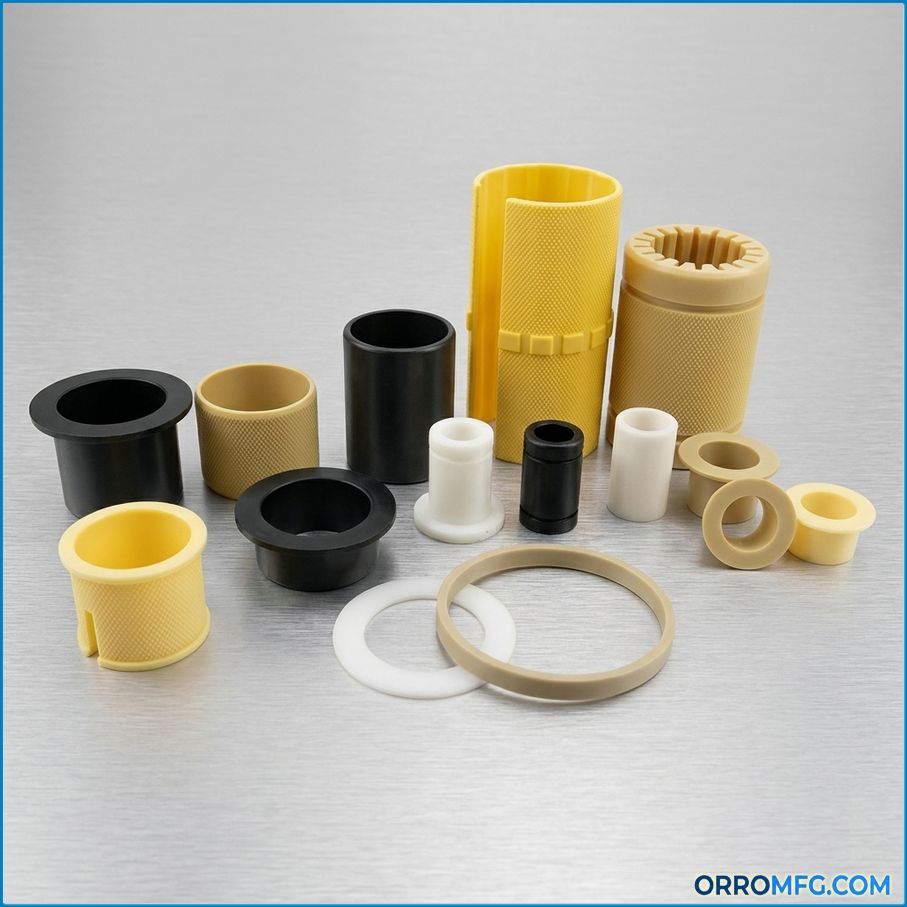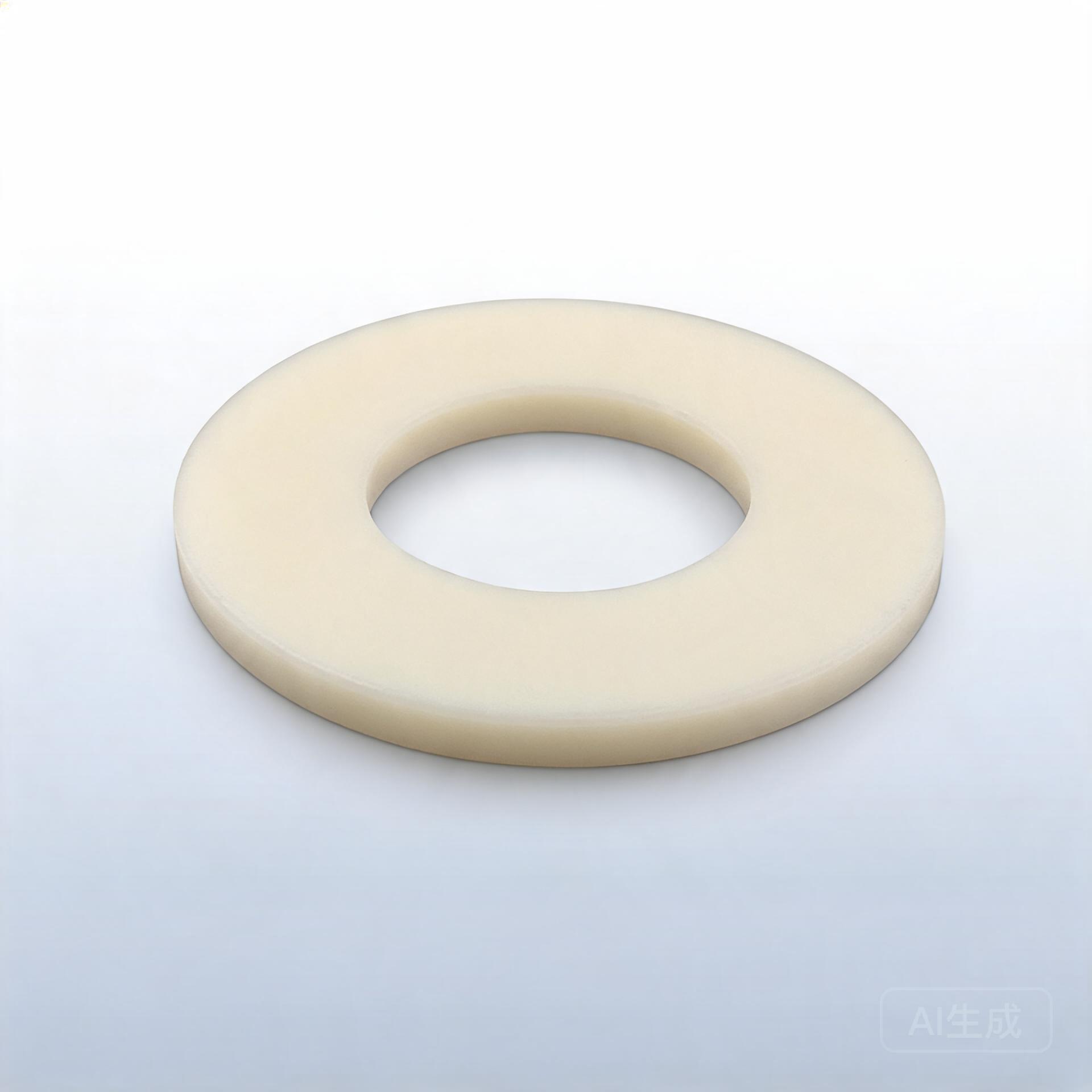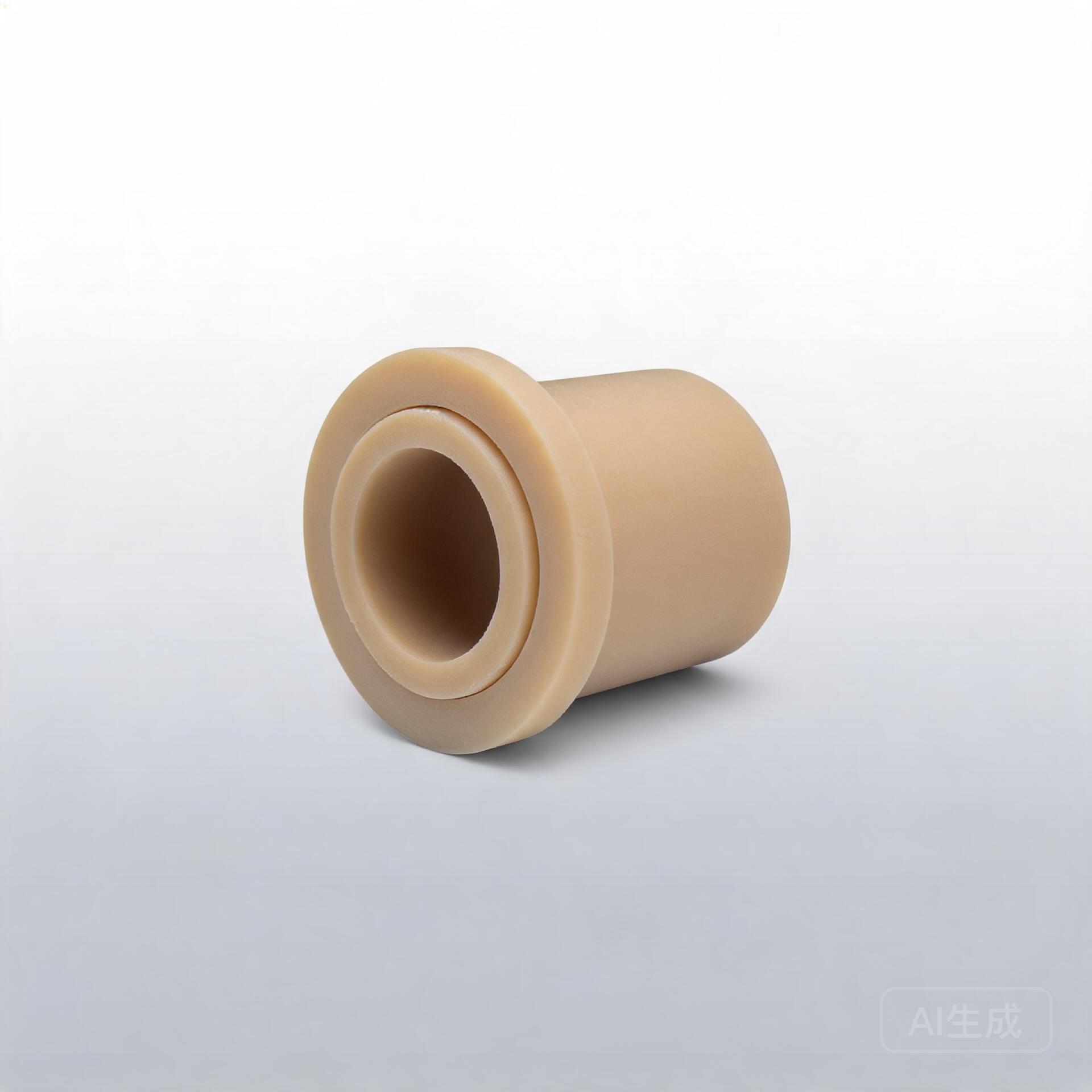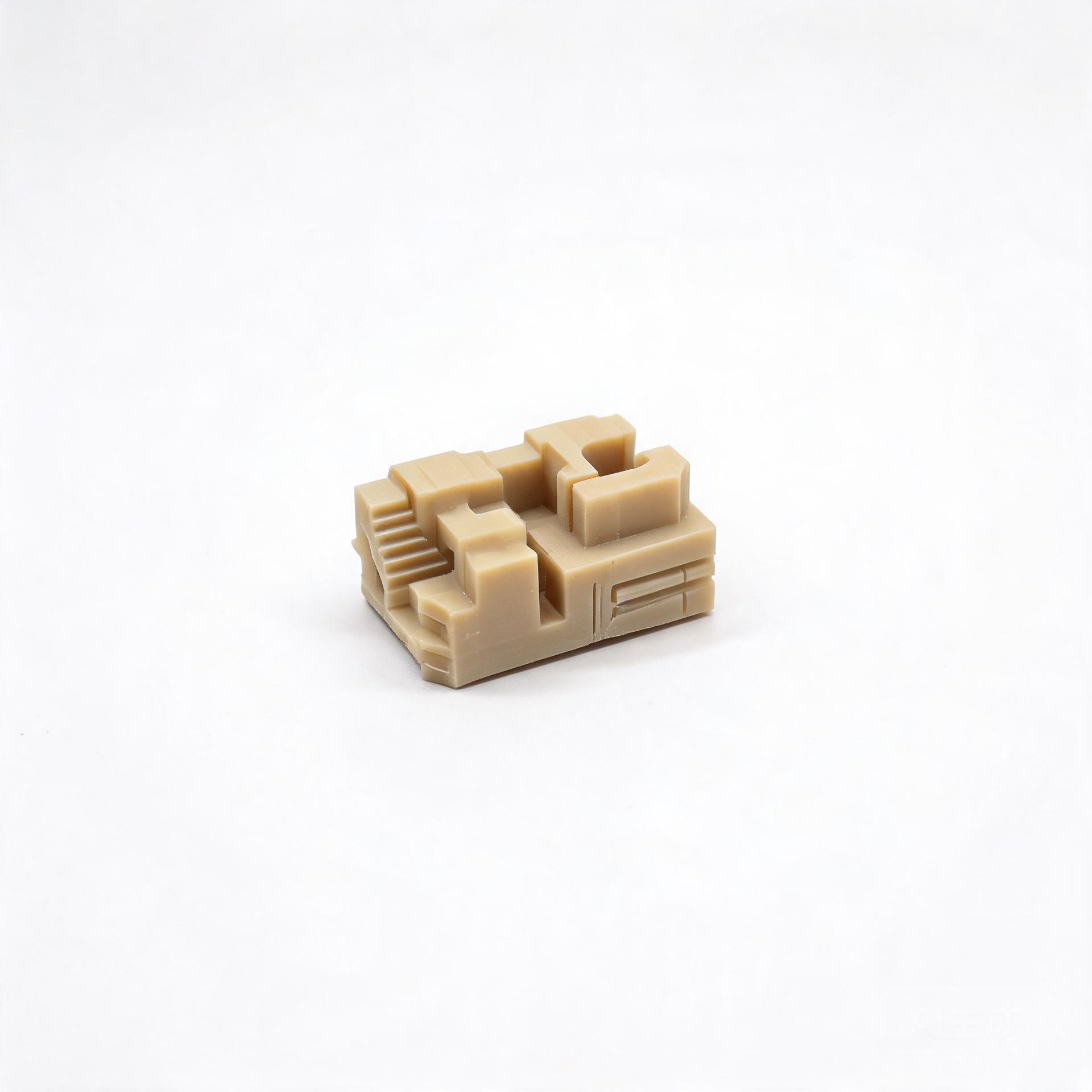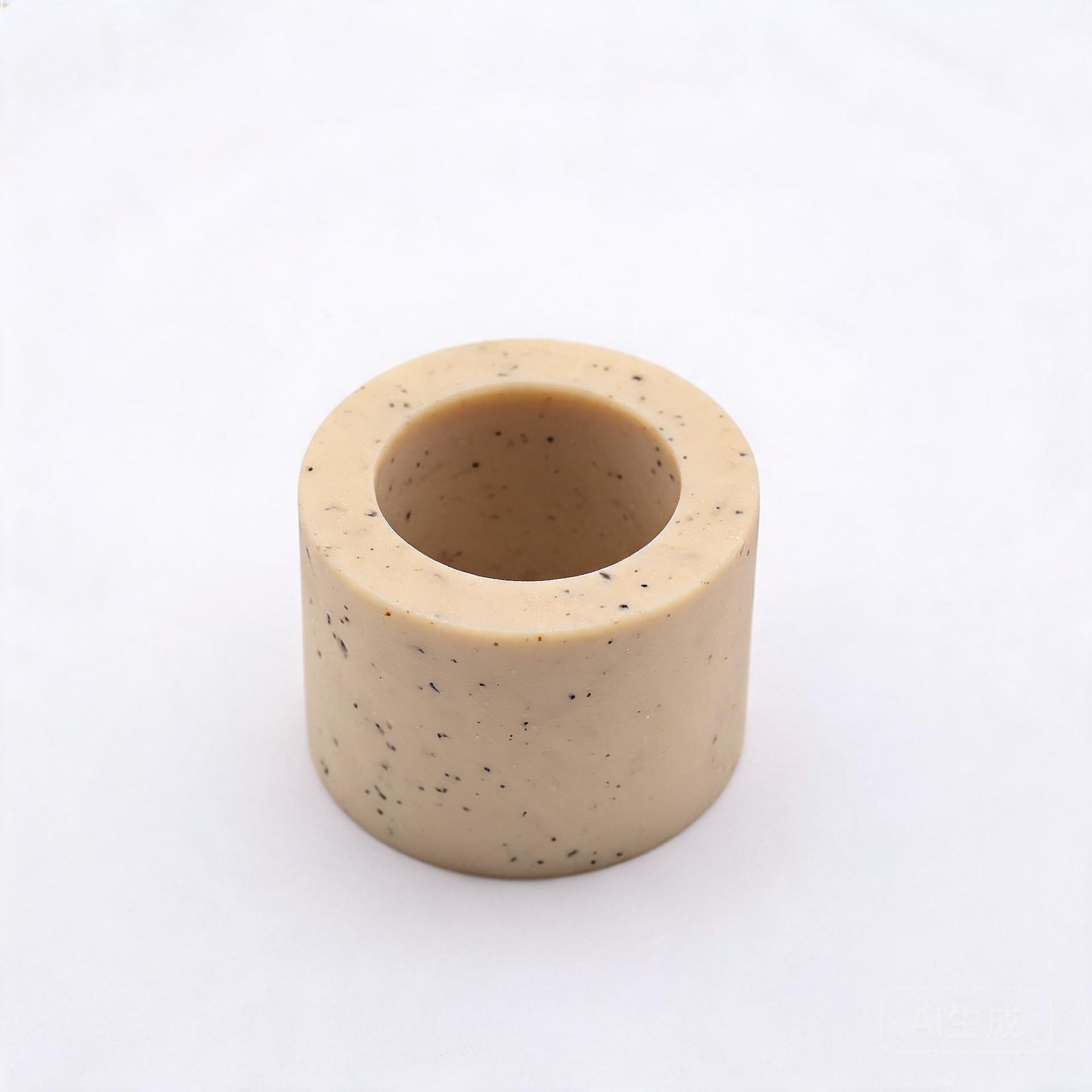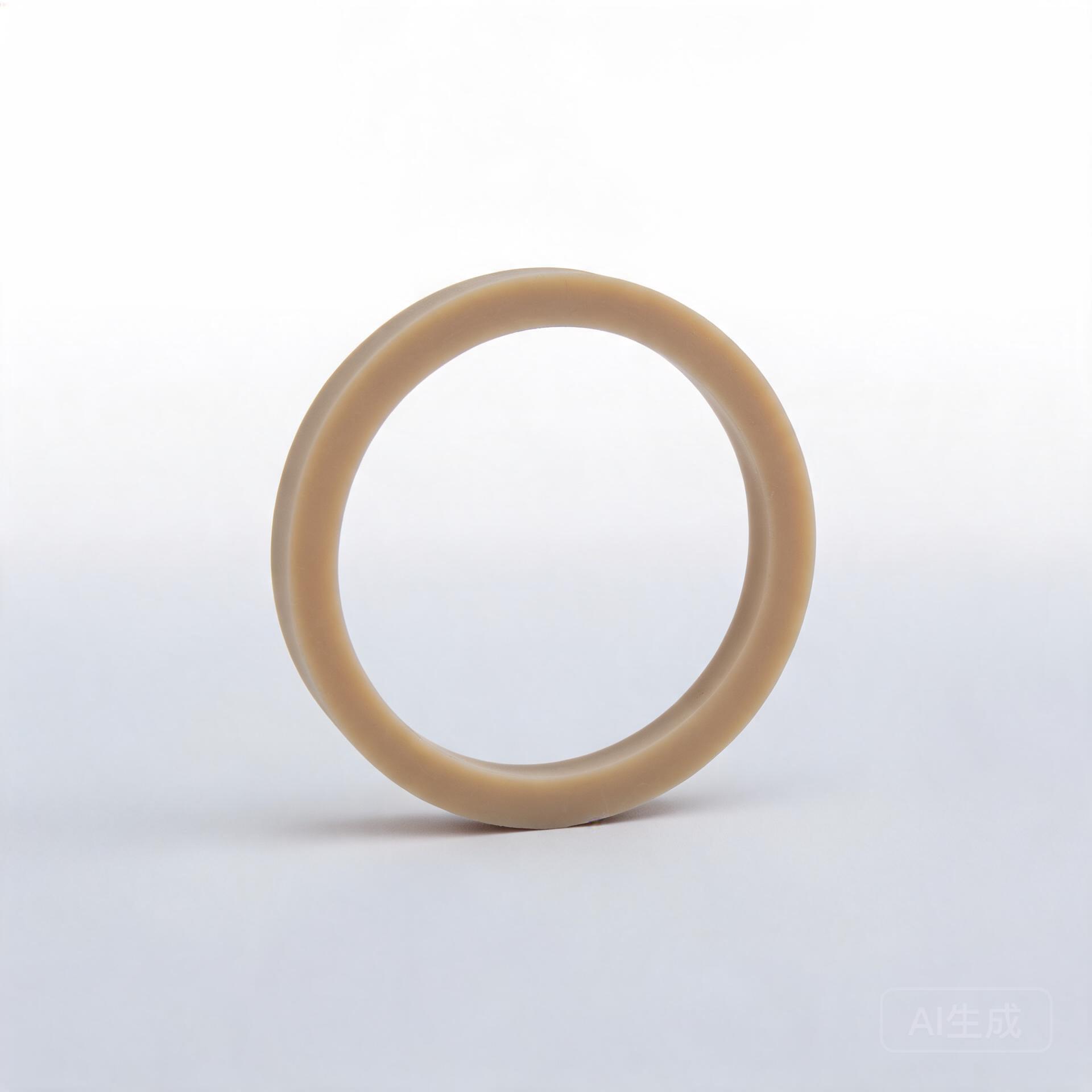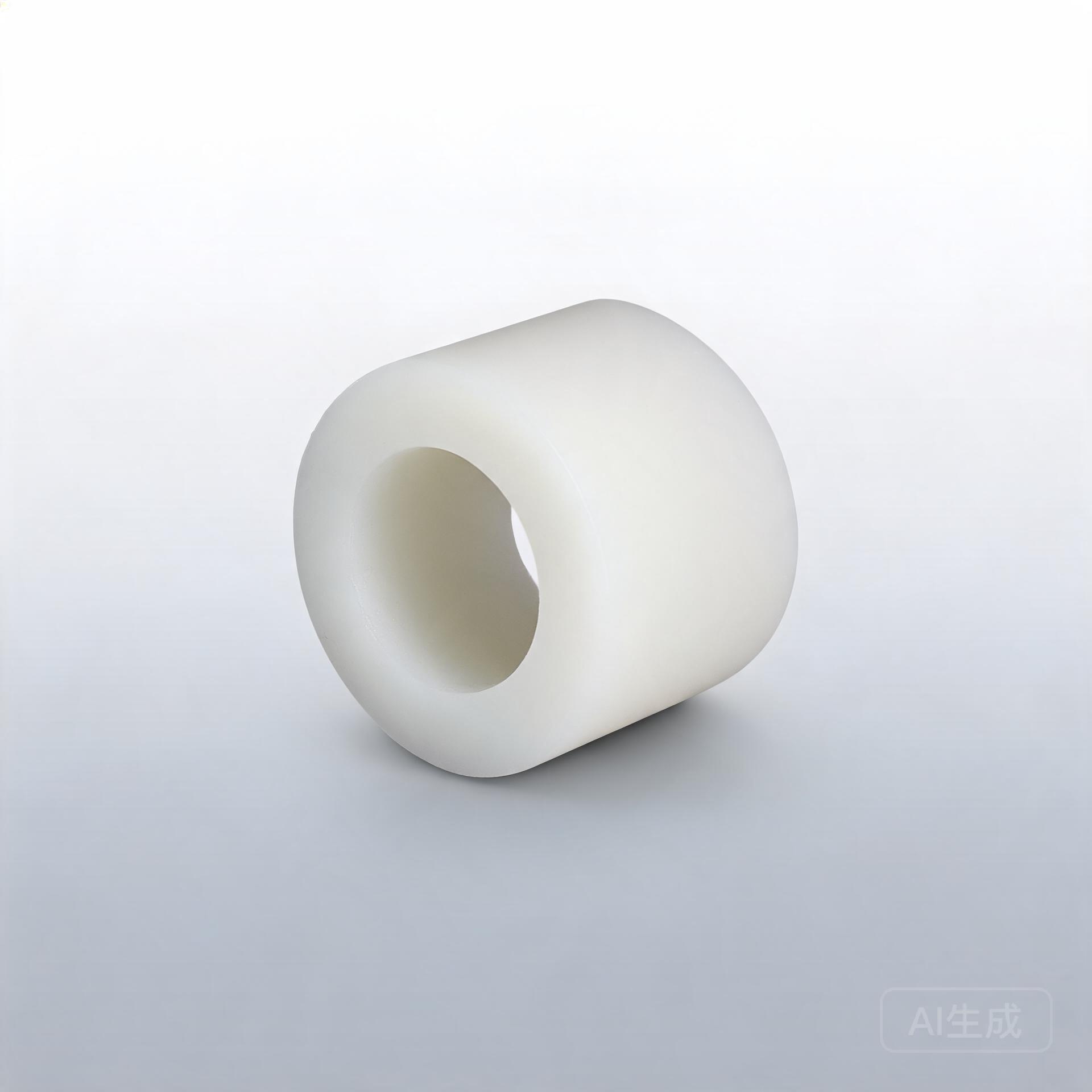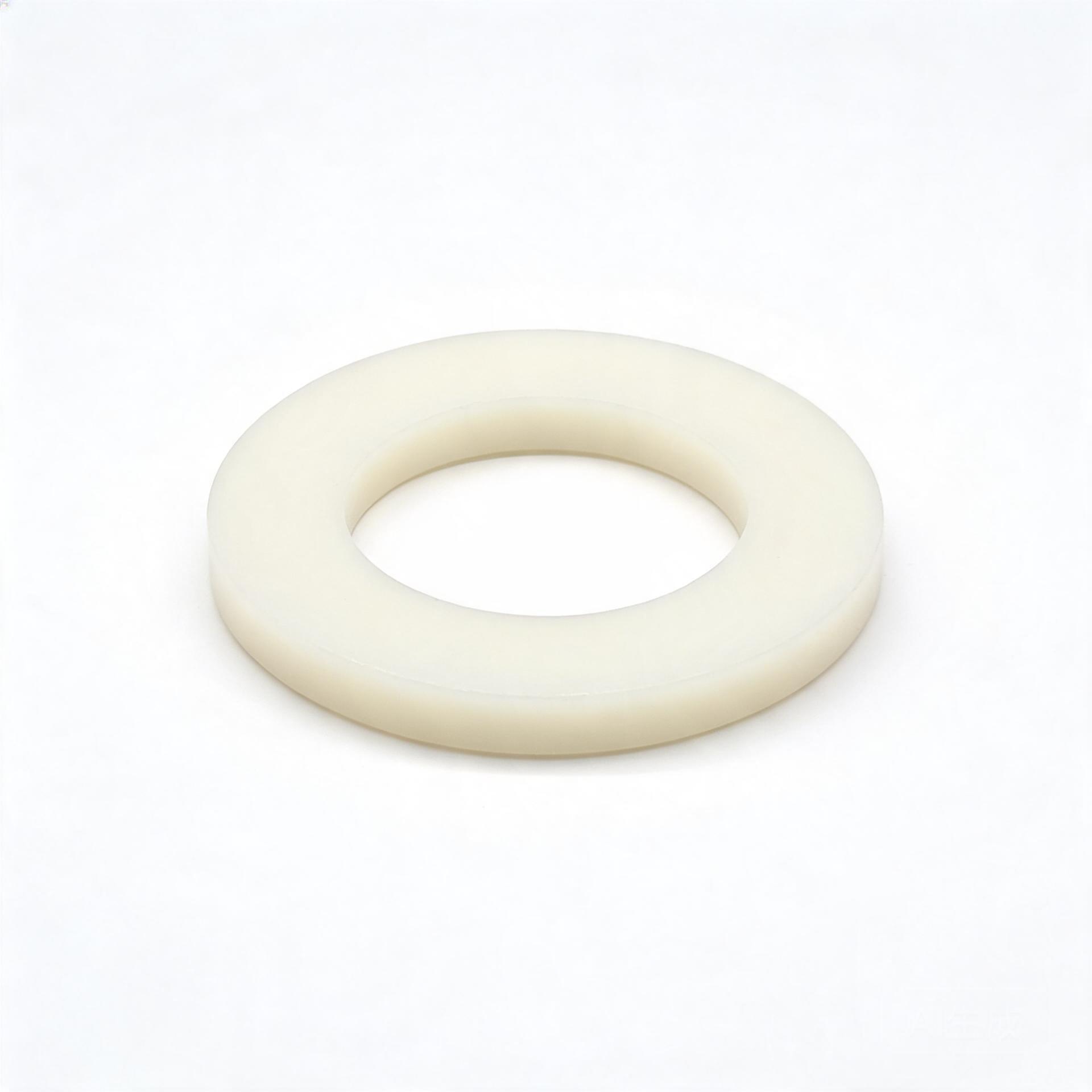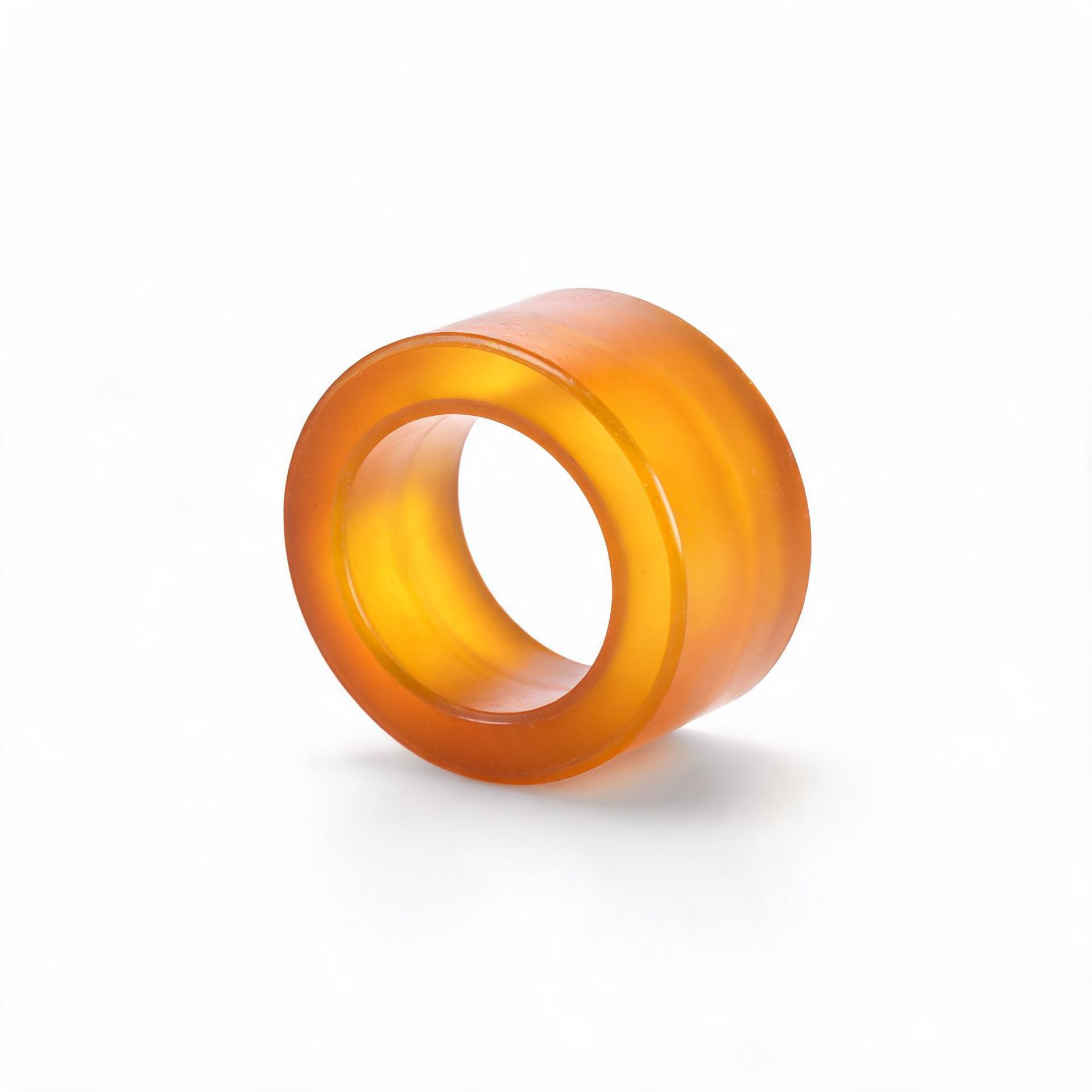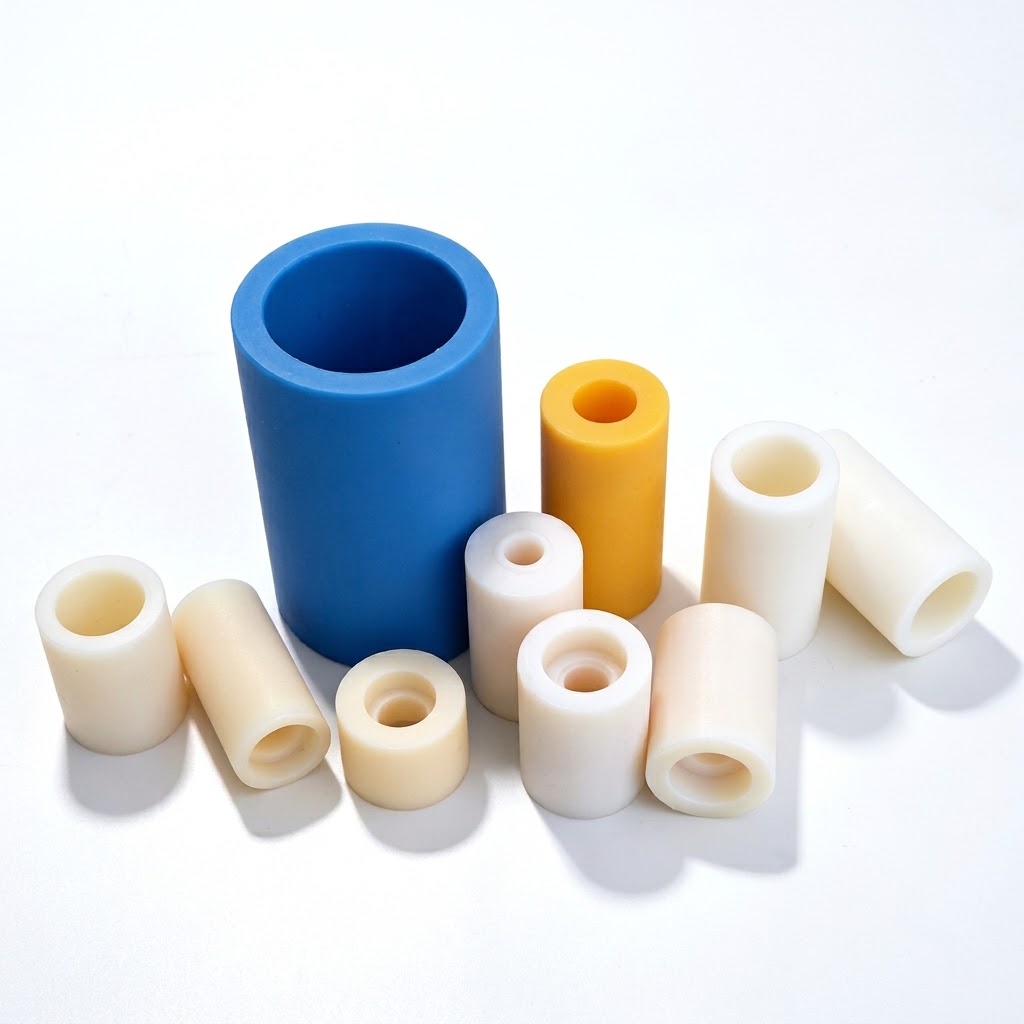
A plain bushing is the simplest bearing there is: a sleeve of material that takes the load on a thin film of itself. That is also why the material choice decides everything — a plastic bushing must be stiff enough to hold the shaft, stable enough to keep clearance, and self-lubricating enough to survive dry running.
This page compares the materials we machine plain bearings, sleeves, wear rings and thrust washers from. Each material links to its page; where we publish a specific bushing in that material, the link goes straight to it.
The three numbers that decide the material
A bushing enquiry normally boils down to three values. Send these with the drawing and the material picks itself:
- PV value — the product of bearing pressure (P) and surface speed (V). Every plastic has a limiting PV; above it, the bushing heats and wears fast.
- Continuous temperature — POM to about 100 °C, nylon lower once moisture is involved, PEEK past 250 °C.
- Shaft material and finish — a plastic bushing wants a hard, smooth, corrosion-proof shaft. A rough shaft acts like a file.
Which plastic for which bushing
| Material | Best for | Watch out | Machined part |
|---|---|---|---|
| POM (Acetal) | General low-PV dry-running bushings and sleeves; precise, stable, cheap. | Softens above ~100 °C under load. | POM Bearing Sleeve, POM Thrust Bearing |
| Nylon | Light, tough, quiet bushings with moderate load. | Moisture growth changes the bore; specify the fitted condition. | Nylon Bushing, Nylon Thrust Washer |
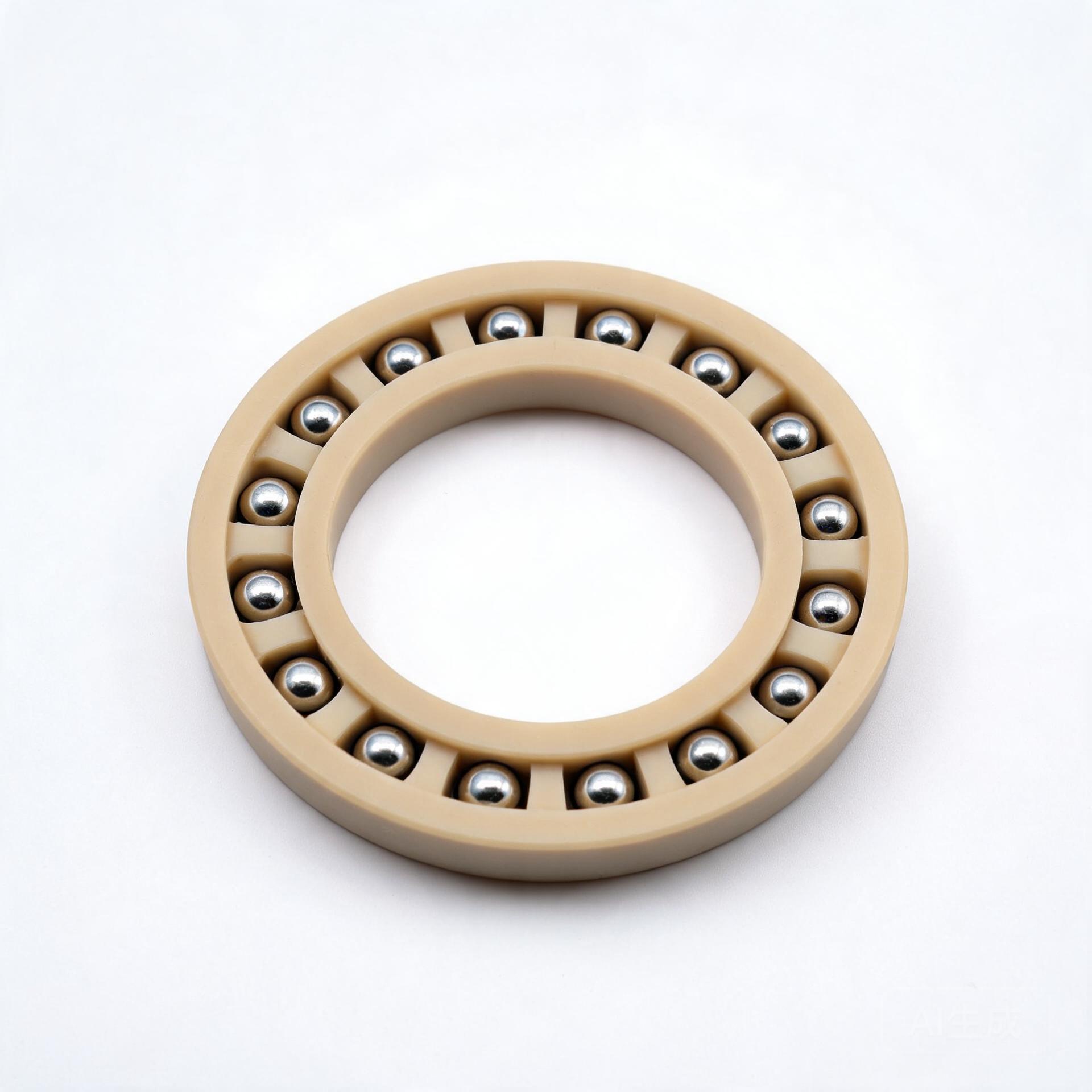
| PEEK | High temperature, steam, chemical, food and semiconductor duty. | Cost; specify it for a reason. | PEEK Self-Lubricating Bushing, PEEK Insulating Bushing, PEEK Bearing Cage, PEEK Wear Ring |
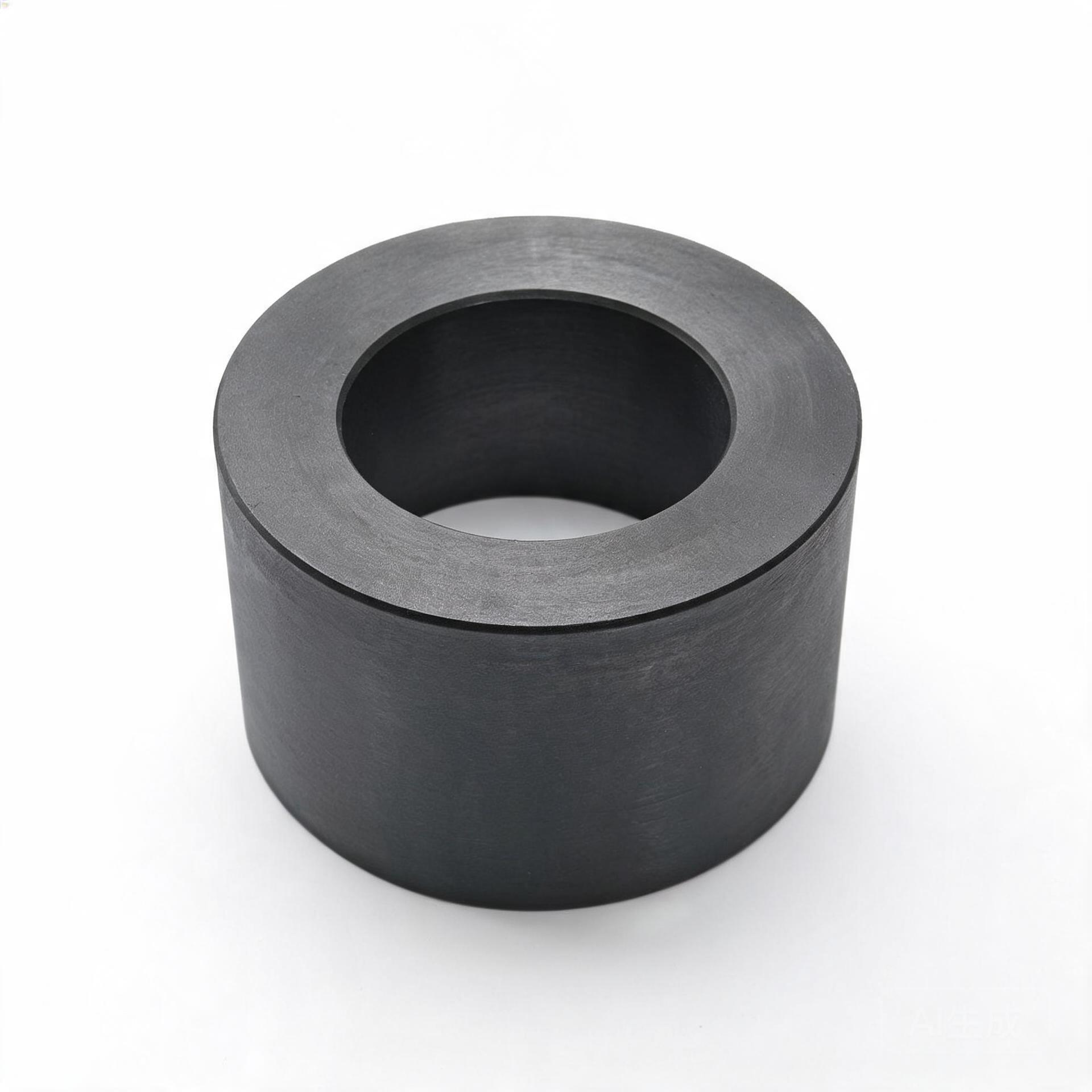
| Graphite | High temperature and where electrical conductivity helps; runs without lubrication. | Brittle — no shock load, and dust needs handling. | Graphite Bushing |
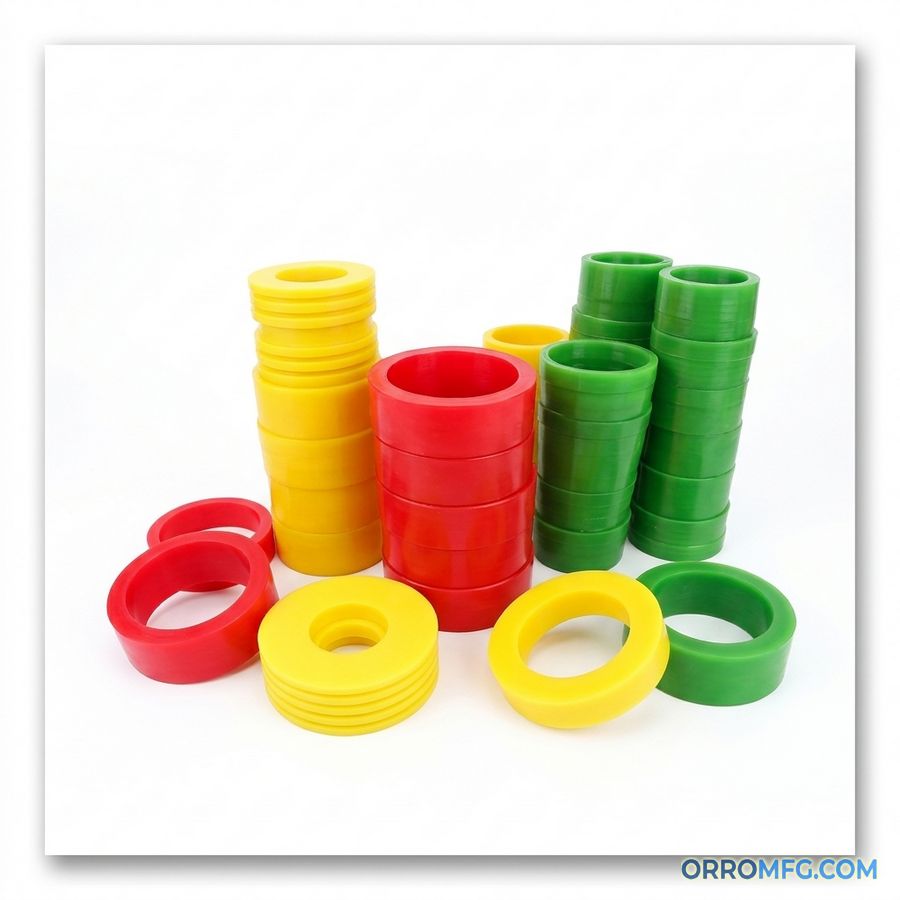
| Polyurethane | Loads where abrasion and shock dominate; tolerates contamination and misalignment. | Limited to about 80–90 °C; hydrolysis in hot wet service. | PU Sleeve Bearing |
| PTFE | Chemically aggressive duty and lowest friction. | Creeps under sustained load — use a filled grade if it carries a force. | PTFE parts |
Design notes that decide whether it lasts
- Clearance. A plastic bushing needs more running clearance than a bronze one, because it expands more. Too tight and it seizes the moment it warms up.
- Wall thickness. Thin walls in soft materials (PTFE, PU) deflect instead of holding the load — as a guide keep at least 1.5–2 mm, more on PTFE.
- Retention. Plastics creep, so a press fit must be sized for plastic, not steel — a light interference with a lead-in chamfer, or a mechanical retention feature.
- Lubrication. POM, PEEK and graphite grades run dry; PTFE and UHMWPE offer the lowest friction when a film is acceptable.
Selection detail for the underlying grades — temperature, chemical resistance and creep — is in the material selection guide, and each material page carries its own ten-section guide.
Send the drawing with the shaft diameter, the load, the speed and the temperature, and we will recommend a grade and a clearance rather than quote the cheapest sleeve. Request a quote.