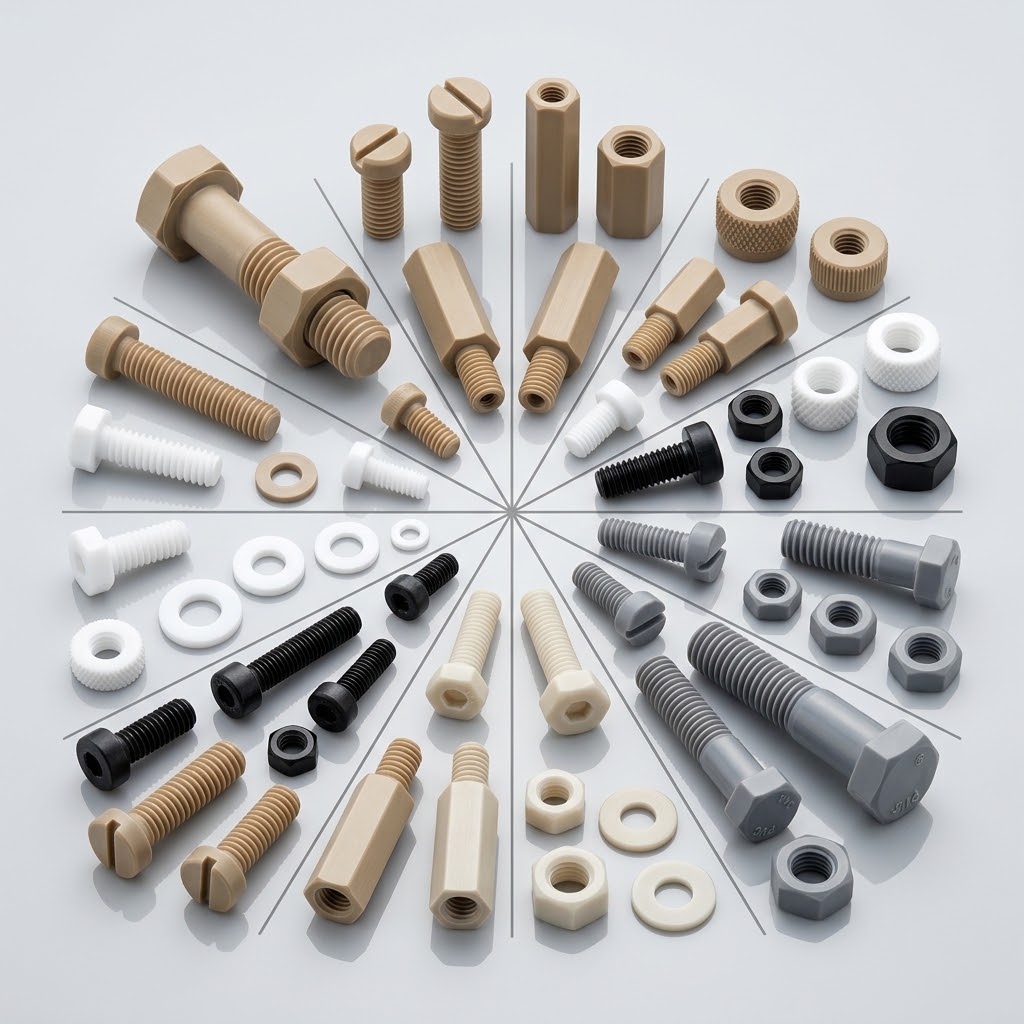
A plastic fastener looks like a metal one and behaves nothing like it. It is there for reasons metal cannot serve — electrical isolation, chemical resistance, non-magnetic and non-sparking duty, or a fastener that must not mark a soft panel — and it must be used inside those limits.
This page compares the materials we machine screws, nuts, washers and standoffs from. Each material links to its page; where a specific part is published in that material, the link goes straight to it.
When a plastic fastener is right — and when it is not
Right:
- Electrically insulating a component from a chassis.
- Chemical exposure that would corrode a stainless screw.
- Non-magnetic or non-sparking environments.
- A fastener that must not damage a soft or cosmetic face.
- Light-load, low-temperature assemblies.
Wrong:
- Structural or safety-critical joints.
- High clamp load or a fastener that must not relax.
- High continuous temperature (material dependent — PEEK and PTFE survive far more than nylon or PVC).
Which material for which fastener
| Material | Best for | Watch out | Machined part |
|---|---|---|---|
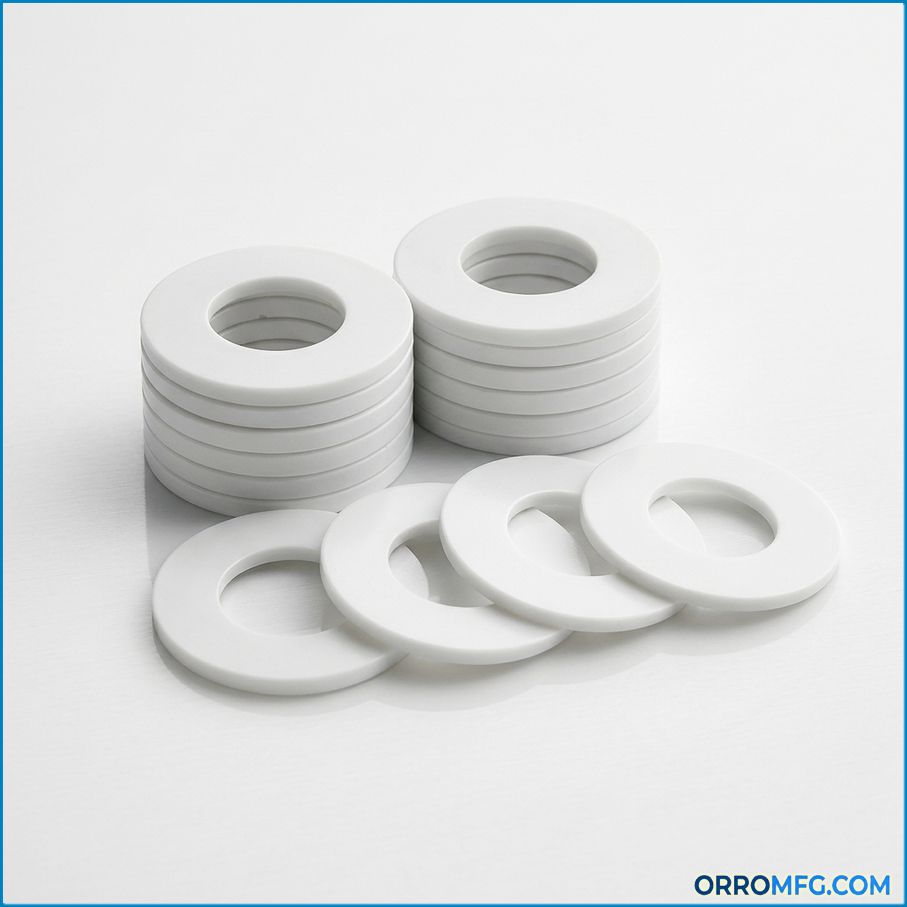
| PTFE | Aggressive chemicals, lowest friction, non-stick; the most chemically inert option. | Soft and creeps — the weakest threads; use only at low load. | PTFE parts |
| PEEK | The strong choice: high temperature, chemical resistance and real mechanical load. | Cost; still creeps over time under high continuous load. | PEEK Precision Component |
| POM (Acetal) | General mechanical fasteners and washers; stiff and dimensionally stable. | Softens above ~100 °C; not for strong acids. | POM parts |
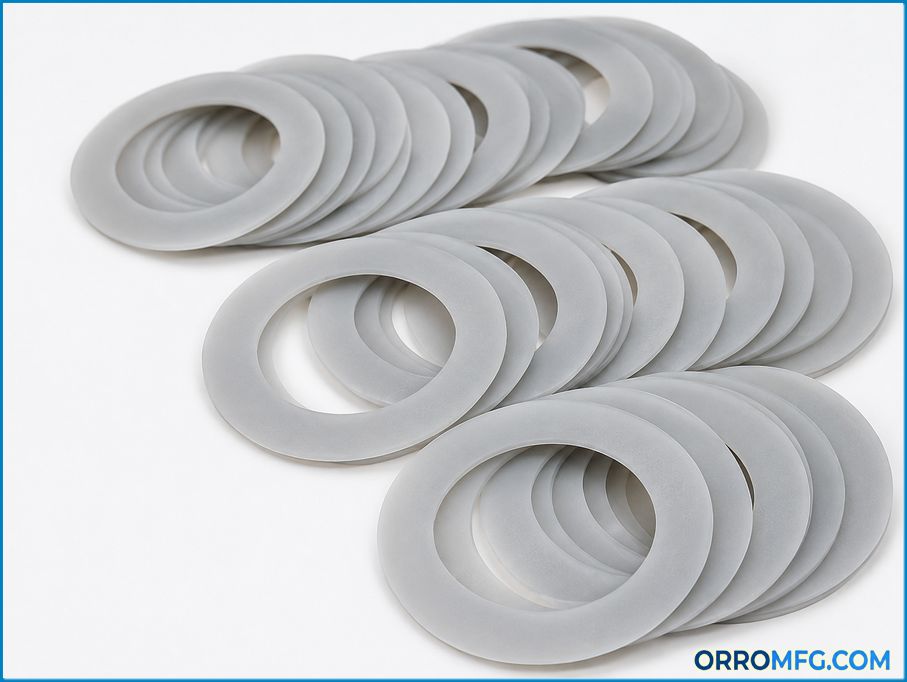
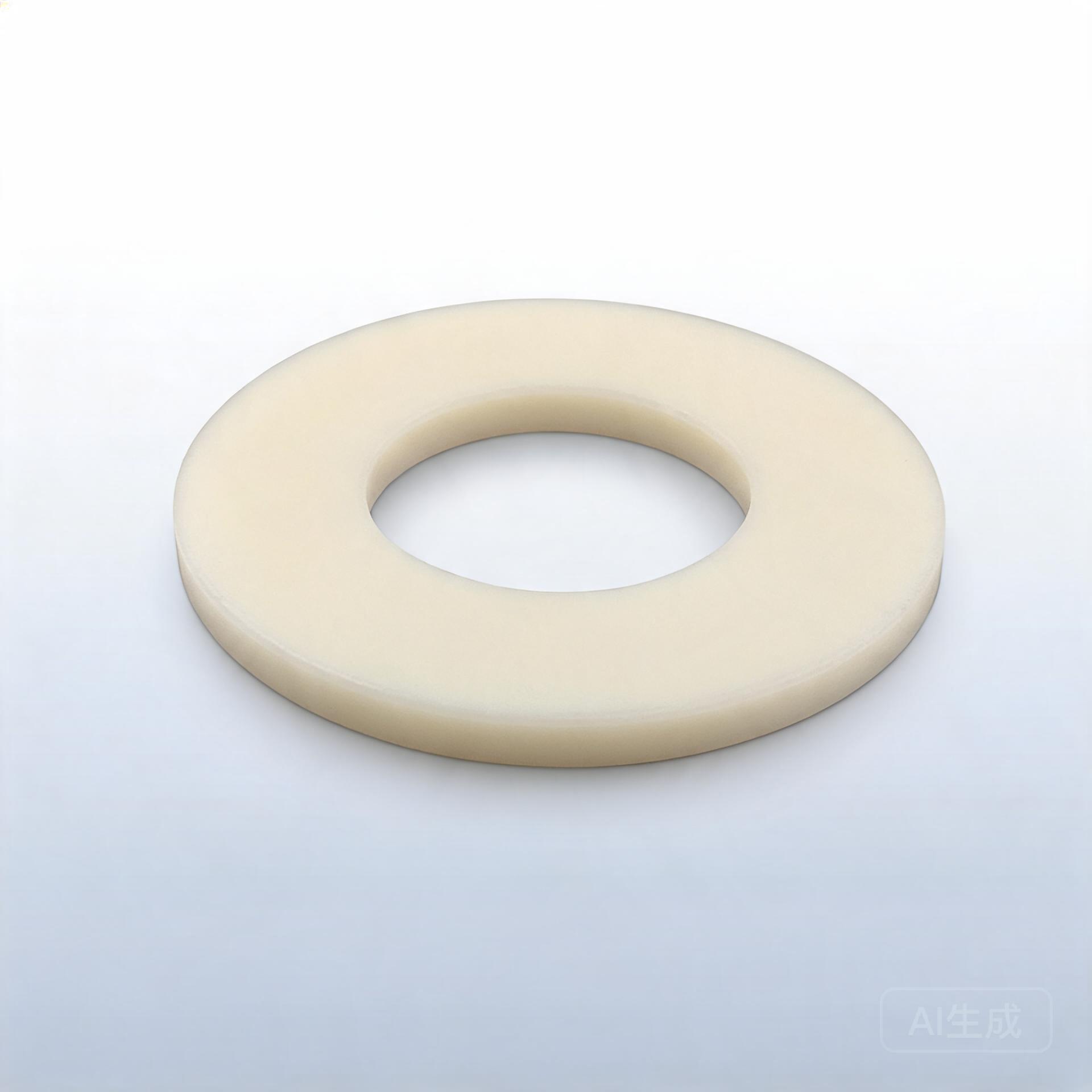
| Nylon | Tough, cheap general fasteners and washers; good impact resistance. | Absorbs moisture and swells; threads can tighten or seize over time. | Nylon Thrust Washer, Nylon parts |
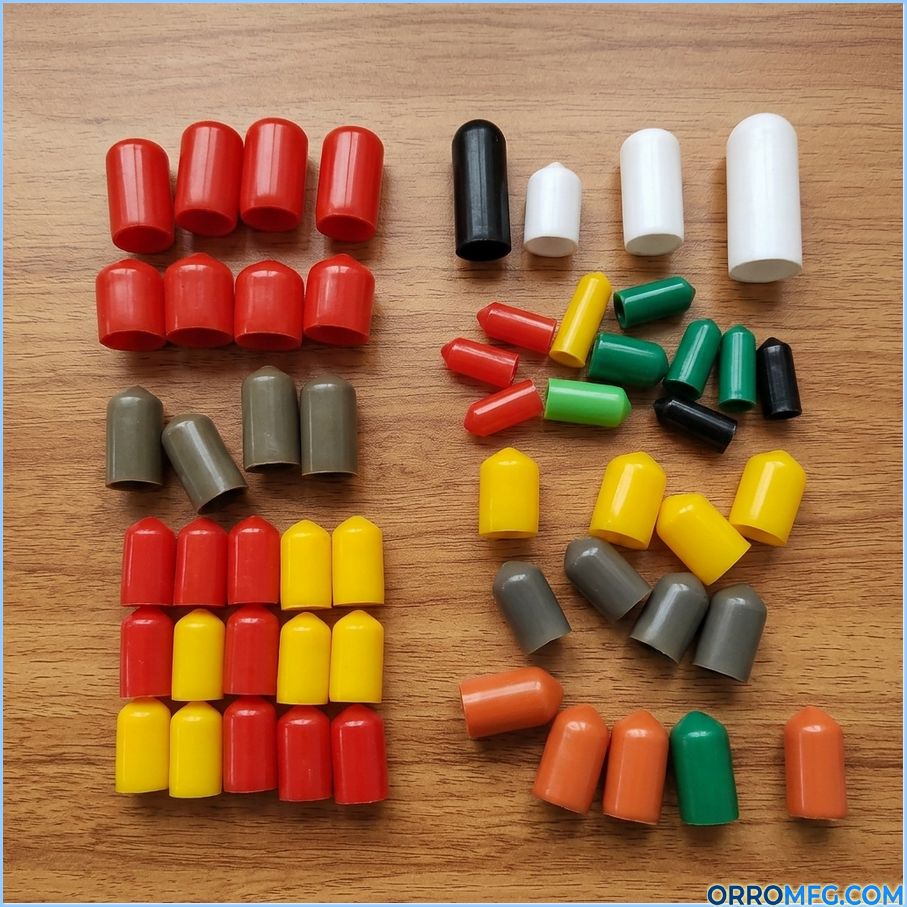
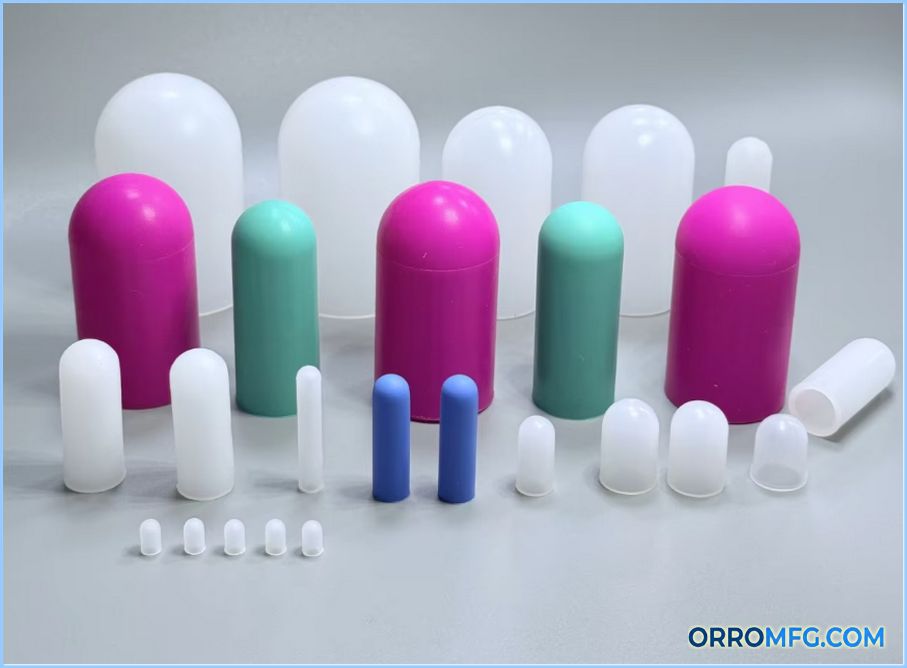
| PVC | Cheap insulating fasteners and sleeves at room temperature. | Low strength and low temperature; not structural. | PVC Insulating Sleeve |
Design notes for plastic threads
- Use coarse threads. Fine threads in soft plastics strip easily; a coarser pitch spreads the load over more material.
- Allow for creep. A plastic fastener loses clamp load over time — pair it with a metal insert, a larger washer, or accept a lower preload.
- Do not over-torque. The failure mode is often a sheared head or a stripped thread, not a broken shank.
- Washers spread the load. A plastic washer under a plastic or metal head stops the head sinking into a soft panel.
- Consider a metal insert for real joints. Where the joint must hold, thread a metal insert into the plastic part instead of relying on a plastic screw.
- State the thread on the drawing. Threads and fits should be dimensioned in full, not implied.
Which material survives your environment is covered in the material selection guide; each material page carries its full ten-section guide.
Tell us the thread, the material and the environment (or send the drawing), and we will machine the fasteners to order. Request a quote.