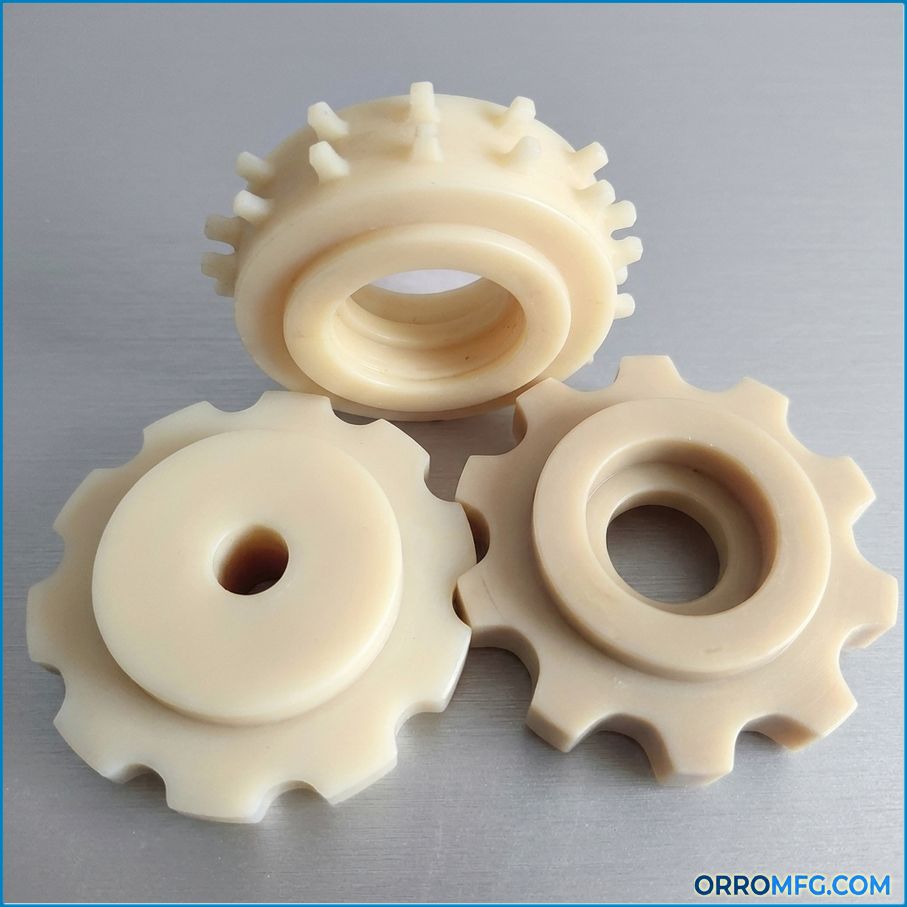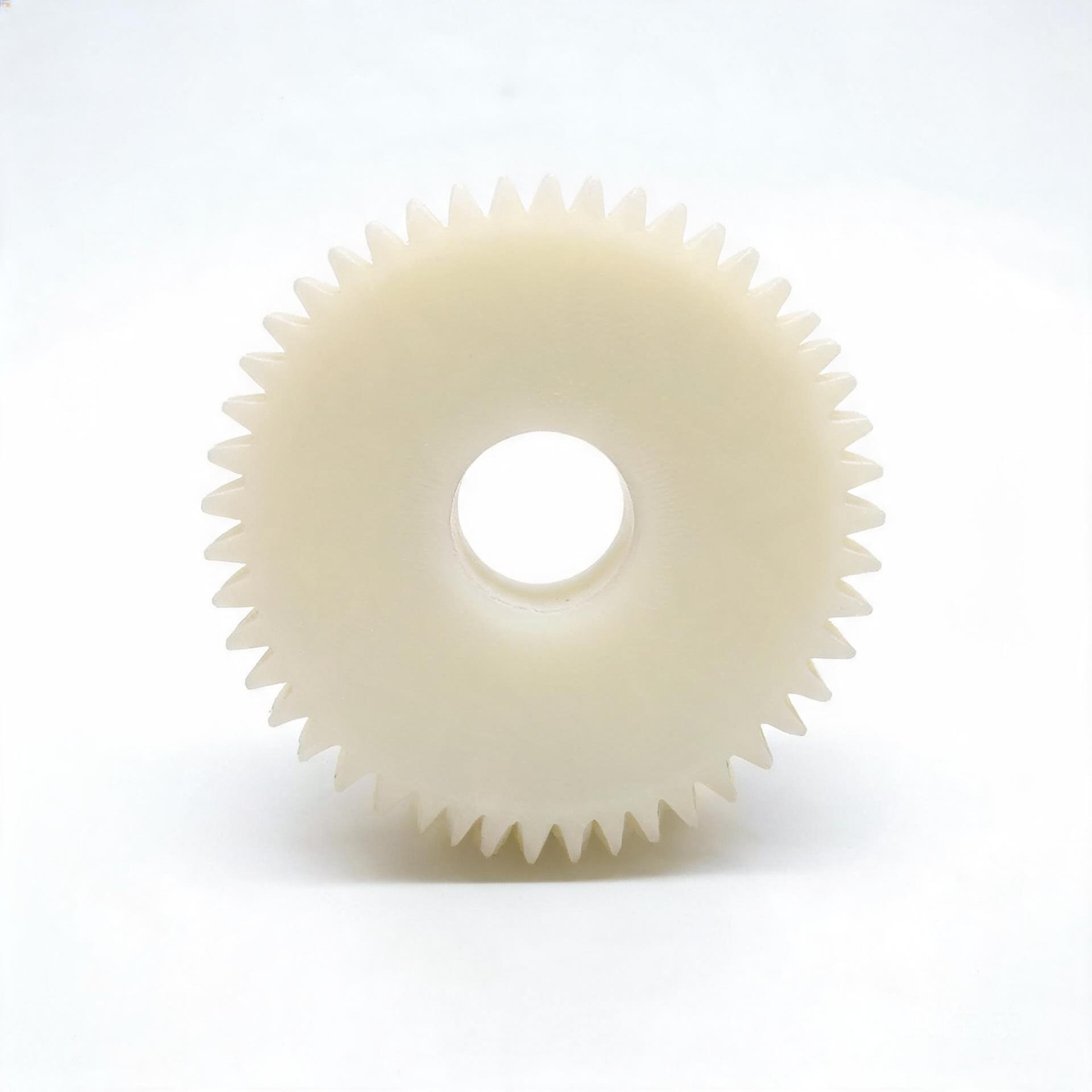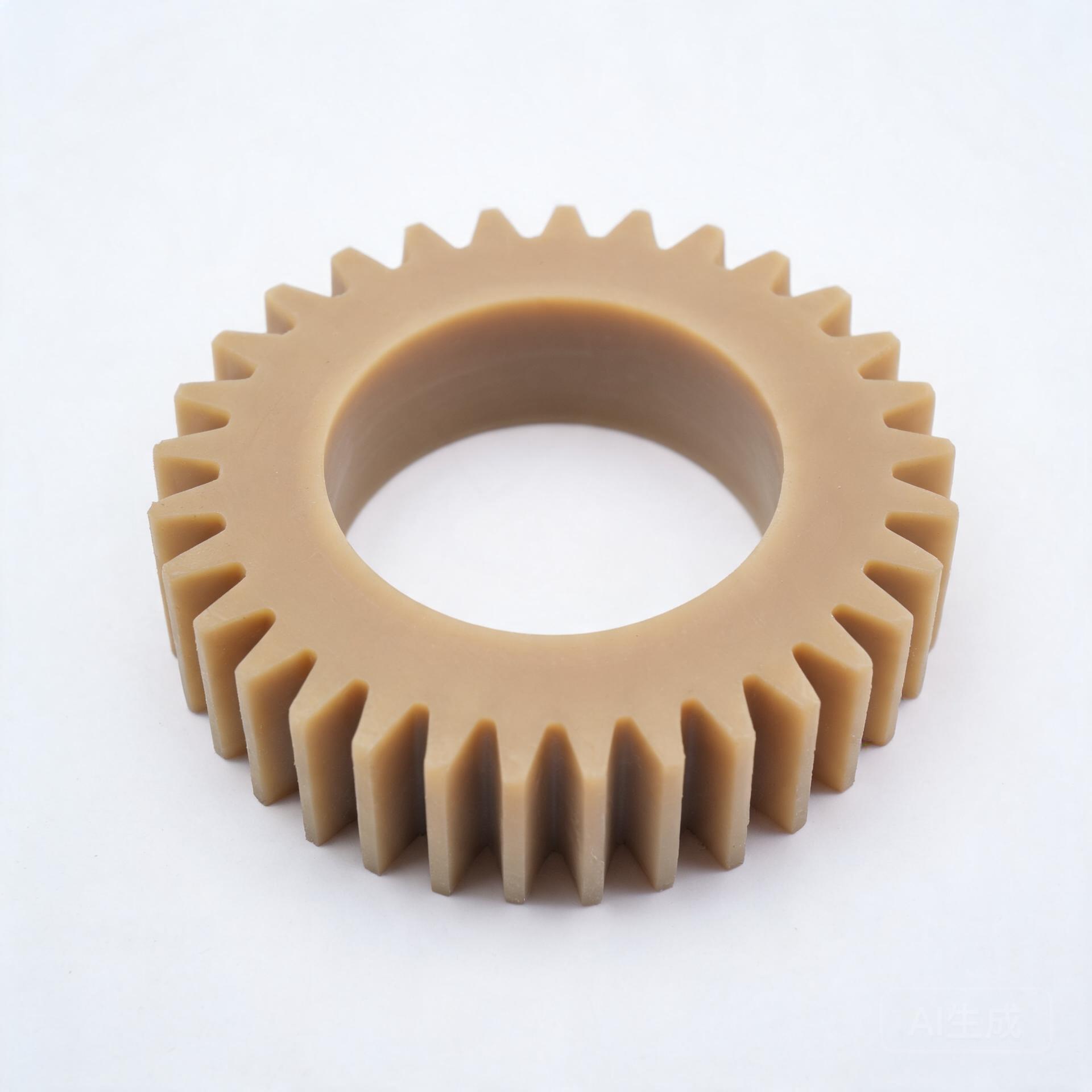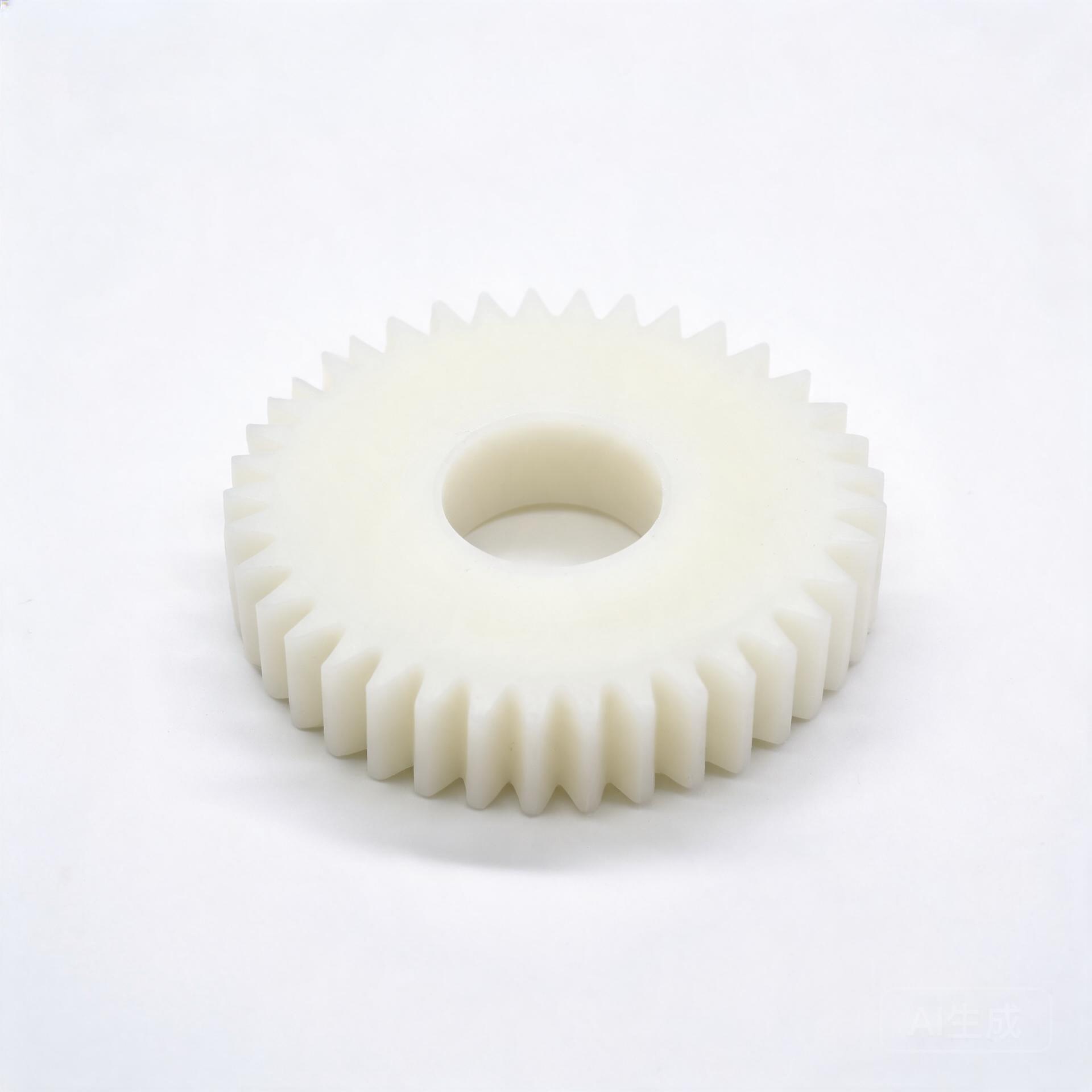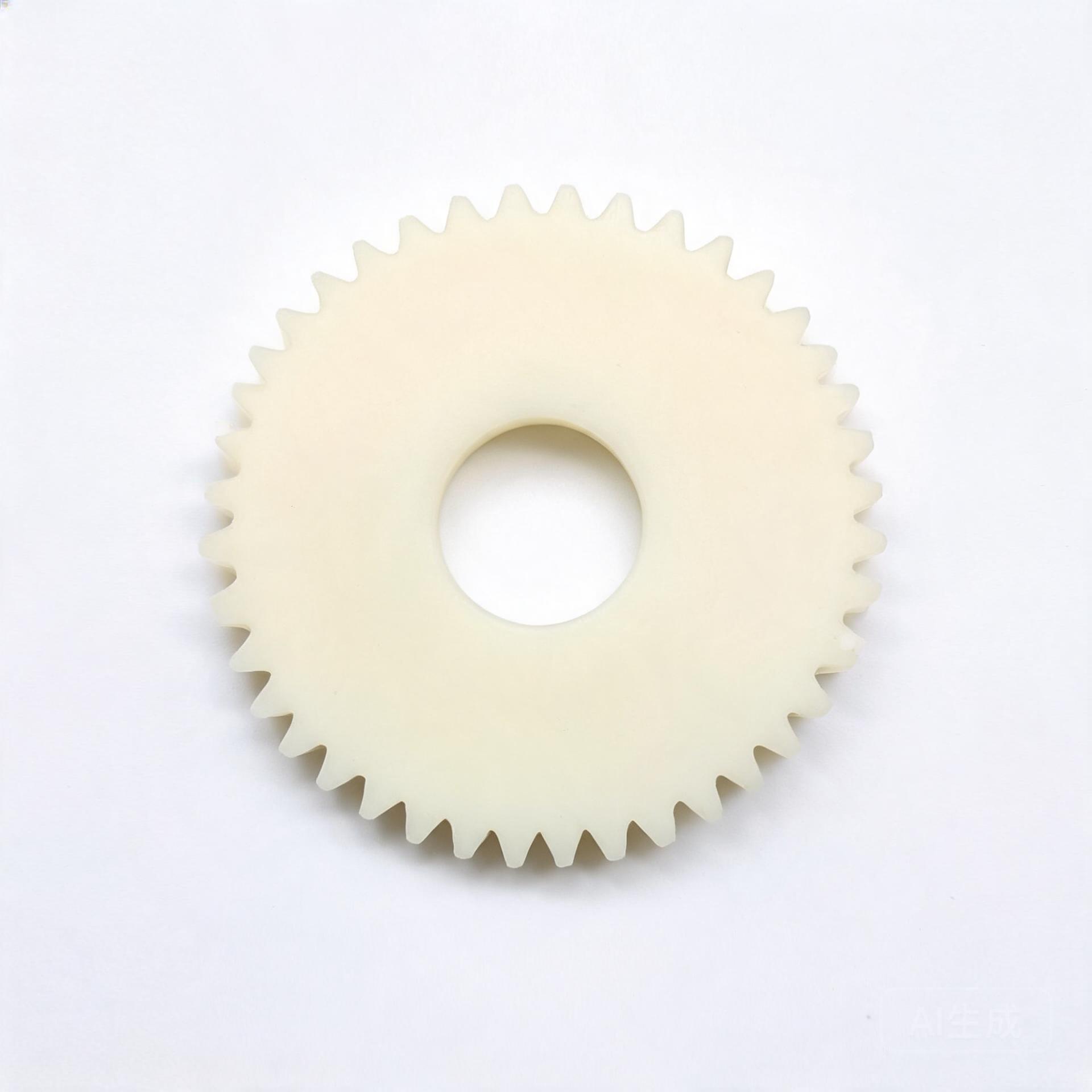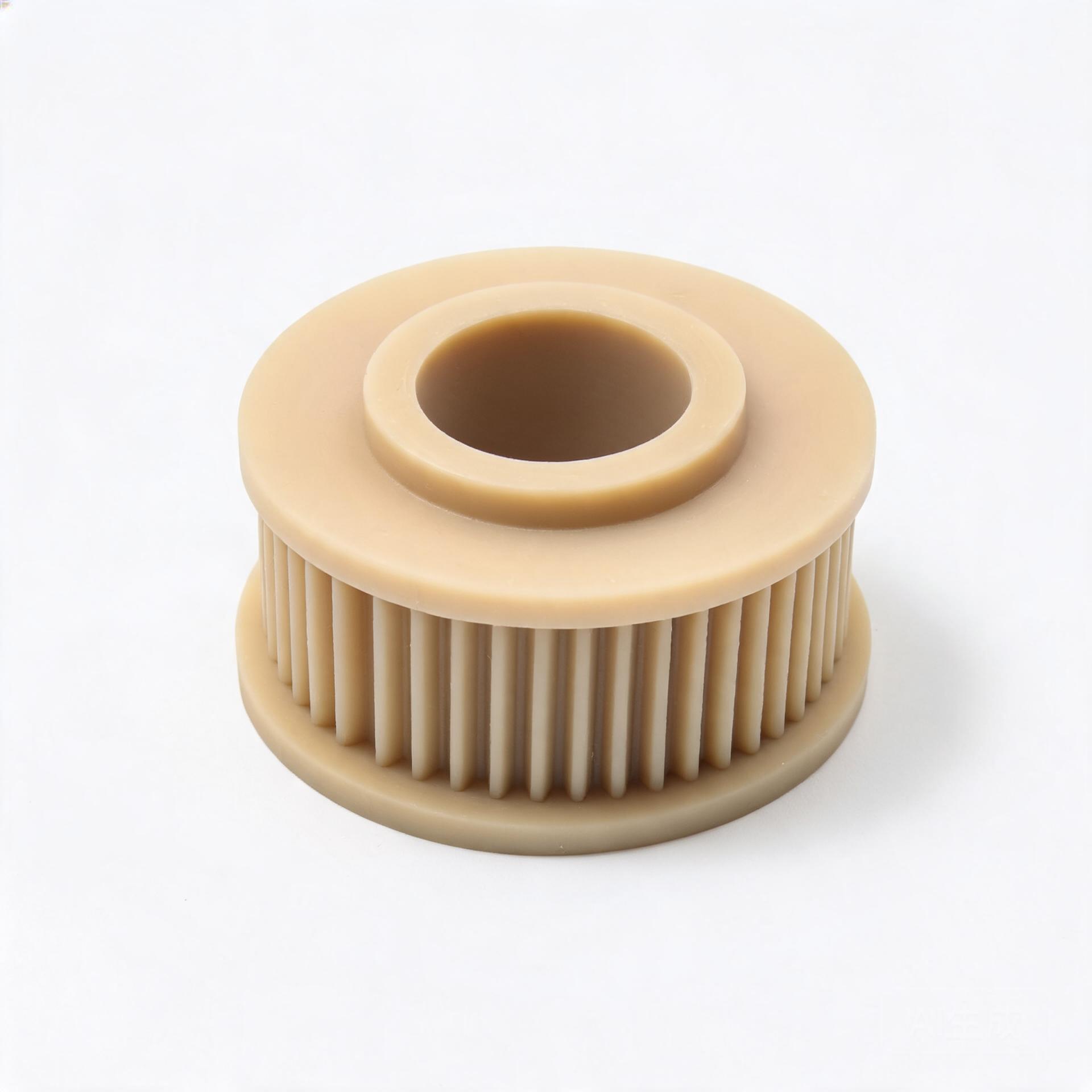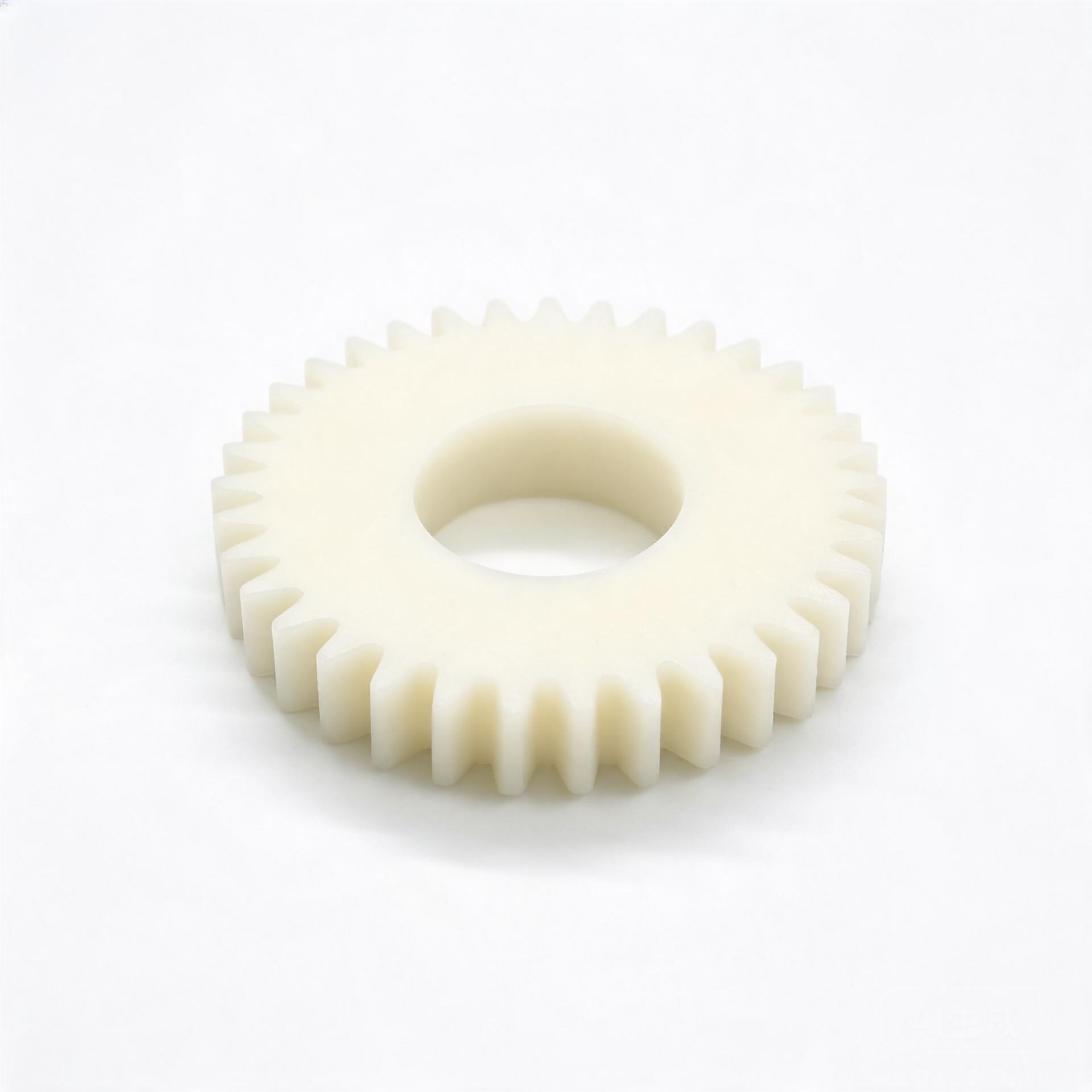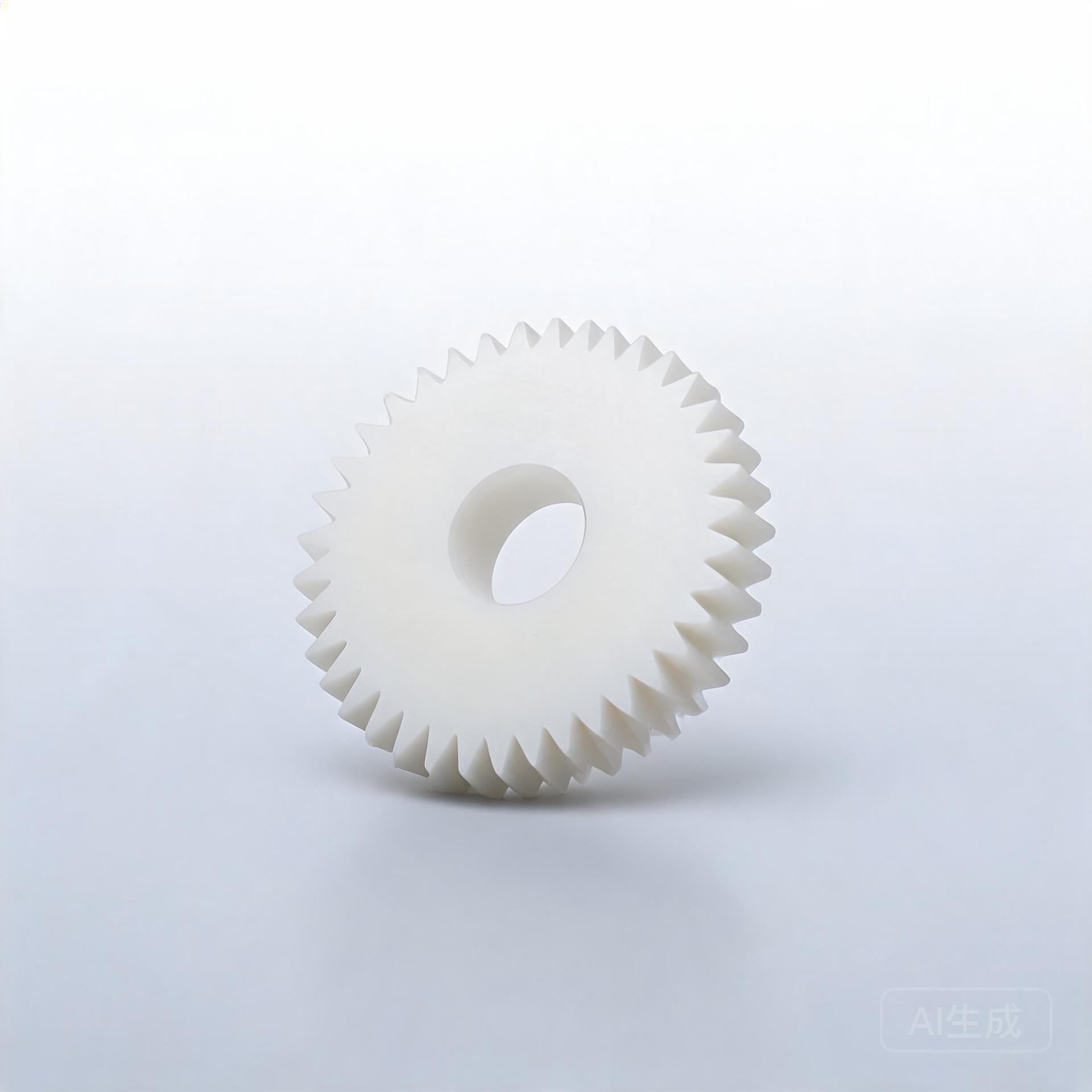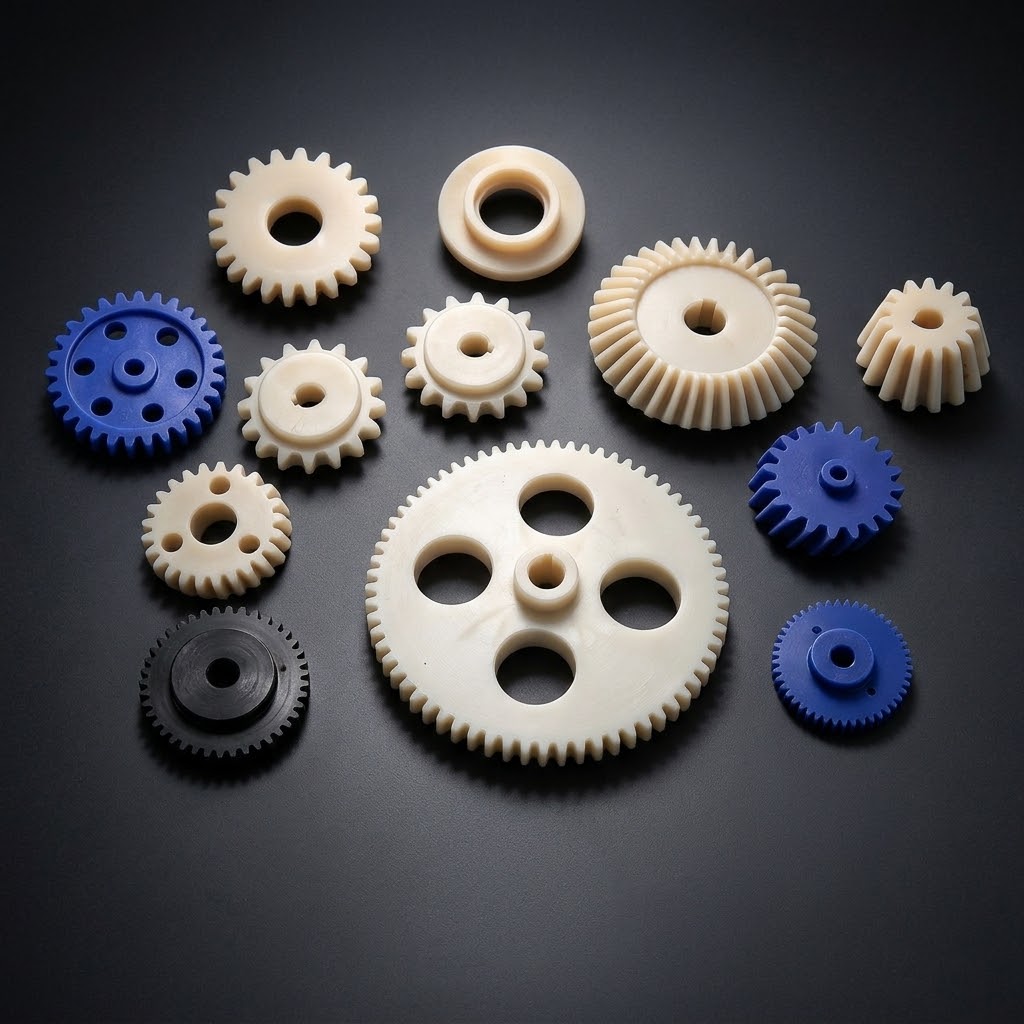
A plastic gear is not a cheap copy of a steel gear. It is a different component: quiet, self-lubricating, corrosion-proof, light and electrically insulating — as long as the load, the speed and the temperature stay inside what the material can take. Choose the wrong plastic and the teeth wear into a hook in a few thousand cycles.
This page compares the materials we machine gears from, so you can pick the grade before you send the drawing. Every material below links to its own page; where we already publish a specific gear in that material, the link goes straight to it.
What a gear has to do
Before comparing materials, separate the three jobs a gear does, because no single plastic is best at all of them:
- Carry torque at the tooth — needs stiffness and fatigue strength (tooth-root bending).
- Run quietly and without lubrication — needs low friction and dimensional stability.
- Survive the environment — temperature, moisture, chemicals and washdown.
Which plastic for which gear
| Material | Best for | Watch out | Machined gear |
|---|---|---|---|
| POM (Acetal / Delrin) | The default for mechanical, dry-running gears. Stiff, stable, machines to tight tolerance. | Nothing above ~100 °C; not for strong acids. | POM Gear · Spur Gear |
| Nylon (PA6 / PA66) | Where shock load and quiet running dominate; light and tough. | Absorbs moisture and grows — dimensions change between dry and fitted. | Nylon Gear · Sprocket |
| PEEK | High temperature, steam, autoclave, food and medical; excellent wear resistance. | Cost — several times POM. Specify it for a reason. | PEEK Gear · Timing Pulley |
| UHMWPE | Very low friction and impact resistance on lightly loaded gears. | Creeps under sustained load; low stiffness. | UHMWPE parts |
| PTFE | Chemically aggressive duty. | Too soft and creeps at the tooth — rarely a good gear material. | PTFE parts |
The three failure modes to design against
- Tooth-root fatigue. Under repeated load the root of the tooth cracks. Choosing a stiffer material (POM, PEEK) and a generous root radius is cheaper than adding a lubricant.
- Friction heat. A dry-running plastic gear generates heat at the mesh. If the material cannot conduct it away, the tooth softens and smears. This is why POM is limited to about 100 °C and PEEK is chosen when the pair runs hot.
- Moisture and thermal growth. Nylon grows with humidity; all plastics move roughly ten times more than steel per degree. On a nylon gear, specify the fitting moisture condition or accept that the centre distance changes.
Decision shortcuts
- General machinery, dry running, under 100 °C → POM.
- Shock load, quiet operation, moderate temperature → nylon, with moisture allowed for.
- Steam, autoclave, 150 °C+, food or medical contact → PEEK.
- Chemically exposed, lightly loaded → filled PTFE, or a corrosion-proof PEEK/POM pair.
- Metal mating gear → keep the plastic tooth softer than the metal so the sacrificial part is the cheap one.
Whichever you pick, mark the module, the pressure angle and the datum on the drawing — one clearly toleranced feature set is worth more than a blanket ±0.01 mm note. See also the full material selection guide for the temperature and chemical limits behind this table.
Send the drawing with the torque, the speed and the operating temperature, and we will recommend the grade rather than quote the cheapest one. Request a quote.