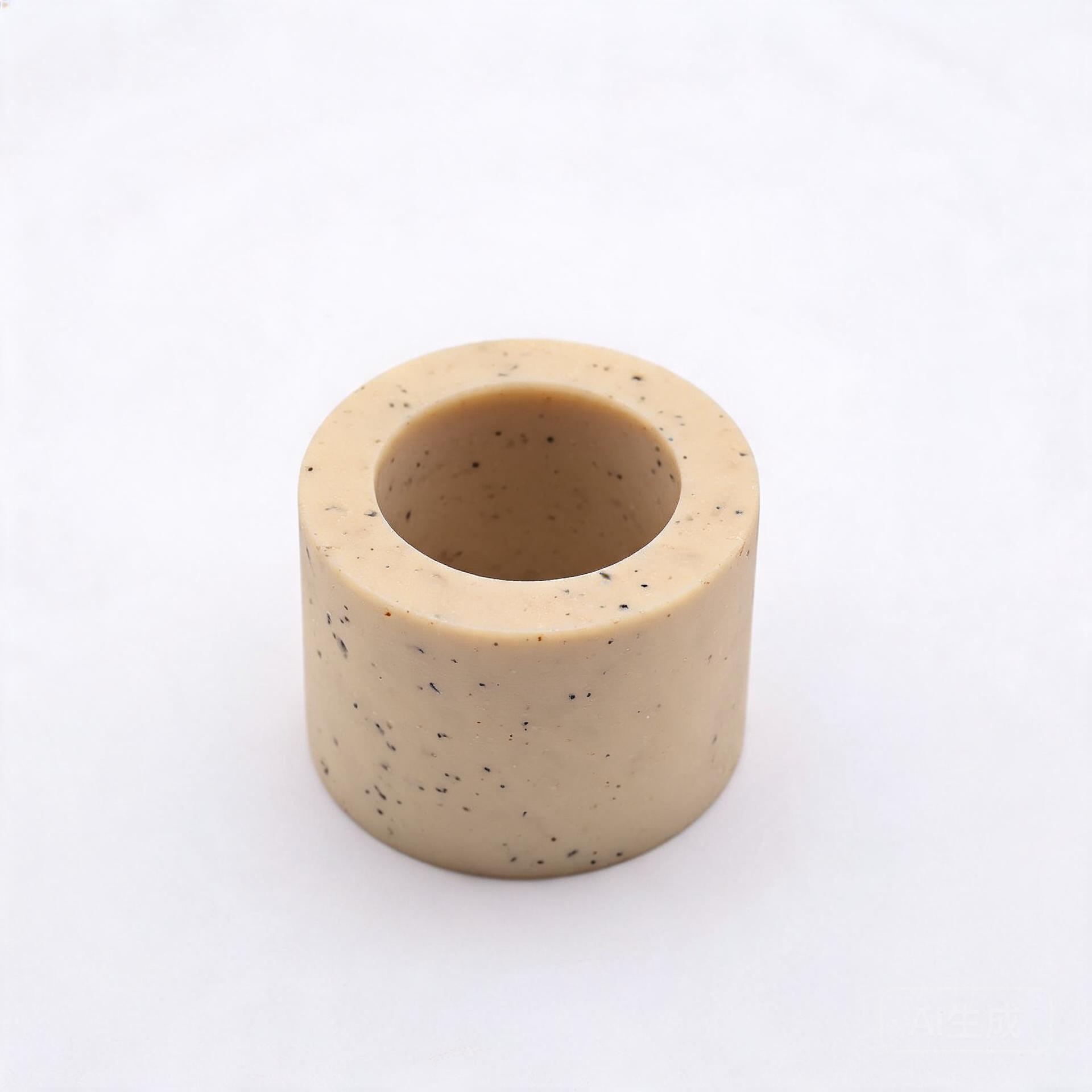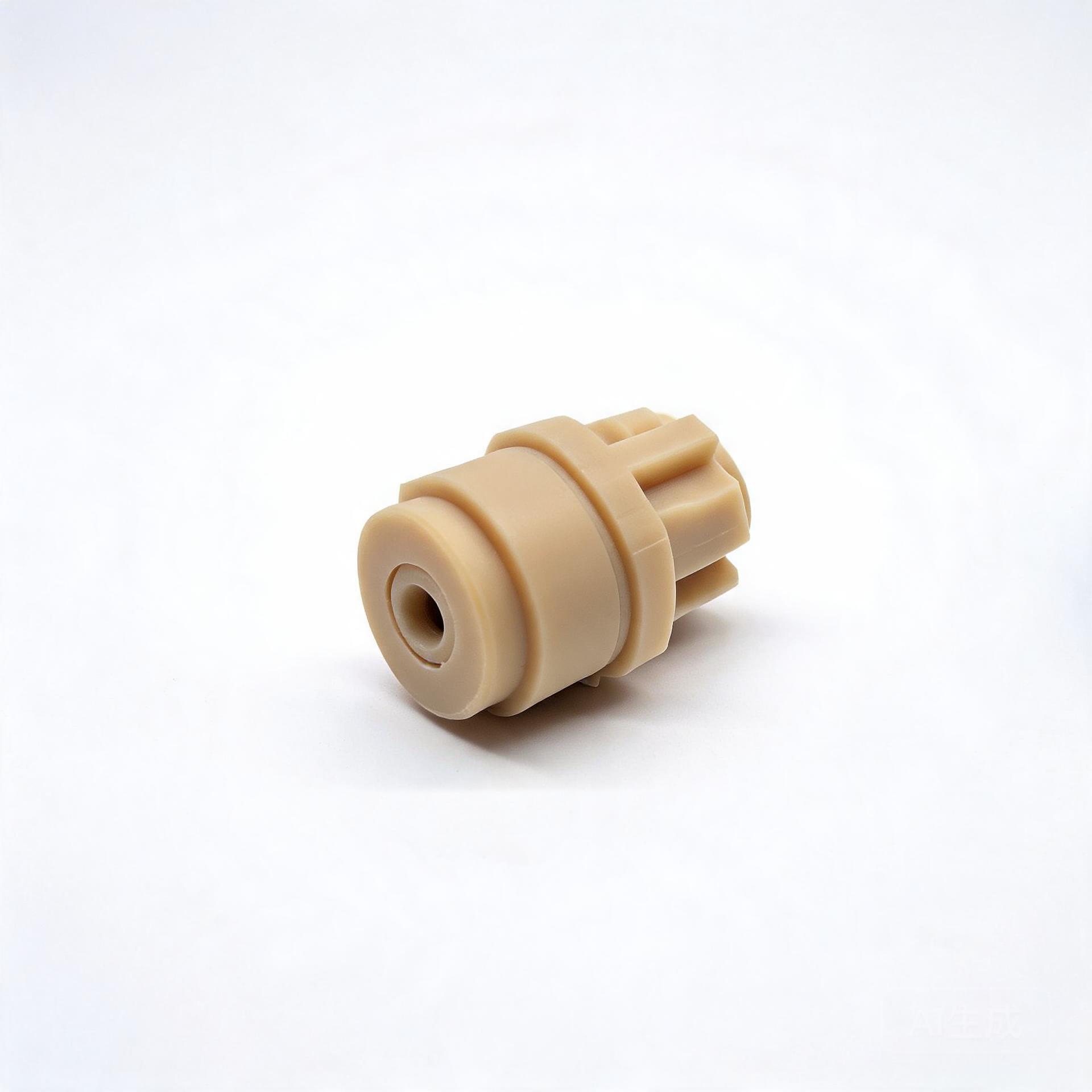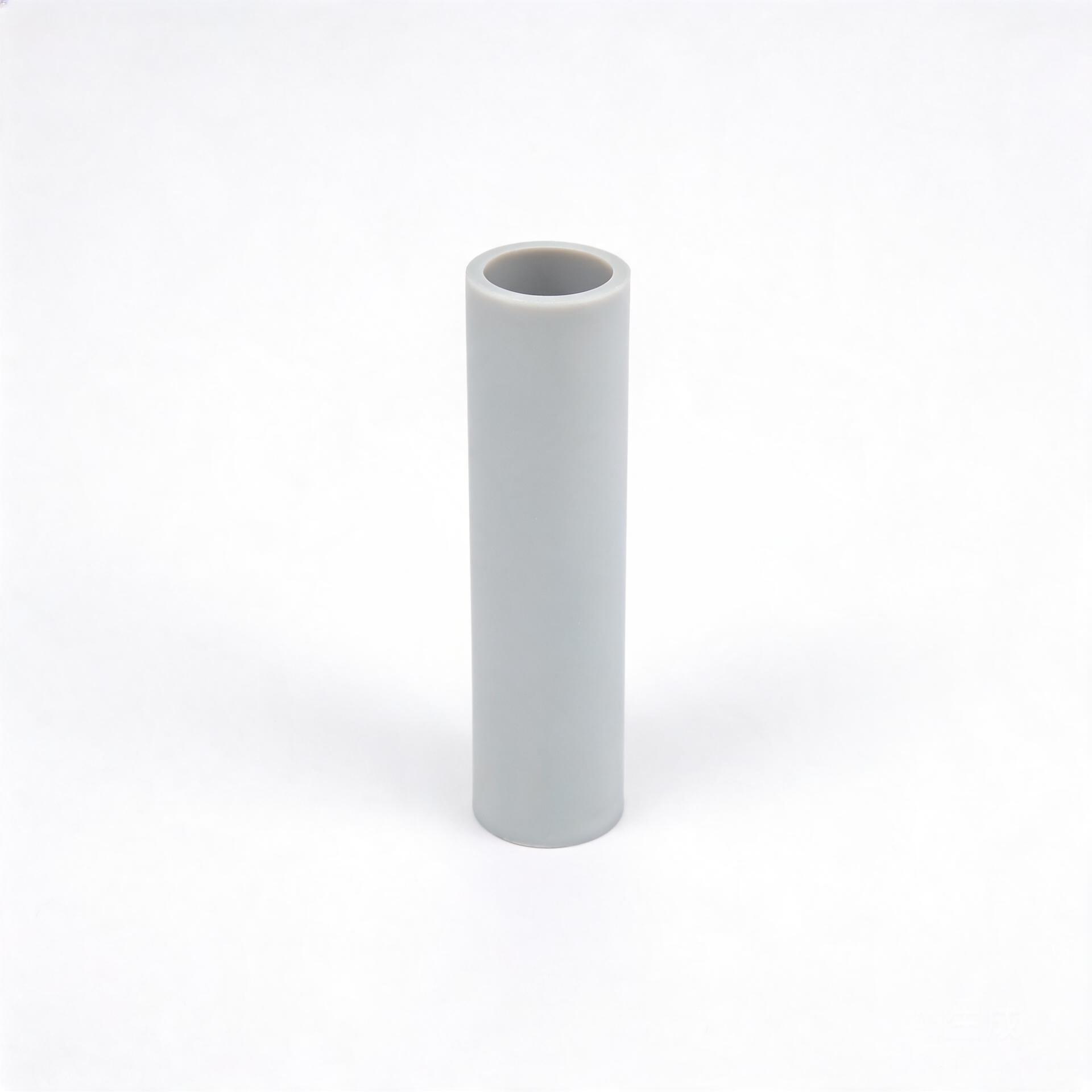
Overview
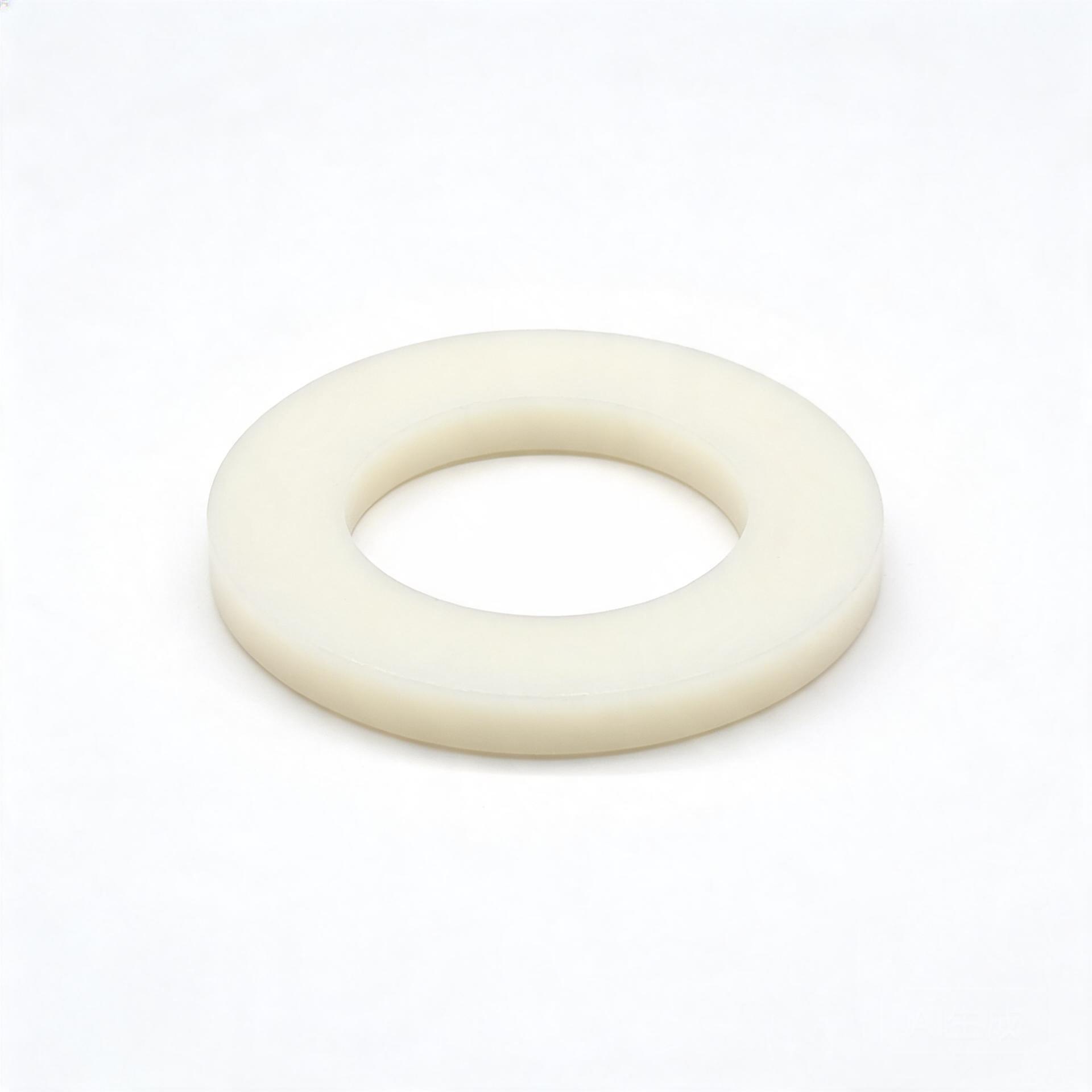
PVC electrical sleeves are thin-walled insulating components, machined or molded from polyvinyl chloride, that provide electrical isolation, mechanical protection and edge protection for conductors, terminals, bushings and cable routing inside electrical and electronic equipment. Rigid PVC sleeves act as structural insulators and spacers, while plasticized and heat-shrinkable grades provide flexible protection where cables flex or pass through metal panels. OrroMFG produces PVC electrical sleeves by CNC turning, injection molding and tube fabrication, supplying both stock-wall tubing and fully custom sleeves, bushings and standoffs to drawing.
PVC is widely specified for insulation because it combines high dielectric strength, excellent volume resistivity and good mechanical toughness with a very low material cost. Its self-extinguishing behaviour and availability in UL 94 V-0 formulations make it a practical choice for equipment that must satisfy electrical safety and flammability requirements. The material machines cleanly and can be produced with precise wall thicknesses, chamfers and shoulders, which allows a single sleeve to perform insulation, spacing and strain relief functions at once. Our product range includes straight sleeves, stepped and flanged bushings, grommet-style edge protectors, terminal insulators, standoffs, spacers and cable-entry sleeves. Options include rigid, semi-rigid and flexible formulations, transparent and pigmented colors, and flame-retardant grades with low smoke emission.
Key Features
- High Dielectric Strength: Typical breakdown strength of 15-25 kV/mm and volume resistivity above 10¹⁵ Ω·cm provide reliable insulation at low and medium voltages.
- Flame-Retardant Options: UL 94 V-0 rated formulations are available with low smoke emission for equipment that must meet electrical safety standards.
- Excellent Chemical and Moisture Resistance: PVC resists water, acids, alkalis, alcohols and most salts, and does not absorb moisture that would degrade insulating performance.
- Precise, Thin-Wall Machinability: CNC turning produces wall thicknesses from 0.3mm with clean edges, allowing compact insulation in tight equipment envelopes.
- Mechanical Toughness: Good impact and abrasion resistance protects conductors against chafing and vibration damage in panel and enclosure wiring.
- Very Low Cost: PVC is among the least expensive engineering plastics, making it ideal for high-volume, cost-sensitive insulating components.
Material Specifications
| Property | Rigid PVC (PVC-U) | Flexible PVC (PVC-P) | CPVC | Flame-Retardant PVC |
|---|---|---|---|---|
| Density (g/cm³) | 1.38 - 1.45 | 1.25 - 1.45 | 1.50 - 1.58 | 1.40 - 1.55 |
| Tensile Strength (MPa) | 45 - 55 | 10 - 25 | 50 - 60 | 35 - 50 |
| Flexural Modulus (GPa) | 2.4 - 3.0 | Flexible (< 0.1) | 2.6 - 3.2 | 2.5 - 3.2 |
| Elongation at Break (%) | 10 - 50 | 200 - 400 | 20 - 60 | 5 - 30 |
| Notched Izod Impact (J/m) | 20 - 60 | 100 - 300 | 25 - 70 | 15 - 50 |
| Hardness | Shore D 75 - 85 | Shore A 60 - 90 | Shore D 80 - 88 | Shore D 78 - 86 |
| HDT at 1.8 MPa (°C) | 65 - 75 | 50 - 60 | 80 - 90 | 65 - 75 |
| Continuous Service Temp (°C) | 60 | 60 | 95 | 60 |
| Volume Resistivity (Ω·cm) | 10¹⁵ - 10¹⁶ | 10¹² - 10¹⁴ | 10¹⁵ | 10¹⁴ - 10¹⁵ |
| Dielectric Strength (kV/mm) | 15 - 25 | 12 - 20 | 15 - 20 | 14 - 20 |
| Dielectric Constant at 1 MHz | 3.0 - 3.5 | 4.0 - 6.0 | 3.0 - 3.5 | 3.2 - 4.0 |
| Flammability Rating (UL 94) | V-0 available | V-0 available | V-0 | V-0 |
Applications
Electrical and Electronics
PVC sleeves insulate terminals, busbars, fuse holders, relay contacts and printed circuit board standoffs inside switchgear, control panels, distribution boards and power supplies. They provide creepage and clearance distance where metal parts sit close together, and protect cable entries through metal chassis from chafing and short circuits. Flame-retardant grades are used where the enclosure must meet UL and IEC flammability requirements.
Consumer Electronics
In consumer products, PVC sleeves are used as battery contact insulators, cable strain reliefs, connector housings, LED lead insulation and internal wiring protection in appliances, audio equipment, chargers and small home devices. The low cost and clean machined finish allow high-volume production of small insulating parts with consistent dimensions.
Industrial Equipment
Industrial machinery uses PVC sleeves to insulate sensor leads, motor terminals, solenoid connectors and control wiring in environments where oil mist, coolant and humidity are present. The material’s chemical resistance and dimensional stability keep insulation intact on vibrating machinery and moving cable runs, and flexible grades are used where cables bend repeatedly.
Automotive and Transportation
PVC sleeves insulate wiring harness splices, connector pins, lamp sockets and battery terminals in vehicles and off-highway equipment. They resist vibration, road splash and the temperature swings of the engine compartment, and their self-extinguishing behaviour supports harness safety requirements.
Building Services and Panel Wiring
In building services, PVC sleeves and bushings protect cables entering metal enclosures, conduit boxes and distribution cabinets, and act as spacers for mounting terminal blocks and rails. Their resistance to moisture and mild chemicals suits plant rooms, pump houses and outdoor cabinets.
Operating Conditions
- Temperature Range: -20°C to +60°C (-4°F to +140°F) continuous for standard PVC; CPVC grades extend continuous service to 95°C
- Voltage Class: Suitable for low and medium voltage insulation duties, typically up to 600V equipment wiring, with dielectric performance confirmed by wall thickness
- Mechanical Load: Intended mainly for static insulation, spacing and light edge protection; high continuous compressive loads should be reviewed for creep
- Chemical Compatibility: Good resistance to water, acids, alkalis, alcohols, salts and aliphatic hydrocarbons; limited resistance to ketones, esters, aromatic solvents and chlorinated hydrocarbons
- Moisture and Humidity: Low water absorption keeps insulation resistance stable in humid, washdown and outdoor installations
- Flammability: Self-extinguishing and available in UL 94 V-0 formulations; not suitable for continuous service above the rated temperature where plasticizer migration accelerates
- UV Exposure: Standard PVC should be shielded from prolonged direct sunlight; UV-stabilized grades are available for outdoor use
- Vacuum Service: Not recommended for high-vacuum applications because of plasticizer outgassing in flexible grades
Material Comparison
| Material | Temp Range | Dielectric Strength | Flexibility | Chemical Resistance | Cost | Best For |
|---|---|---|---|---|---|---|
| PVC | -20 to +60°C | Very Good | Good (flexible grades) | Good | Very Low | General electrical insulation, panel wiring, cost-sensitive parts |
| CPVC | -20 to +95°C | Very Good | Fair | Very Good | Low-Medium | Hot-water and higher-temperature insulation |
| Nylon PA6/66 | -40 to +120°C | Good | Good | Good (oils, fuels) | Low-Medium | Tougher sleeves, abrasion resistance, snap-fit parts |
| PTFE | -200 to +260°C | Excellent | Fair | Excellent | High | High-temperature and chemically aggressive service |
| Polycarbonate | -40 to +120°C | Good | Fair | Fair | Medium | Transparent insulating covers and housings |
| Silicone Rubber | -55 to +200°C | Good | Excellent | Good (aqueous) | Medium | Flexible high-temperature sleeving and grommets |
Choose PVC electrical sleeves when:
- Low-voltage insulation is needed at the lowest possible component cost
- A flame-retardant, self-extinguishing grade is required for equipment safety compliance
- Thin, precisely machined walls are needed for compact electronic assemblies
- Service temperatures stay below 60°C and aggressive solvents are absent
- Moisture, humidity and mild chemical exposure must not degrade insulation resistance
- High-volume production of small insulating parts demands a low-cost, easily molded material
Customization Options
- Material Grades: Rigid PVC (PVC-U), semi-rigid PVC, flexible plasticized PVC, CPVC, flame-retardant UL 94 V-0 PVC and UV-stabilized PVC
- Sleeve Types: Straight sleeves, stepped and shouldered bushings, flanged bushings, grommet-style edge protectors, standoffs, spacers and cable-entry sleeves
- Size Range: Inner diameter from 1mm to 150mm; wall thickness from 0.3mm to 10mm; lengths up to 1000mm
- Tolerances: Machined to ±0.05mm on critical bores and ±0.10mm on general dimensions; molded parts to ISO 3302-1 Class M2 or tighter
- Surface Finish: Smooth machined finish, matte finish, polished bore finish and deburred chamfers for safe cable entry
- Color Options: Natural grey, white, black, transparent, and custom pigmented colors for circuit or function identification
- Flame and Smoke Ratings: UL 94 V-0 and low-smoke formulations, with documentation available for safety approvals
- Secondary Operations: CNC turning and milling, laser cutting, tube bending, solvent bonding, printing and hot stamping of part numbers
- Assembly Features: Snap-fit lips, retention grooves, keyways and molded ribs for secure installation without adhesives
- Marking and Packaging: Laser marking of material grade and batch, plus bulk, tray or cleanroom bag packing as required
Quality Assurance
OrroMFG produces PVC electrical sleeves under an ISO 9001:2015 certified quality management system. Incoming PVC and CPVC stock is verified against its certificate of analysis for specific gravity, hardness, tensile strength, plasticizer content and flammability rating, and flame-retardant grades are checked for UL 94 documentation before release. Material is quarantined until the quality department approves it, and every batch is recorded so finished sleeves remain traceable to their raw material lot.
In-process inspection covers dimensional checks on inner diameter, wall thickness, concentricity and length during machining and molding, together with visual inspection for flash, cracks, voids, discoloration and contamination. Finished parts are measured with coordinate measuring machines (CMM), optical comparators, pin gauges and calibrated micrometers, and sampled components undergo dielectric withstand testing where the customer specification requires it. First article inspection (FAI) reports are issued for new tools and new part numbers, and shipments can be accompanied by a certificate of analysis (COA), dimensional inspection reports, RoHS and REACH declarations, flammability documentation and full batch traceability records.