Overview
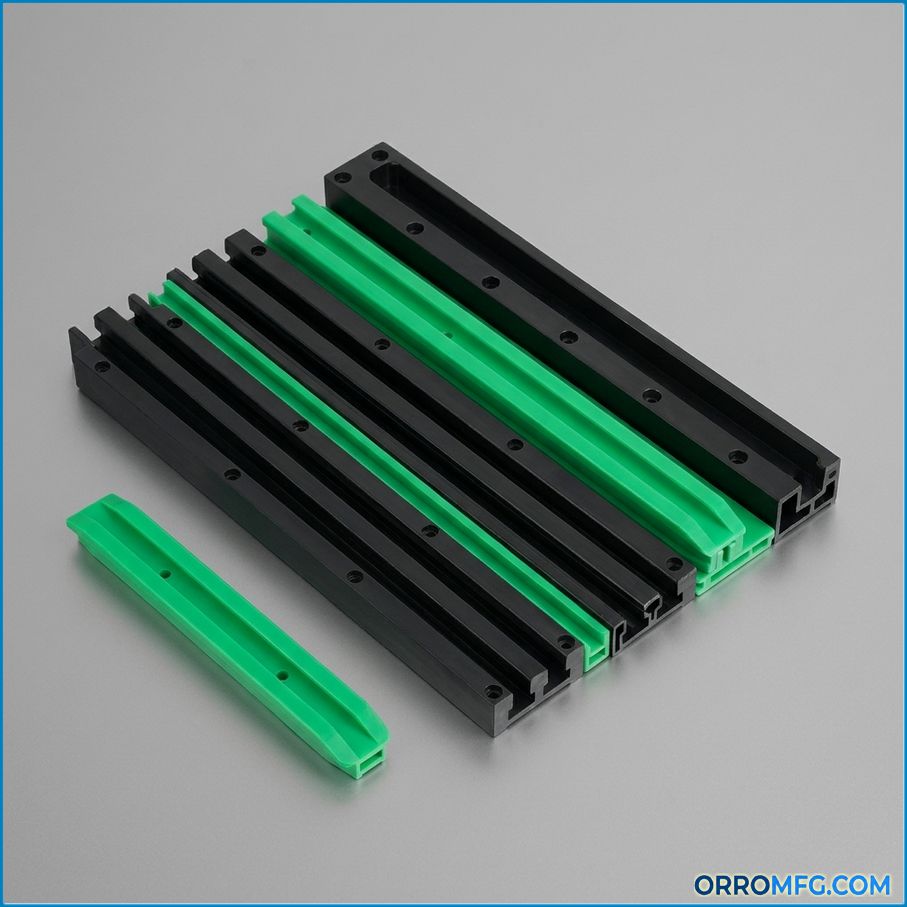
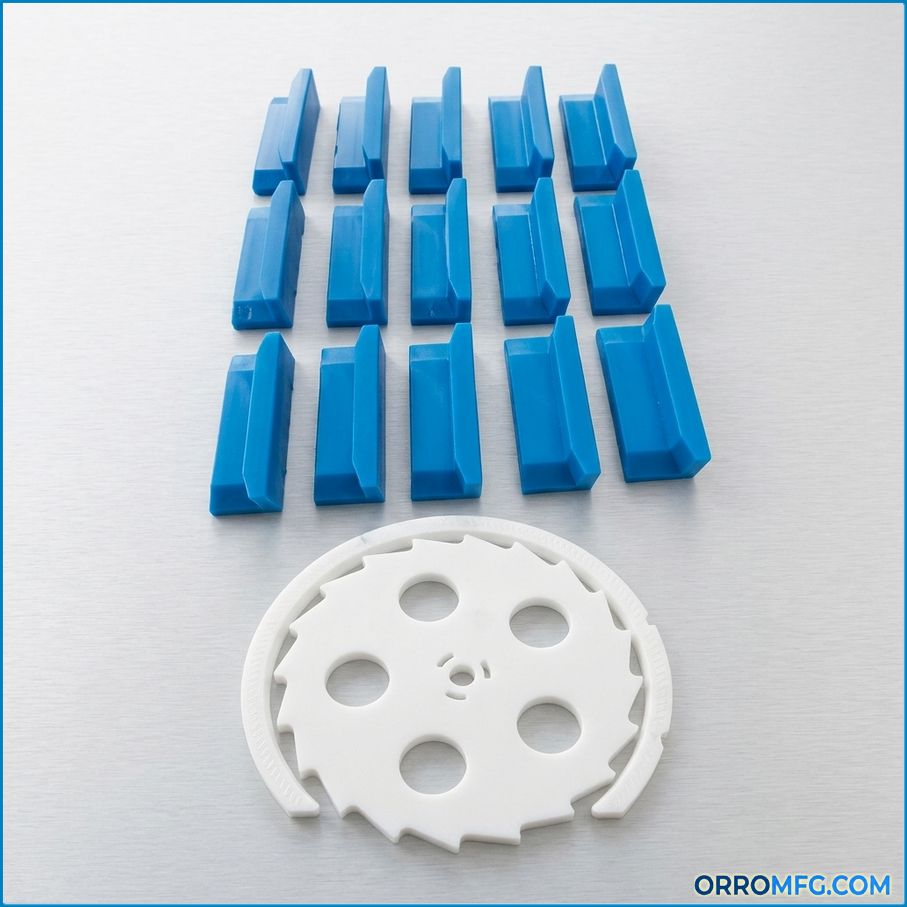
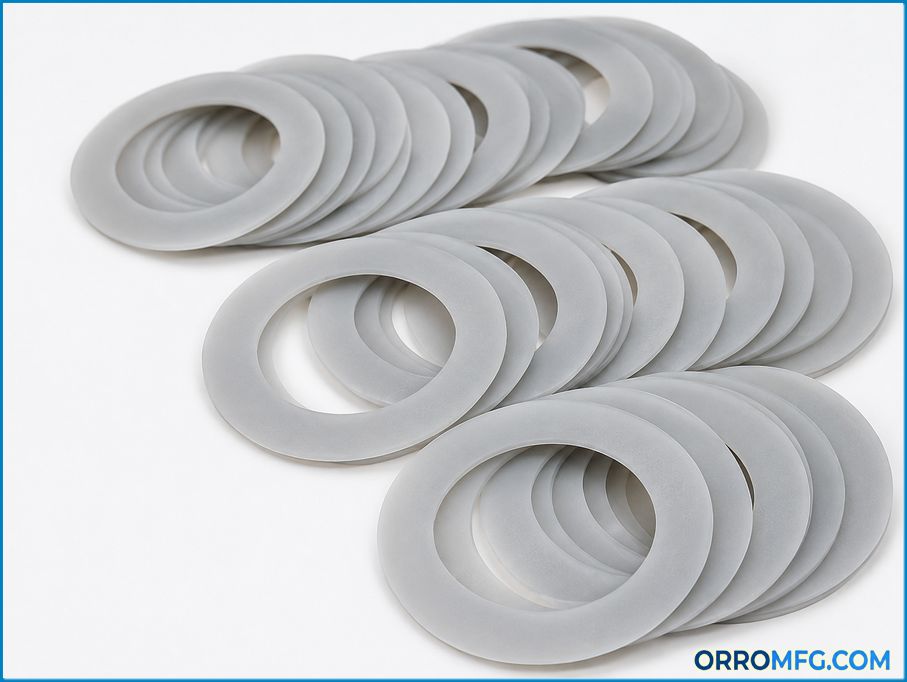
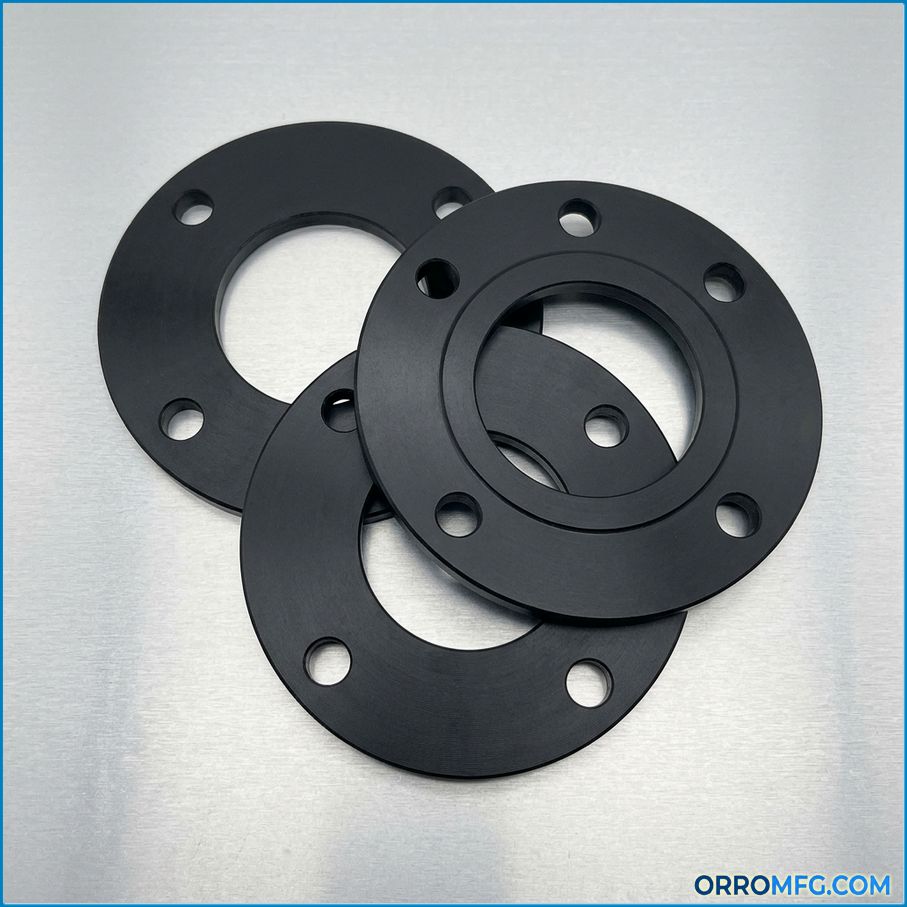
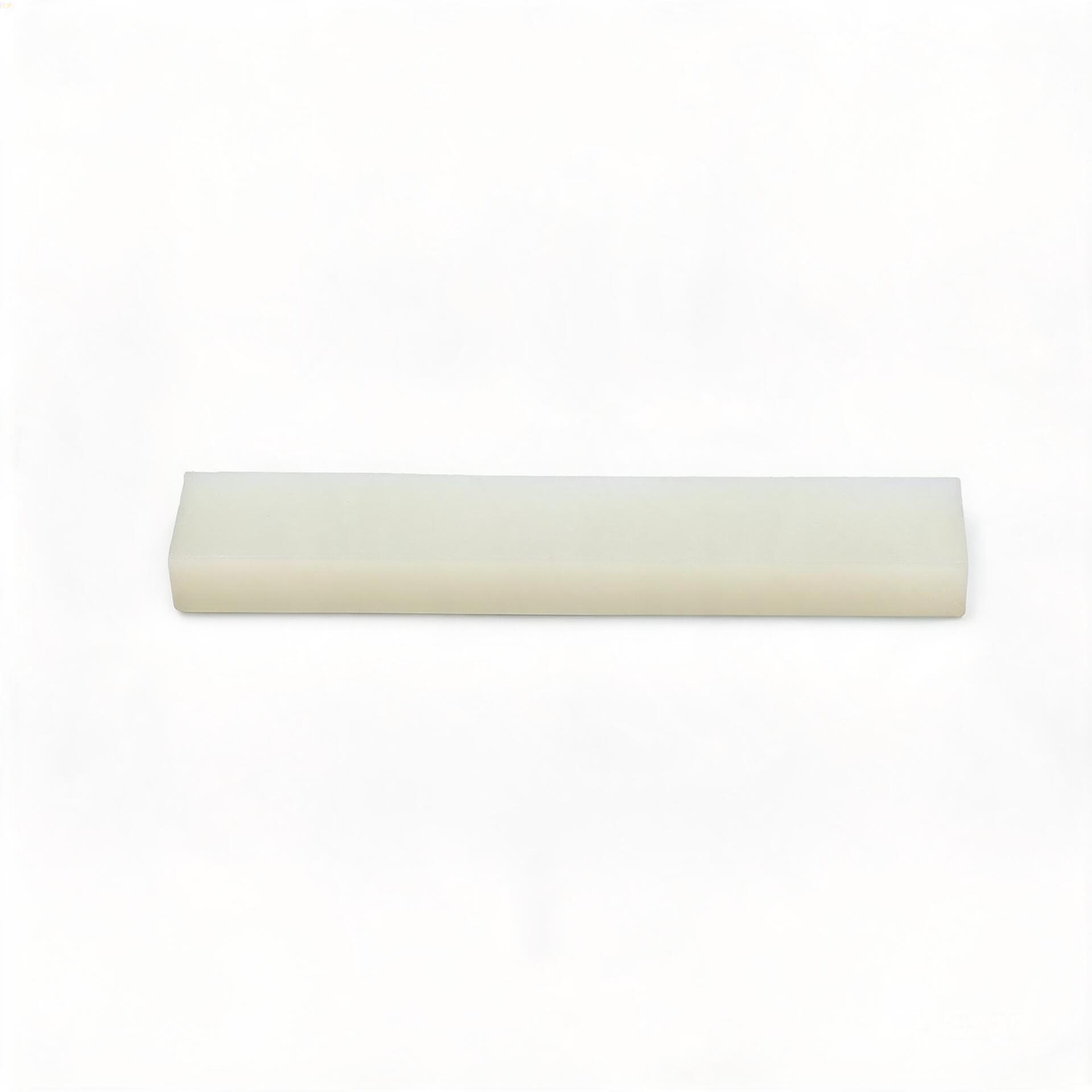
Conveyor wear strips are the sliding surfaces that carry a chain, a belt or a product along a line. Ours are machined or extruded from ultra-high molecular weight polyethylene (UHMWPE), chosen for its wear resistance, low friction and impact toughness. They are used in conveyor systems, material handling equipment and industrial machinery as guide rails, chain guides, wear plates and sliding pads — reducing friction, protecting the mating parts and extending service life. OrroMFG produces them in a range of profiles, sizes and material grades for conveyor and material handling applications.
UHMWPE (molecular weight typically 3-10 million g/mol) offers significantly higher wear resistance and impact strength compared to conventional polyethylene and many other engineering plastics. Our wear strip product line includes flat wear strips, profiled guide rails, chain guides, belt guides, and custom-shaped wear components designed for specific conveyor and machinery applications. UHMWPE wear strips are particularly valued for their self-lubricating properties, which eliminate the need for external lubrication and reduce maintenance requirements. They are also FDA-compliant for food contact, making them the standard choice for food and beverage processing conveyors. We manufacture wear strips in standard lengths up to 4 meters with custom machined features including mounting holes, notches, and grooves to simplify installation and ensure perfect fit.
Key Features
- Exceptional Wear Resistance: 5-15 times the wear resistance of carbon steel, dramatically extending service life and reducing replacement frequency.
- Ultra-Low Friction: Coefficient of friction comparable to PTFE, providing smooth, low-drag sliding with minimal power consumption.
- Outstanding Impact Resistance: Highest impact strength of any engineering plastic, withstanding heavy impacts and shock loads without cracking.
- Self-Lubricating: Inherent lubricity eliminates the need for grease or oil lubrication, reducing maintenance and preventing product contamination.
- FDA-Compliant: Food-grade UHMWPE meets FDA 21 CFR 177.1520 requirements for direct food contact applications.
- Chemical and Corrosion Resistance: Resistant to most chemicals, acids, alkalis, and salt solutions; will not rust or corrode in wet environments.
Material Specifications
| Property | Virgin UHMWPE | Oil-Filled UHMWPE | Glass-Filled UHMWPE (20%) | Anti-Static UHMWPE |
|---|---|---|---|---|
| Density (g/cm³) | 0.93 - 0.94 | 0.92 - 0.94 | 1.00 - 1.10 | 0.93 - 0.95 |
| Molecular Weight (million g/mol) | 3 - 10 | 3 - 6 | 3 - 6 | 3 - 6 |
| Tensile Strength (MPa) | 35 - 50 | 30 - 45 | 40 - 55 | 30 - 45 |
| Tensile Modulus (GPa) | 0.7 - 1.0 | 0.6 - 0.9 | 1.2 - 1.8 | 0.6 - 0.9 |
| Impact Strength (Izod, kJ/m²) | No break | No break | 50 - 100 | No break |
| Hardness (Shore D) | 60 - 70 | 55 - 65 | 65 - 75 | 60 - 70 |
| Coefficient of Friction | 0.08 - 0.15 | 0.05 - 0.10 | 0.10 - 0.18 | 0.08 - 0.15 |
| PV Limit (bar·m/s) | 1,000 - 2,000 | 2,000 - 3,500 | 800 - 1,500 | 1,000 - 2,000 |
| Continuous Service Temp (°C) | -200 to +80 | -200 to +80 | -200 to +100 | -200 to +80 |
| Water Absorption (%) | < 0.01 | < 0.01 | < 0.02 | < 0.01 |
| Abrasion Resistance (ASTM G65) | Excellent | Excellent | Very Good | Excellent |
| FDA Compliance | Yes | Yes (special grades) | Limited | Yes |
Standard Profiles and Dimensions
| Profile | Section | Stock size range | Where it is used |
|---|---|---|---|
| Flat wear strip | Rectangular strip | 3–50 mm thick × 20–300 mm wide | Belt support beds, slide surfaces, packer and labeller tracks |
| Rectangular bar | Solid bar | 10–100 mm × 20–500 mm | Chain return guides, impact bars, dead plates |
| U-channel / T-slot guide | Slotted rail | To drawing | Modular belt edge guides, side rails that accept inserts |
| L-angle and corner rail | 90° angle | To drawing | Product containment, transfer corners |
| Chain guide profile | Matched to chain | To drawing or sample | Roller chain, table-top chain and slat chain tracks |
| Curved / bend section | Thermoformed radius | Radius ≥ 3× thickness | Curve conveyors, spiral and merge sections |
| Wear plate and liner | Sheet | 5–100 mm thick | Chutes, hoppers, transfer points, truck beds |
Stock lengths run to 4,000 mm and can be butt-jointed for longer runs. A section we do not hold as a standard profile is machined from plate, or produced on a dedicated extrusion die when the annual quantity justifies the tooling — send the mating chain, belt or a worn sample and we will match the section.
Two dimensions decide most of the cost: thickness (wear allowance plus stiffness) and straightness after machining. A strip that is flat to 0.5 mm/m installs without shimming; one that bows will wear at the ends first regardless of the grade.
Applications
Conveyor Systems
UHMWPE wear strips are the most widely used wear components in conveyor systems across all industries. They serve as chain guides, belt guides, side rails, wear pads, and return guides for roller chains, modular belts, flat belts, and slat conveyors. Their low friction reduces conveyor drive power requirements, while their exceptional wear resistance minimizes maintenance and downtime. They are particularly critical in curved conveyor sections where side thrust loads cause accelerated wear.
Curved and bend sections. On a curve conveyor the outer rail carries the side thrust of the whole product load, so it wears several times faster than a straight run. We thermoform UHMWPE rails to the radius of the curve, with a minimum radius of about three times the section thickness, and pre-drill the mounting holes on the formed part rather than drilling after bending — a hole drilled into a formed rail can pull the section out of line. For spiral and merge sections the radius is usually split into two or three formed segments so a single worn piece can be replaced without stripping the whole rail.
Food and Beverage Processing
FDA-compliant food-grade UHMWPE wear strips are extensively used in food and beverage processing conveyors including bottling lines, canning lines, dairy processing, meat and poultry processing, bakery equipment, and fruit and vegetable handling lines. Their non-toxic nature, resistance to cleaning chemicals, and ability to withstand high-pressure washdowns make them ideal for sanitary conveyor applications. They are also used in packaging equipment for guiding containers and products through filling, capping, and labeling stations.
Packaging Industry
In packaging lines and automated packaging machinery, UHMWPE wear strips and guide rails guide products, containers, and packaging materials through various production stages. They are used in case packers, palletizers, shrink wrappers, and labeling machines. Their low friction ensures smooth product flow without jamming or product damage, while their wear resistance provides reliable long-term operation.
Material Handling and Logistics
In warehouse automation, distribution centers, and logistics facilities, UHMWPE wear strips are used in sortation conveyors, merge conveyors, diverters, and accumulation conveyors. They guide packages, totes, and cartons through complex material handling systems with minimal friction and wear. Their impact resistance ensures they can withstand the repeated impact of heavy loads and high-speed product transfer.
Mining and Aggregates
In mining, quarrying, and aggregate processing operations, UHMWPE wear strips and liners are used in chutes, hoppers, bins, and conveyor transfer points to reduce friction and wear when handling abrasive bulk materials such as coal, ore, sand, and gravel. Their exceptional wear resistance and non-stick properties ensure reliable material flow and reduce maintenance in harsh operating environments.
Aircraft and Aerospace Wear Strips
Aircraft wear strips are a different duty from a quarry conveyor: the loads are lower, but the part has to be light, dimensionally stable, non-corroding against aluminium structure and quiet in service. UHMWPE is used for cargo-loading roller tracks and floor guides, galley and seat-track slides, cargo-door and baggage-compartment wear faces, and on the ground-support and baggage-handling equipment that feeds the aircraft.
Three properties matter here. It absorbs almost no water, so a rail does not swell or change dimension in a humid cabin or on a wet apron. It does not set up galvanic corrosion against aluminium or coated steel fasteners, which a bronze or steel wear pad will. And its impact strength is unchanged at low temperature, so a baggage-hook impact dents the strip rather than cracking it.
Two limits to be clear about. UHMWPE is not a structural or flight-critical material — it is a wear and sliding surface, and load paths belong in metal. And where cabin-interior flammability rules apply, the stock must come with the relevant flame test data; ask for that certificate before we quote, because not every FR grade carries it.
Ground Support and Airport Baggage Handling
Baggage carousels, tilt-tray sorters, cargo loaders and belt loaders use the same flat strip and guide profiles as industrial conveyors, but specified in anti-static or FR grades where dust ignition or interior rules apply.
Operating Conditions
- Temperature Range: -200°C to +80°C (-328°F to +176°F) continuous service; short-term up to 100°C; glass-filled grades up to 120°C
- PV Limit: 1,000-3,500 bar·m/s depending on material grade and mating surface
- Load Capacity: Up to 20 MPa compressive load for static applications; up to 5 MPa for dynamic sliding applications
- Sliding Speed: Up to 5 m/s (1000 ft/min) depending on load and material grade
- Chemical Compatibility: Resistant to most acids, alkalis, salts, solvents, food products, cleaning agents, and water
- Not Recommended For: Strong oxidizing agents, aromatic and chlorinated hydrocarbons, and temperatures above 100°C continuous
- Mating Surface: Compatible with steel, stainless steel, aluminum, plastics, rubber belts, and most conveyor materials
- FDA/USDA Compliance: Food-grade formulations meet FDA 21 CFR 177.1520 and USDA requirements for food contact
Material Comparison
| Material | Wear Resistance | Friction | Impact Resistance | Temp Range | Cost | Best For |
|---|---|---|---|---|---|---|
| UHMWPE | Excellent | Very Low | Excellent | -200 to +80°C | Low-Medium | Conveyors, food processing, material handling |
| Nylon PA66 | Good | Low | Very Good | -40 to +120°C | Low-Medium | General industrial, higher temp, higher load |
| PTFE | Very Good | Ultra Low | Fair | -200 to +260°C | Medium-High | Chemical service, low-load, wide temp range |
| POM (Acetal) | Good | Low | Fair | -40 to +100°C | Low-Medium | Dimensional stability, precision apps |
| Hardened Steel | Fair | High | Good | -40 to +200°C+ | Medium | Heavy-load, high-temp, lubricated apps |
| Bronze | Good | Medium | Fair | -40 to +200°C | Medium-High | Heavy-load, lubricated, moderate speed |
Choose UHMWPE wear strips when:
- Exceptional wear resistance for sliding applications is needed
- Self-lubricating, maintenance-free operation is desired
- FDA compliance for food contact is required
- Low friction is important for energy efficiency and smooth operation
- The application involves conveyors, material handling, or food processing
- Impact resistance and toughness are critical for heavy-duty service
Customization Options
- Material Grades: Virgin UHMWPE, oil-filled/lubricated, glass-filled, anti-static/ESD, UV-stabilized, FDA food-grade, flame-retardant, and reprocessed grades
- Profile Types: Flat strips, rectangular bars, angle profiles, U-channels, T-profiles, L-profiles, custom-extruded profiles
- Size Range: Thickness 3mm to 100mm; width 20mm to 500mm; length up to 4000mm (longer lengths available on request)
- Tolerance Grades: Cut-to-length ±0.5mm; machined features IT7-IT9 tolerance
- Machining Features: Mounting holes, countersinks, notches, grooves, chamfers, radii, and custom machined features
- Surface Finishes: As-extruded, planed, milled, and polished surfaces
- Mounting Options: Pre-drilled holes for screw mounting, adhesive-backed, magnetic, and snap-in configurations
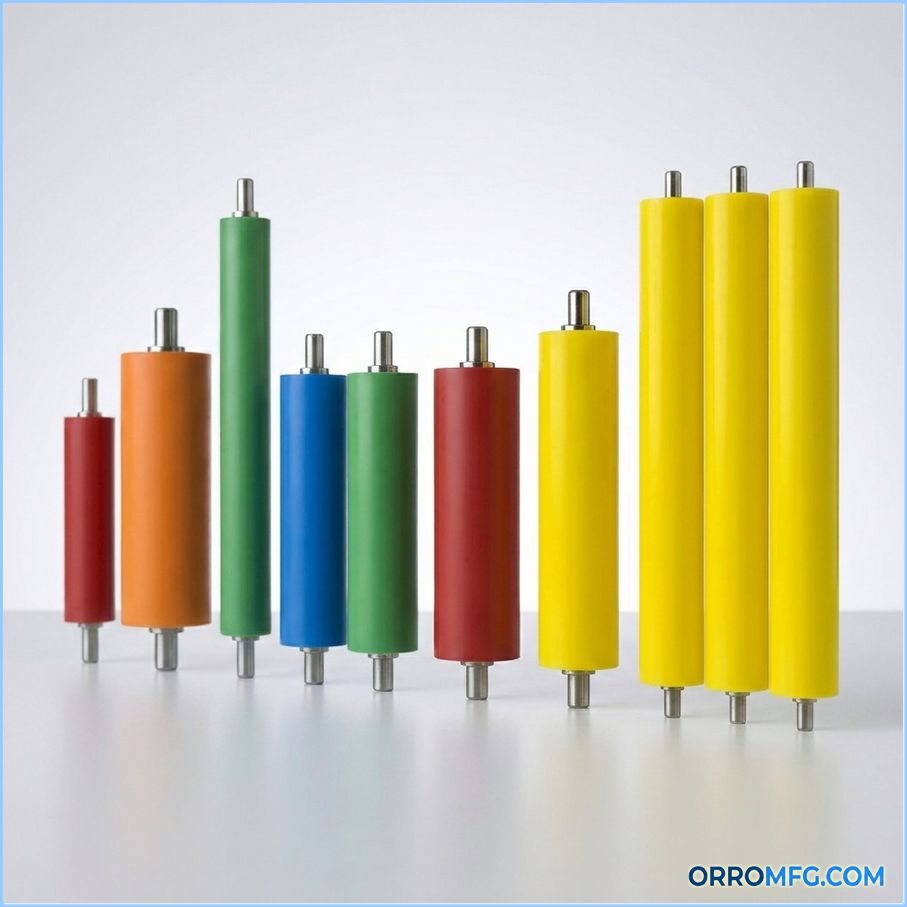
- Color Options: Natural (white/off-white), black, blue, yellow, green, red, and custom colors for safety identification or aesthetic purposes
- Fabrication Services: Welding, bending, thermoforming, and assembly into complete conveyor guide systems
- Custom Profiles: Custom extrusion tooling for unique profile geometries with minimum order quantities
Quality Assurance
OrroMFG maintains strict quality control throughout UHMWPE wear strip manufacturing. Our ISO 9001:2015 certified quality management system ensures consistent product quality from raw material receipt through final inspection and shipment. We source UHMWPE resin from globally recognized manufacturers and verify material properties including molecular weight, density, and melt flow index upon receipt.
For extruded wear strips, we monitor process parameters including temperature, extrusion speed, and cooling rate to ensure consistent material properties and dimensional accuracy across production runs. Quality control inspections include dimensional verification using calipers, micrometers, and coordinate measuring machines (CMM), straightness and flatness measurement, surface roughness evaluation, and hardness testing. We also perform material testing including tensile testing, impact testing, and wear testing (per ASTM G65) for material validation and quality assurance. Food-grade products come with FDA compliance declarations and supporting documentation. All UHMWPE wear strips are supplied with material certificates, inspection reports, and full batch traceability documentation. Our commitment to quality ensures that every wear strip we produce delivers reliable, long-lasting performance in the most demanding conveyor and material handling applications.
FAQ
What is a UHMWPE wear strip?
A wear strip is the sacrificial sliding surface bolted or clamped to a conveyor frame so that the chain, belt or product runs on plastic instead of on steel. UHMWPE is the default material because it combines a friction coefficient close to PTFE with very high abrasion resistance and the highest impact strength of any engineering plastic.
Wear strip or wear plate — which term applies?
A strip is a narrow rail or guide that carries a chain, a belt edge or a product side; a plate is a wide flat liner bolted into a chute, hopper or transfer point. Same material, same machining, different section and fixing pattern.
What thickness should I specify?
Enough to cover the wear allowance plus the fixing depth. Most conveyor guide strips run 5–10 mm, impact bars and dead plates 15–25 mm, chute liners 10–50 mm. The wear allowance is the thickness you are willing to lose before the fastener heads become the sliding surface — that number, not the available stock, sets the minimum.
How do I replace a worn or imported profile?
Send a cross-section drawing or an offcut of the worn part. We measure the section, match it in the closest grade and quote from that, so the profile does not have to be in our catalogue to be machined. Note that a worn part has already lost material at the sliding face, so the original thickness is not what you measure.
How much thermal expansion should I allow?
Roughly 0.15–0.2 mm per metre per °C, which is large by metal standards: a 3 m run can grow about 5 mm over a 40°C swing. Use slotted or oversized holes, leave a 2–3 mm butt gap between lengths, and never butt a run tight against a fixed stop.
What is the minimum order and lead time?
100 pieces per part number for machined profiles; cut lengths from a standard profile start smaller. Standard profiles ship in 10–15 working days, formed or fully machined parts in 15–20 working days after drawing approval.
Send the mating chain or belt, the profile drawing and the line speed. Request a Quote
Related
- POM vs nylon vs UHMWPE — when UHMWPE is the right choice for a wear part, and when it is not
- UHMWPE chain guide rails — the rail form, with the bend and mounting details