Overview
UHMWPE sheet is a polyethylene sheet with a molecular weight in the millions — typically 3 to 9 million g/mol against 200,000 to 500,000 for standard HDPE. That single difference changes the material’s behaviour: it stops being a stiff board and becomes a material that absorbs impact, slides on itself, and refuses to wear out under sliding abrasion.
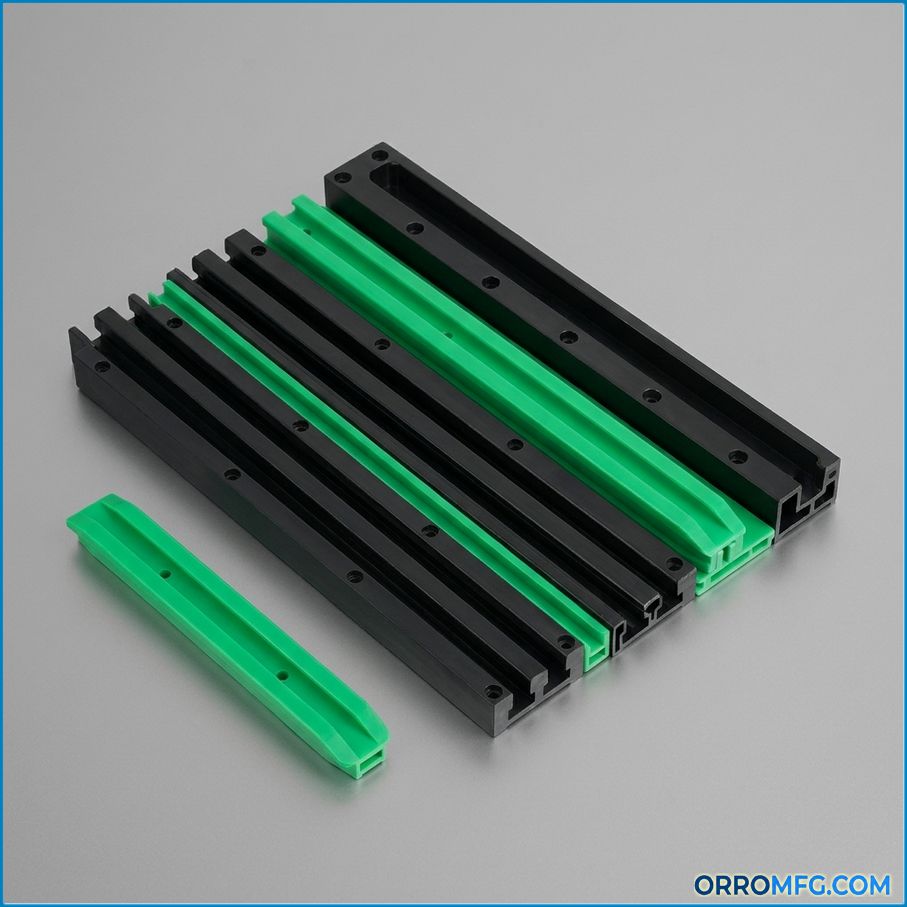
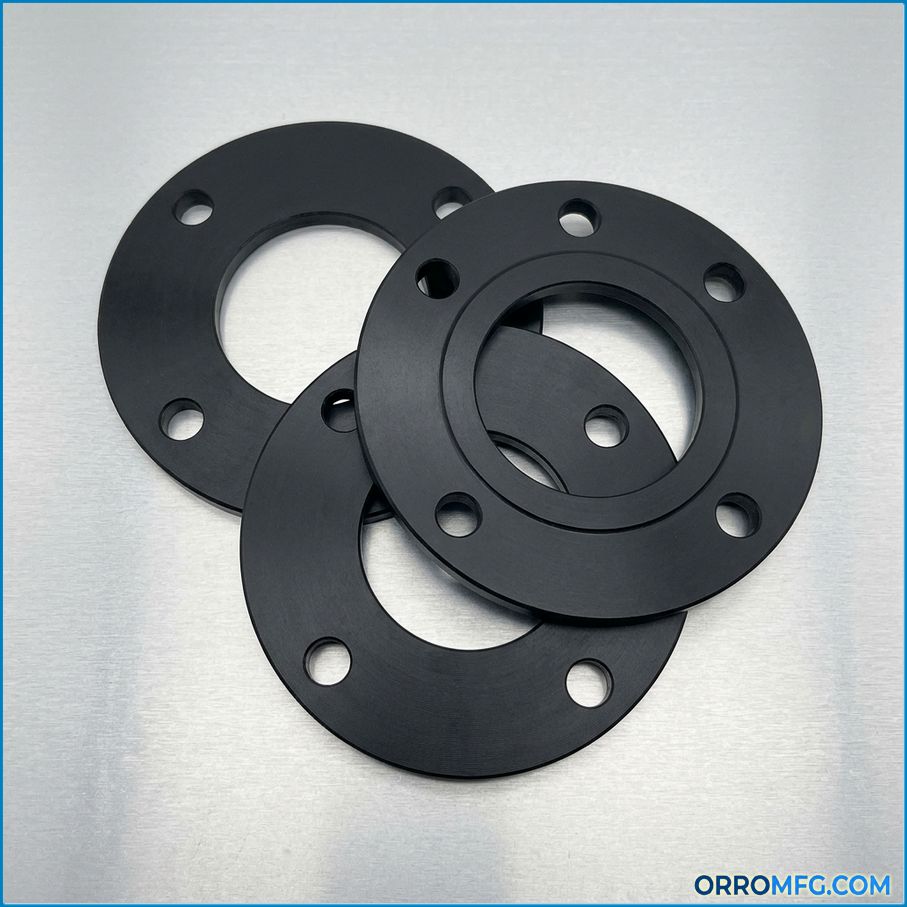
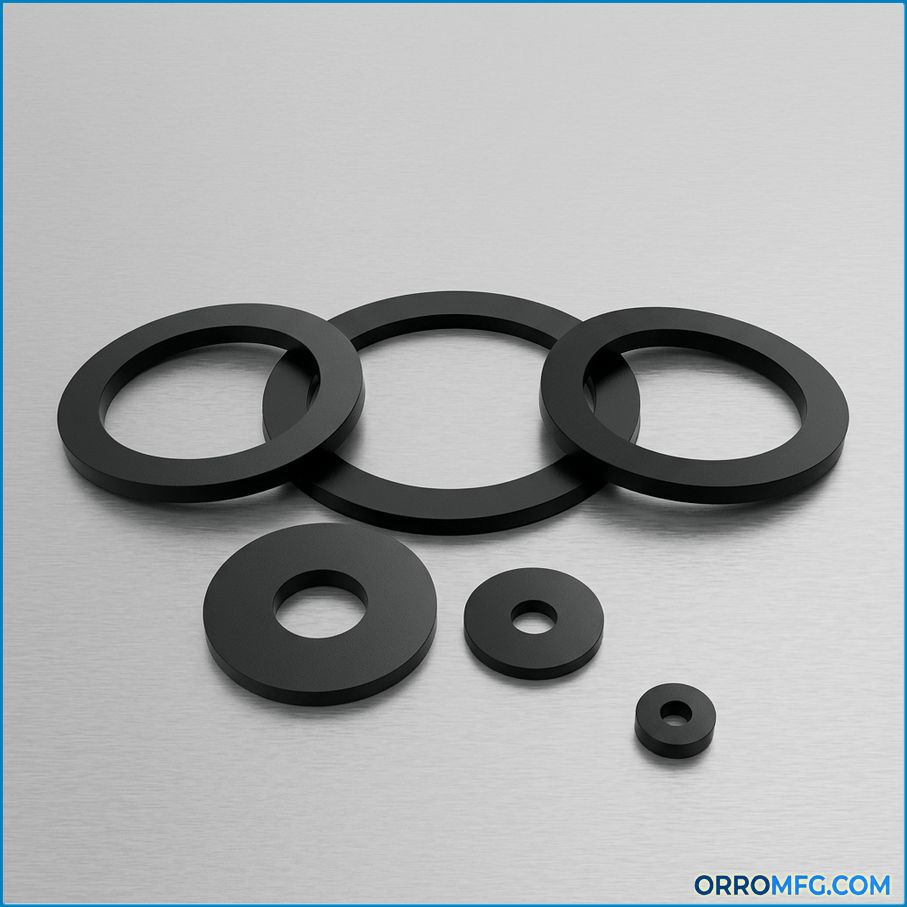
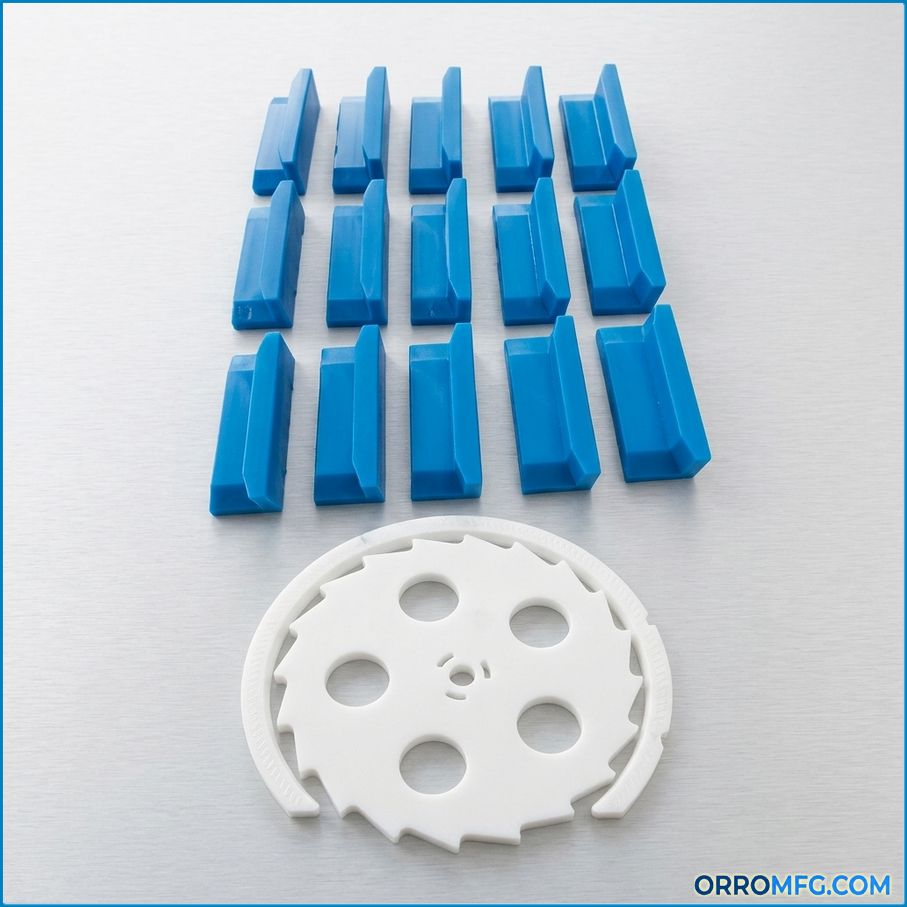
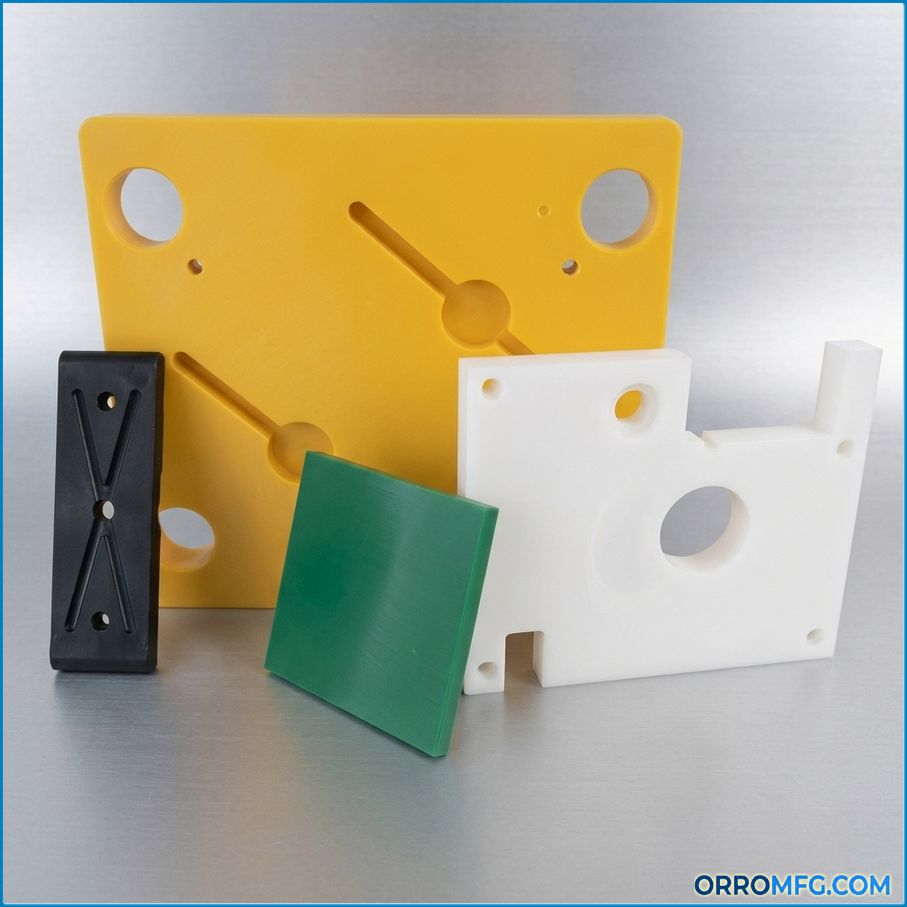
ORRO cuts and machines UHMWPE sheet to drawing — saw-cut blanks, CNC-routed profiles, drilled and milled components, wear strips, chain guides, fenders and liners — in thicknesses from 1 mm to 200 mm and sheet formats up to 4250 × 2060 mm. The same material is also the standard choice for synthetic ice rink panels, which is covered in its own section below.
Two things decide whether a sheet performs: molecular weight and grade. A 3-million-grade sheet is fine for a fender or a guide rail; a chain guide or an ice rink panel running under skate blades needs 5 million and above, because abrasion resistance rises with molecular weight until about 9 million, after which the material becomes difficult to mould and no better in service.
Key Features
- Abrasion resistance — the highest of any thermoplastic in common industrial use; outlasts steel plate in sliding-wear duty by a wide margin.
- Self-lubricating, low friction — friction coefficient around 0.07–0.12 against steel, so chutes, hoppers and guides run without grease and without stick-slip.
- Impact strength — absorbs repeated impact without cracking, and stays tough at −30 °C where many plastics go brittle.
- Chemical resistance — unaffected by water, salts, dilute acids and alkalis, and most industrial chemicals; only strong oxidising acids attack it.
- Zero water absorption — does not swell, so dimensions stay put in wet or washdown service.
- Anti-stick surface — wet or frozen bulk material releases cleanly; that is why it lines hoppers and truck beds.
- Food-contact grades — natural (unpigmented) UHMWPE is accepted for food handling; coloured grades are available for coding and visibility.
- Machinable and weldable — saws, routes, drills and machines like a soft wood; can be welded into tank linings on site.
Material Specifications
Typical values. The grade datasheet governs the final design.
| Property | Typical value |
|---|---|
| Molecular weight | 3–9 million g/mol (5 million and above for high-wear duty) |
| Density | 0.93–0.98 g/cm³ |
| Hardness | Shore D 60–65 |
| Tensile strength at yield | 20–35 MPa |
| Elongation at break | ≥ 300 % |
| Notched impact strength | No break (Charpy, un-notched) |
| Coefficient of friction vs steel | 0.07–0.12 |
| Sand-slurry abrasion index | 10–20 (steel ≈ 100) |
| Service temperature | −80 °C to +80 °C (short peaks to +90 °C) |
| Water absorption | < 0.01 % |
| Chemical resistance | Excellent to acids, alkalis, salts, water; poor to strong oxidising acids |
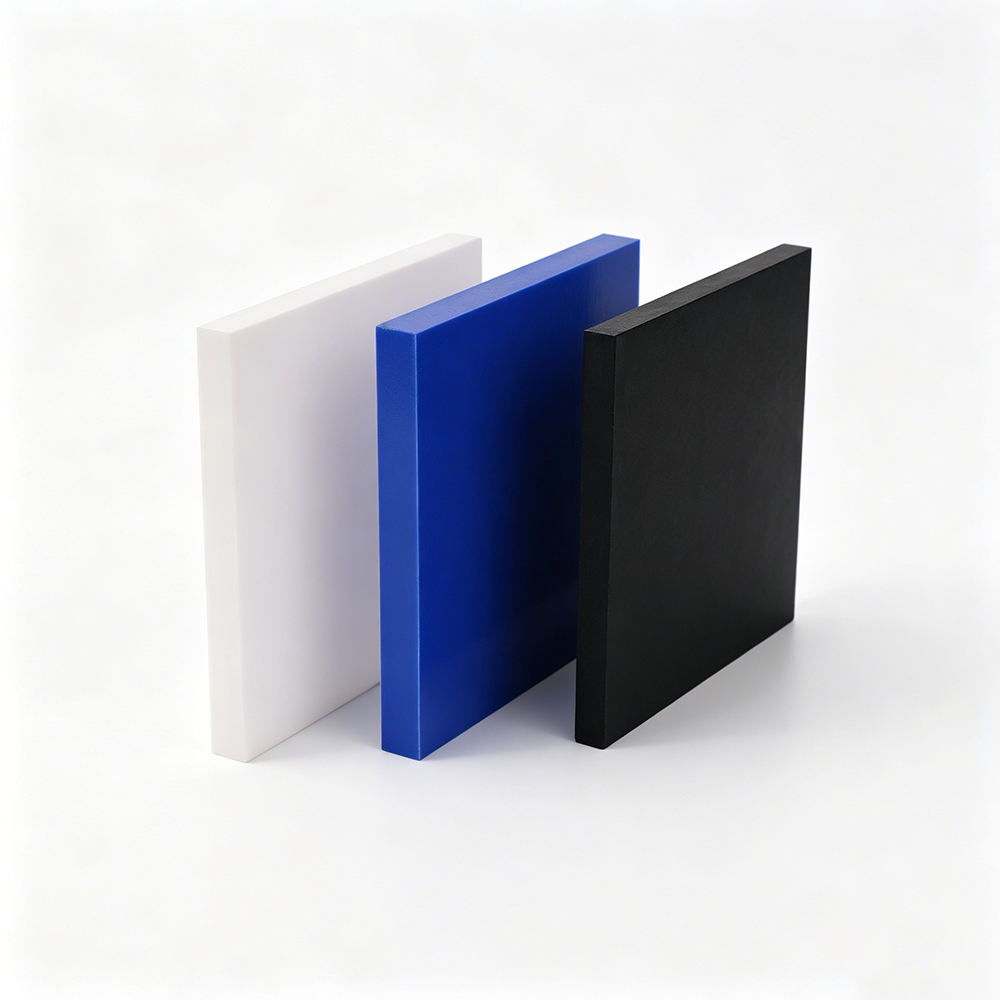
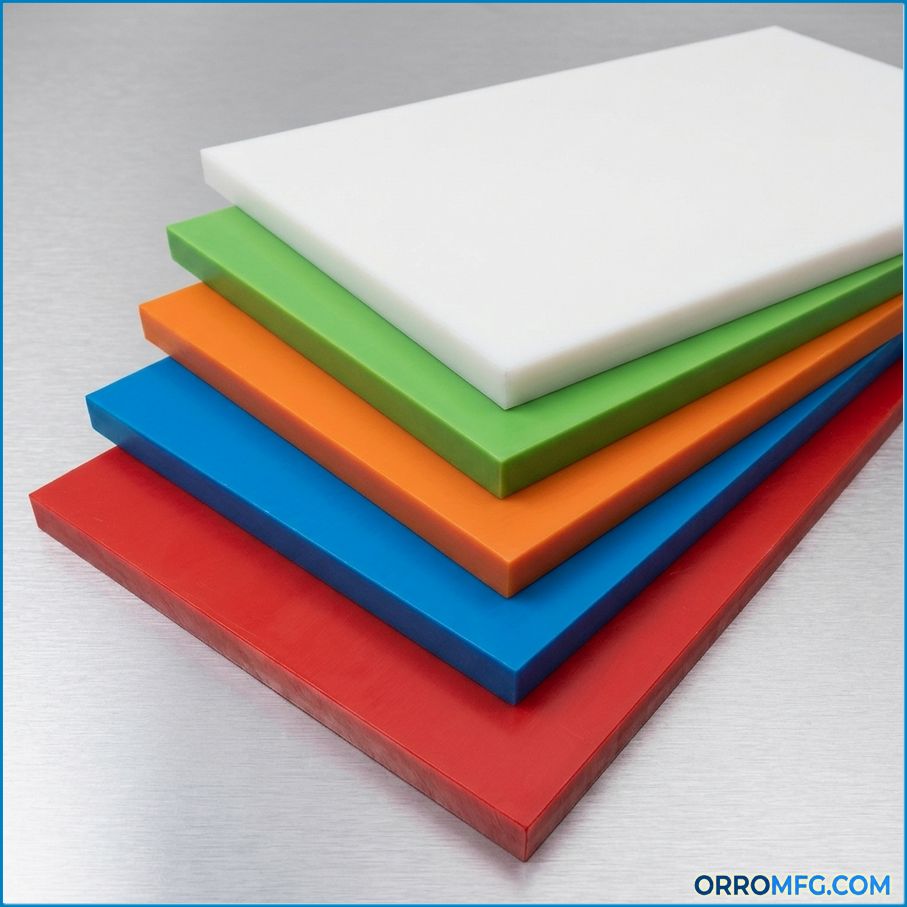
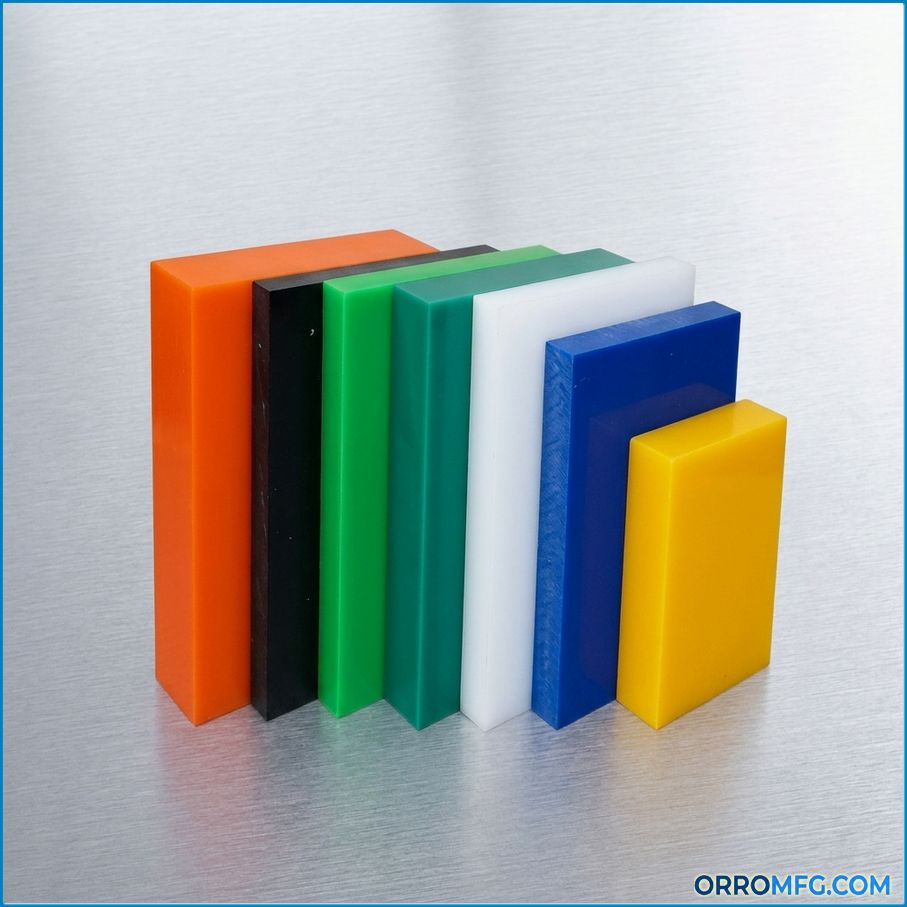
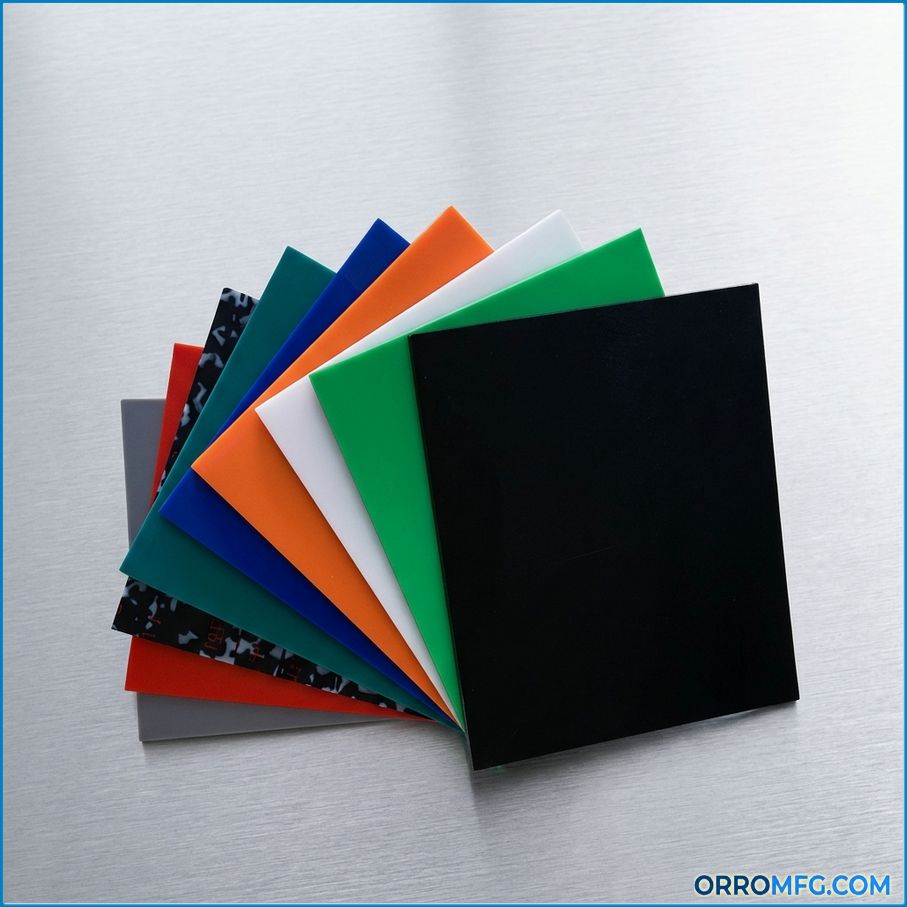
| Colours | Natural white, black, green, blue, yellow, red, orange, grey, camouflage |
| Certification | ISO 9001; RoHS compliant grades on request |
Grade note: standard UHMWPE, high-wear (5–9 million), UV-stabilised, antistatic/conductive, and food-contact grades are all available. Tell us the duty — sliding wear, impact, outdoor exposure or food contact — and the grade follows from it.
Sheet Formats and Cut-to-Size
| Format | Range |
|---|---|
| Thickness | 1–200 mm (1–3 mm thin sheet, 6–200 mm moulded sheet) |
| Maximum sheet size | 4250 × 2060 mm |
| Standard sizes | 1280 × 3480 mm, 1060 × 4120 mm, 1280 × 4250 mm, 2060 × 3120 mm, 1030 × 4120 mm, 1060 × 4220 mm |
| Rod and strip | Round rod, square bar and extruded wear strip profiles |
| Sawn tolerance | ± 0.5 mm on cut blanks |
| Machined tolerance | ± 0.1 mm on routed and milled features |
| Edge finish | Sawn, routed, chamfered or polished |
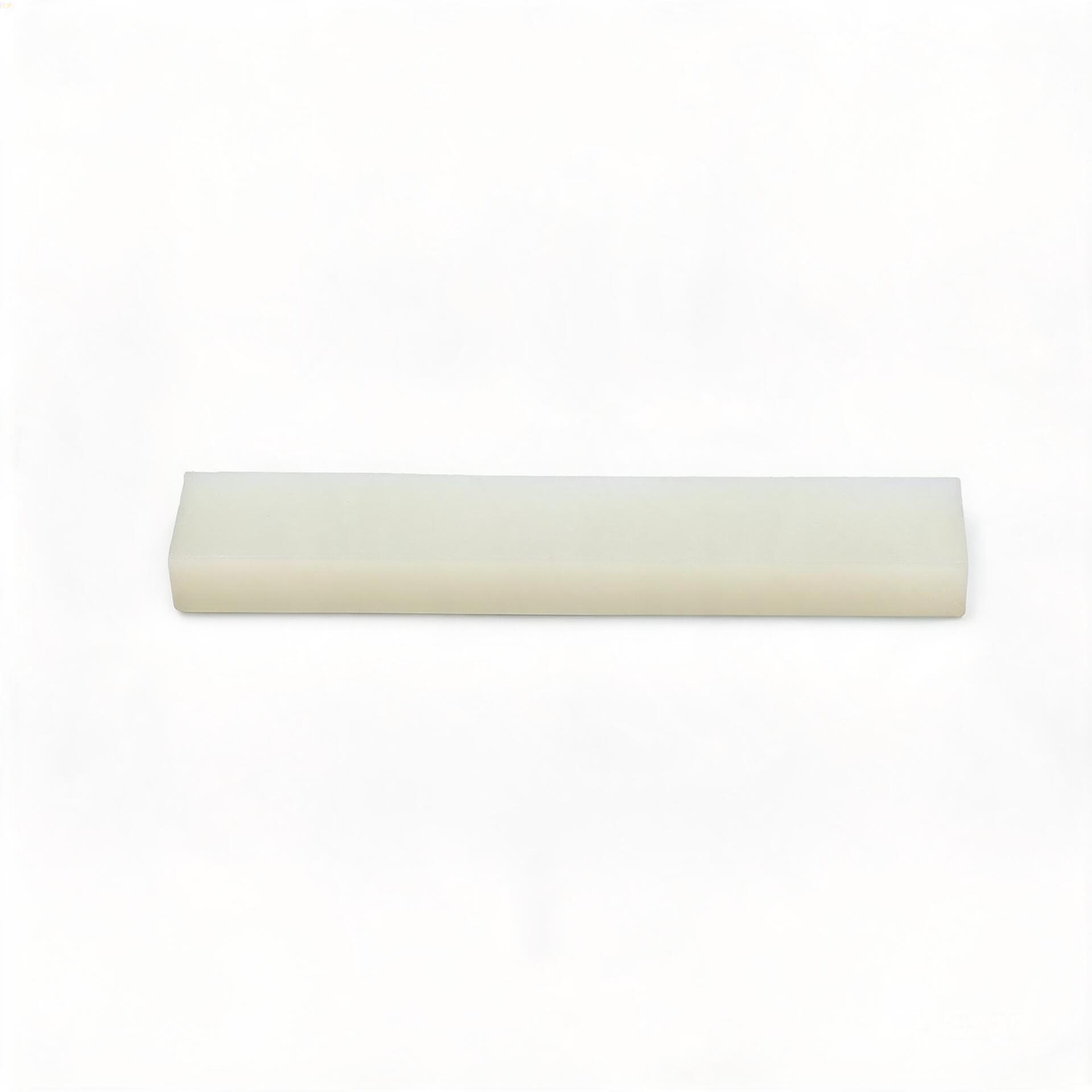
Cut-to-size service: we take your drawing, panel schedule or template and return finished blanks — cut to length and width, holes drilled, slots routed, edges chamfered, parts marked. There is no mould cost and no minimum tooling, which is why small replacement sets and one-off repairs are practical.
Synthetic Ice Rink Panels
UHMWPE sheet is the material behind most synthetic ice rinks. Panels are cut to a fixed size, edge-matched, and laid on any flat, level surface; skaters glide on the sheet surface itself, with no refrigeration, no chillers and no water treatment.
Why it works: the very low friction coefficient and high abrasion resistance of UHMWPE let a steel skate blade slide without cutting into the panel, while the material’s toughness absorbs the impact of jumps and stops. Add a surface dressing (a silicone or glide coating) and the skating feel moves closer to real ice.
| Parameter | Typical value for rink panels |
|---|---|
| Panel thickness | 6 mm (light home use) · 10–15 mm (figure skating) · 20–25 mm (hockey) · 30–60 mm (commercial / heavy traffic) |
| Panel size | Cut to a 1 × 2 m or 1.22 × 2.44 m module, or to your rink layout |
| Edge joint | Interlocking tongue-and-groove, shiplap or straight butt with underlay |
| Ambient temperature | −30 °C to +50 °C |
| Installation time | About 3 days for a typical single-sheet rink |
| Surface | Glossy, or textured for a more ice-like glide |
| Maintenance | Sweep and occasional dressing; no compressor, chiller or generator |
| Colours | White (ice look), blue, grey, or custom colours and printed markings |
Where it fits: indoor studios and shopping centres, outdoor winter rinks in warm climates, hockey training pads, figure-skating and curling practice, events and temporary installations — anywhere a real rink cannot be built for cost, space, water or power reasons.
Where it does not: competitive match play on a full-size rink. Skate resistance is higher than real ice, so a synthetic surface is harder work for the skater; it is a training, recreation and event product, not a replacement for a regulation arena.
Applications
- Material handling — chute, hopper and truck-bed liners; conveyor wear strips; chain guides and star wheels.
- Mining and bulk handling — screen decks, skirtboard, impact bars, and wear plates that outlast steel in slurry duty.
- Sports and recreation — synthetic ice rinks, dry-slope mats, gym flooring and skate-park edging.
- Marine engineering — dock fenders, keel blocks, stern tubes and deck pads, where water absorption and impact both matter.
- Food processing — cutting boards, guide rails and star wheels in food-contact grade.
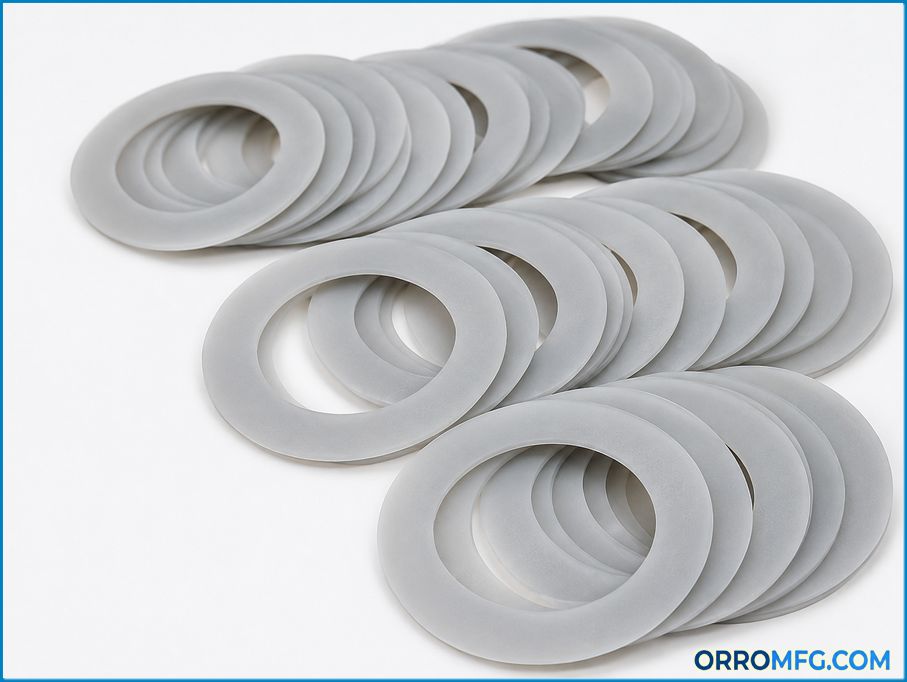
- Industrial machinery — gears, idler wheels, bushings, guide rails and suction-box covers.
Material Comparison
| Property | UHMWPE | HDPE | POM (Acetal) | PTFE |
|---|---|---|---|---|
| Abrasion resistance | Best | Good | Very good | Moderate |
| Friction coefficient | 0.07–0.12 | 0.15–0.25 | 0.15–0.25 | 0.04–0.10 |
| Impact strength | Very high | High | Moderate | Moderate |
| Stiffness / creep resistance | Low | Low | High | Low |
| Machined dimensional stability | Moderate | Moderate | Excellent | Good |
| Max continuous temperature | +80 °C | +80 °C | +100 °C | +260 °C |
| Chemical resistance | Very good | Very good | Moderate | Excellent |
| Relative cost | Low | Lowest | Medium | High |
| Best for | Wear liners, ice rinks, guides | General panels, tanks | Precision moving parts | Chemical and high-temperature duty |
Choose UHMWPE when the job is sliding wear, impact and sticking — liners, guides, fenders and rink panels. Move to POM when the part must hold a dimension under load, and to PTFE when temperature or chemical exposure is the constraint.
Customization Options
- Grade: standard, high-wear (5–9 million), UV-stabilised, antistatic/conductive, food-contact.
- Thickness: 1–200 mm, sawn or machined to your tolerance.
- Size: cut to your panel schedule; maximum 4250 × 2060 mm.
- Colour: natural white, black, green, blue, yellow, red, orange, grey, camouflage, or matched to a sample.
- Fabrication: cutting, CNC routing, drilling, milling, chamfering, welding, bending (thin sheet), and edge polishing.
- Marking: part numbers, LOGO engraving, and printed line markings for rink panels.
- Packaging: wooden pallet with plastic film, or export carton for smaller cut parts.
- MOQ: 100 pieces per part number. Mixed sizes on one order are acceptable.
Quality Control
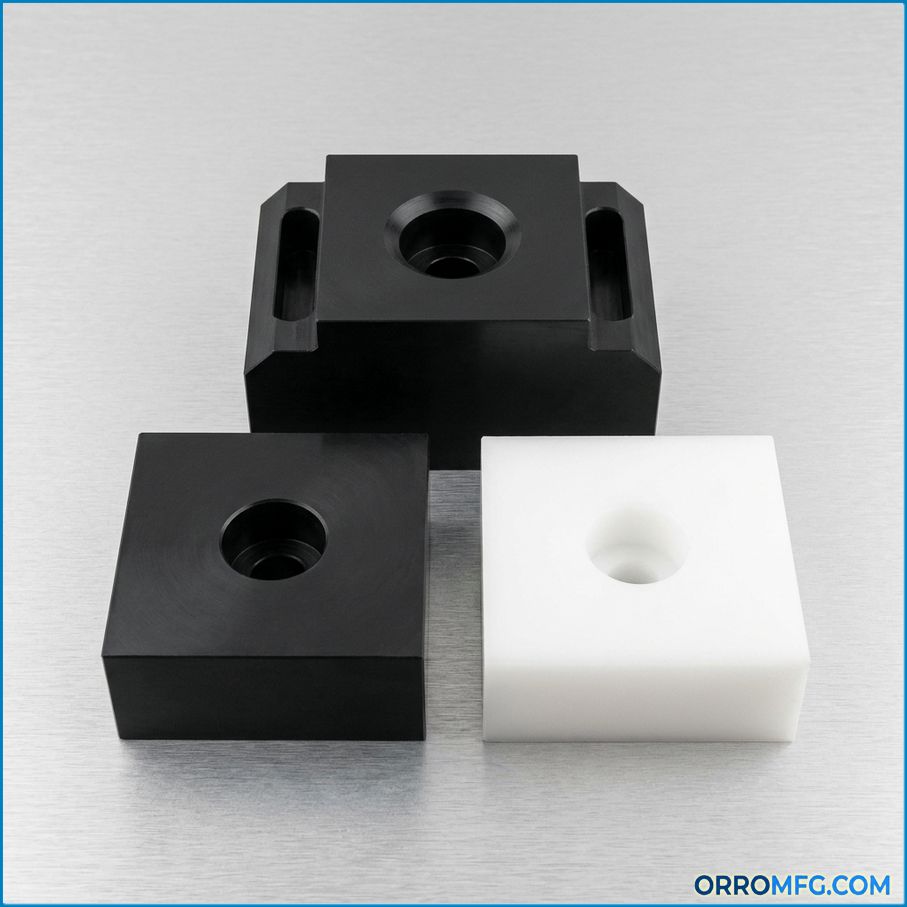
Sheets are checked on receipt for thickness, flatness, colour and grade against the mill certificate, and molecular weight is confirmed on the certificate rather than assumed from the label. Cut parts are inspected against the drawing: length and width, hole positions, edge quality and squareness. Machined faces are checked with callipers, height gauge and, where specified, a CMM. Rink panels are checked for thickness consistency across the batch and for joint fit, because a mismatch at the joint is what a skater feels. Shipments include a measurement report, material data sheet and, where required, COA and packing list.
Lead time: cut-to-size blanks 5–10 days; machined parts 10–15 days; custom colours and thick moulded sheet 15–20 days. Samples in 3–7 days.
Frequently Asked Questions
What is the minimum order quantity?
100 pieces per part number. Mixed sizes and colours can be combined in one order, and sample quantities are quoted separately as sample orders.
How do I choose between 3 million and 9 million molecular weight?
Match it to the duty. Sheet for liners, fenders and general panels works at 3–5 million. Chain guides, star wheels and synthetic ice rink panels see concentrated sliding abrasion and should be 5 million or above. Going beyond about 9 million adds cost without measurable wear benefit.
What thickness should a synthetic ice rink panel be?
6 mm is enough for light home use with small children; 10–15 mm for figure skating and general recreation; 20–25 mm for hockey practice; 30–60 mm for commercial rinks and heavy traffic. Thicker panels resist skate cuts and point loads better, and give a more stable surface over uneven sub-bases.
Can UHMWPE sheet be used outdoors?
Yes, with a UV-stabilised grade. Unstabilised sheet chalks and embrittles after a few years in direct sun. For rink panels and outdoor liners, specify UV-stabilised material and a light-coloured or white surface to limit heat build-up.
What is the cutting tolerance?
± 0.5 mm on sawn blanks, and ± 0.1 mm on routed or milled features. UHMWPE expands and contracts with temperature, so parts measured hot will not match parts measured cold — we inspect at 20 °C and state the reference temperature on the report.
Can you supply the panels cut to my own rink layout?
Yes. Send a layout drawing or a panel schedule with panel sizes, joint type and any printed markings. We cut, edge-finish and mark each panel, and pack them in laying order so installation follows the drawing.
Does a synthetic rink need refrigeration or maintenance equipment?
No compressor, chiller, generator or water treatment. The panels are laid on a flat, level base, and upkeep is sweeping plus an occasional surface dressing. That is the main reason the running cost is a fraction of a refrigerated rink.
Can UHMWPE be welded or repaired on site?
Yes. UHMWPE welds with hot-gas or extrusion welding, which is how tank liners and large chute linings are installed on site. Cut damage in a liner can be repaired locally instead of replacing the whole sheet.
Related Products
- UHMWPE Wear Strip — extruded profiles for conveyors and guides
- UHMWPE material guide — grades, properties and selection
- POM Sheet — when the part must hold a dimension under load
- POM CNC Machined Parts — precision machined components
- Plastic Machining — routing, cutting and machining capability
- PTFE Sheet & Parts — chemical and high-temperature duty
Send your cut list, drawing or rink layout for a quote within 24–48 hours. Tell us the duty, thickness and colour — or simply the application — and we will recommend the grade and the sheet format.