
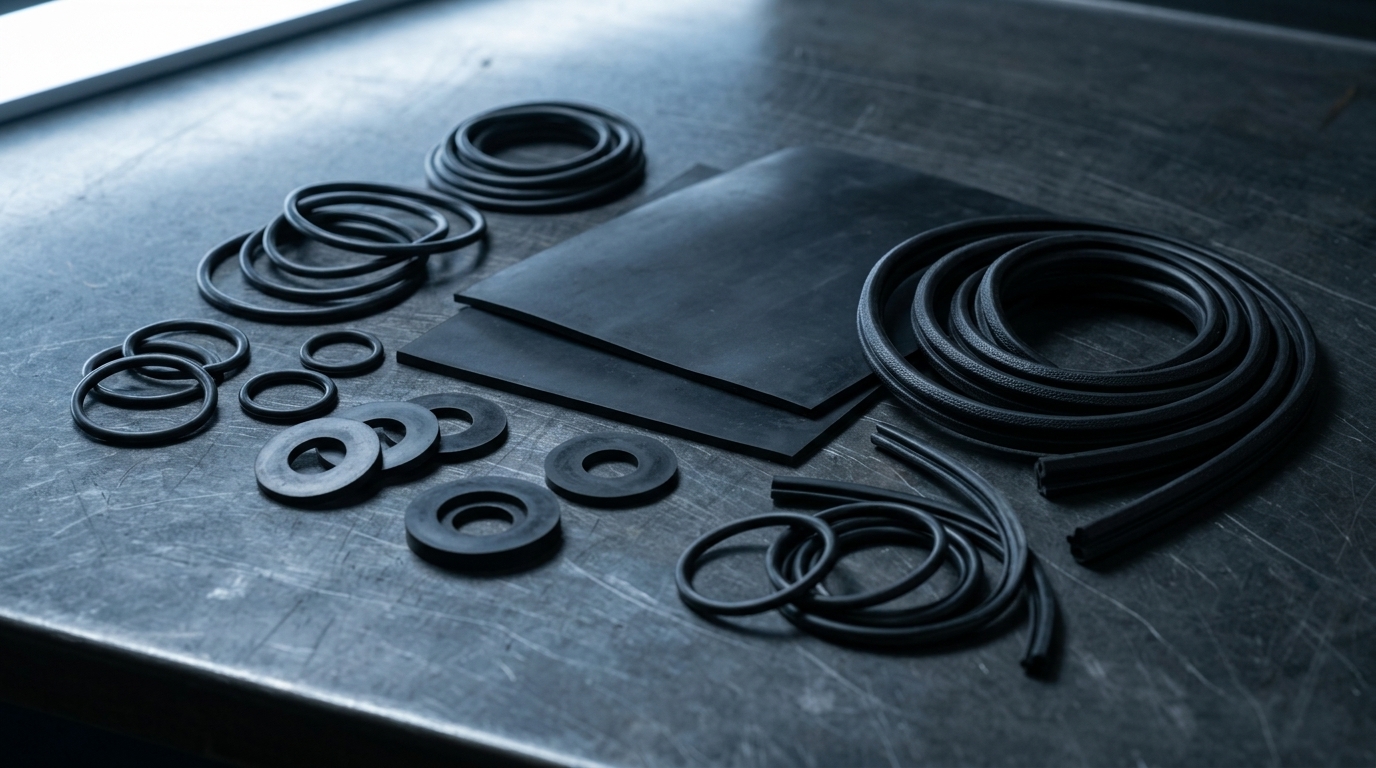
All four of these are soft, black-looking elastomers, and on a drawing they are interchangeable. In service they are not. Silicone survives heat but hates oil. EPDM survives weather and hot water but dissolves in oil. NBR is the opposite — an oil specialist that cracks in sunlight. Polyurethane out-wears all of them but is destroyed by hot wet service.
A gasket that fails is almost always a case of choosing the wrong one of these four. This page is the short version of how we choose.
The short version
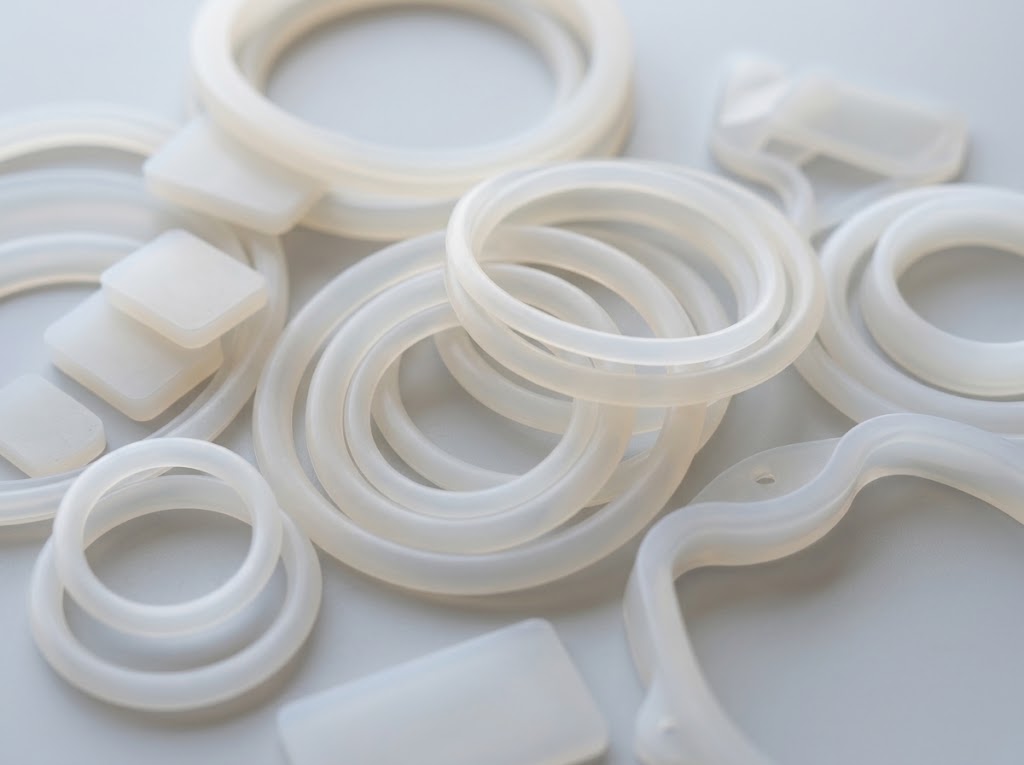
- Silicone (VMQ) — the temperature and purity elastomer. −60 °C to 200 °C+, food and medical grade by default, and it ignores ozone and UV. Soft, low tear strength, and standard silicone swells badly in mineral oil and fuel.
- EPDM — the water, steam and weather elastomer. Continuous 150 °C, the best aging resistance of any rubber, and it takes potable water and polar chemicals. Never use it with oil or fuel.
- NBR (nitrile, Buna-N) — the oil and fuel elastomer. The standard oil seal, −30 °C to 100 °C, with good abrasion resistance. Its weaknesses are ozone, weather and polar fluids like brake fluid.
- Polyurethane (PU) — the wear elastomer. Abrasion life several times that of rubber, with a hardness range from 60 Shore A to 75 Shore D, so it can carry load as a wheel, roller or scraper. Do not put it in hot water.
Temperature
Continuous service temperature is the fastest way to separate them.
| Material | Continuous range | Short-term peaks | Watch out |
|---|---|---|---|
| Silicone (VMQ) | −60 °C to +200 °C | −100 °C / +250 °C (special grades) | Low tear strength; swells in oil |
| EPDM | −50 °C to +150 °C | ~180 °C (steam) | Swells severely in oil and fuel |
| NBR | −30 °C to +100 °C | ~120 °C | Ozone and weathering crack it |
| Polyurethane (PU) | −30 °C to +80 °C | ~100 °C (dry heat only) | Hot wet service hydrolyses it |
If the part sees sustained heat above 150 °C and no oil, silicone is the only one of the four that holds. If it sees heat and oil, none of these four is the answer — the correct move is a fluoroelastomer (FKM/Viton), or a hard plastic such as PTFE for chemical service.
Water, oil and chemicals
The second split is the medium, and it is where most mistakes happen: EPDM and NBR are almost exact opposites.
| Medium | Silicone | EPDM | NBR | Polyurethane |
|---|---|---|---|---|
| Hot water / steam | Good (to 200 °C) | Excellent | Fair (to ~100 °C) | Poor (hydrolysis) |
| Weather, ozone, UV | Excellent | Excellent | Poor (cracks untreated) | Good |
| Mineral oils, grease | Poor | Poor (swells) | Excellent | Good |
| Petrol, diesel | Poor | Poor | Excellent | Good |
| Glycols, polar fluids | Good | Good | Fair | Fair |
| Acids / bases (dilute) | Fair–good | Good | Fair | Poor |
| Brake fluid (DOT 3/4) | Fair | Good | Poor | Poor |
| Food / potable water | Excellent (FDA/USP VI) | Good (peroxide cure) | Not preferred | Fair |
Two traps worth stating plainly. Silicone and oil do not mix — a silicone O-ring in a gearbox or a fuel line will swell and lose sealing force; use NBR instead. And EPDM and oil do not mix — the same mistake in the other direction, seen most often on outdoor equipment that also carries hydraulic fluid.
Seals versus wear parts
Three of the four are sealing materials; polyurethane is a wear material that sometimes seals.
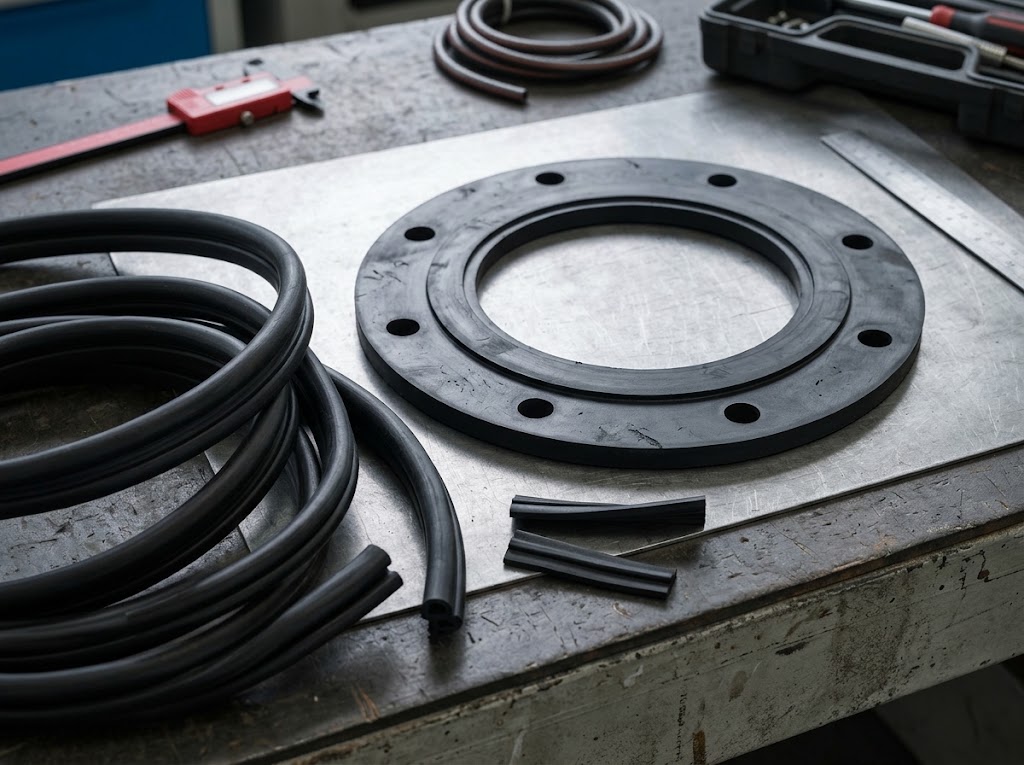
- Static seals (flat gaskets, O-rings, flange seals) — silicone for temperature and purity, EPDM for water and weather, NBR for oil. Link and groove dimensions are usually fixed by the equipment, so state the standard (DIN, ANSI, JIS).
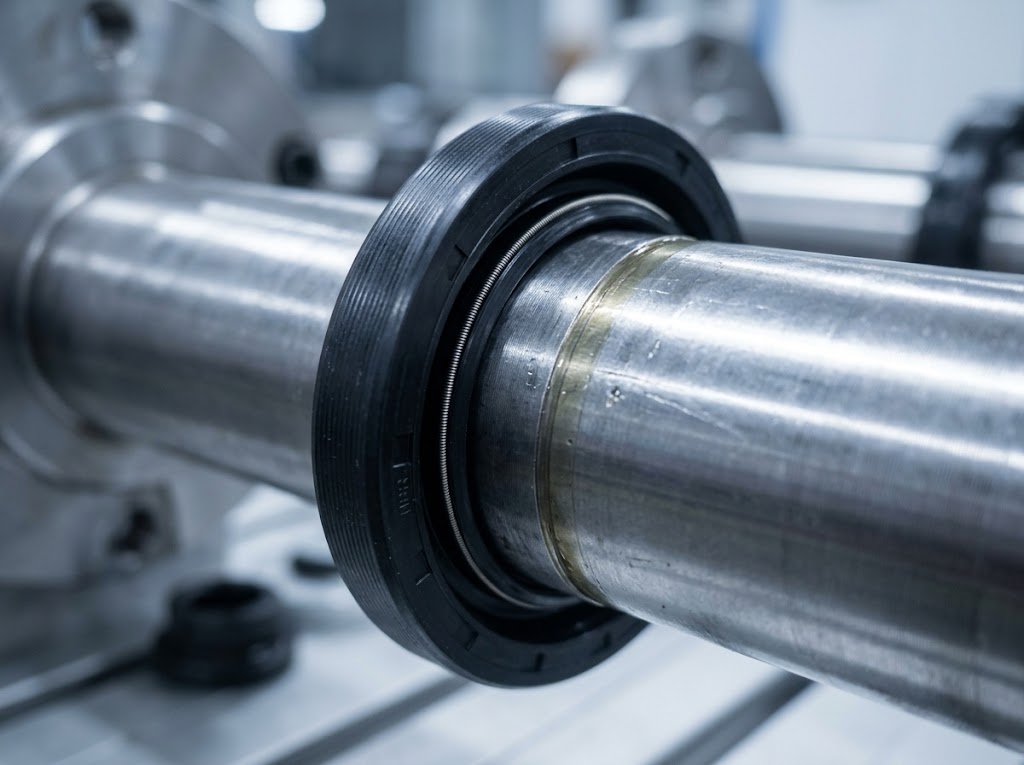
- Dynamic seals (oil seals, wipers, scrapers) — NBR for oil-lubricated shafts; polyurethane for abrasion and pressure, in wipers and scrapers where the lip sees grit. Polyurethane is not for hot wet service.
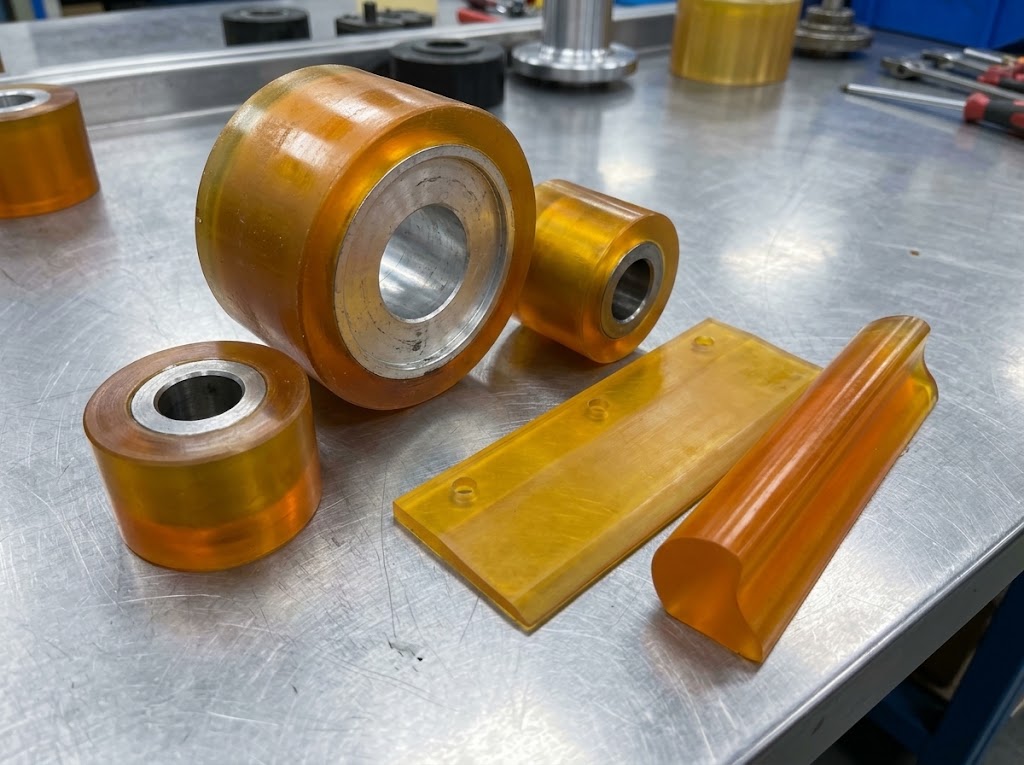
- Load and wear parts (wheels, rollers, guide wheels) — polyurethane wins outright: it combines the grip and elasticity of rubber with several times the abrasion life, and its hardness range lets one material cover both a soft feed roller and a hard guide wheel. See PU Guide Wheel and PU Roller.
Which one for which part
| Part | Best default | Move up when |
|---|---|---|
| Flange gasket, hot water or steam | EPDM | Above 150 °C or food contact → silicone |
| Food or medical seal | Silicone (FDA / USP Class VI) | Oil contact → fluorosilicone or FKM |
| Outdoor weather seal, HVAC | EPDM | — |
| Oil seal, gearbox, hydraulic | NBR | Above 120 °C or dynamic duty → HNBR |
| Fuel or diesel seal | NBR | — |
| Scraper, wiper, wear strip | Polyurethane | Hot wet service → NBR or a hard plastic |
| Guide wheel, load roller | Polyurethane | High temperature → a different design |
Hardness and compression set
For rubber seals, hardness is not just a feel — it is the sealing force.
- Shore A is the league table. Silicone and EPDM are usually specified 40–70 Shore A; NBR 60–80 Shore A; polyurethane spans 60 Shore A to 75 Shore D, which reaches into rigid-plastic territory.
- Softer seals conform better to rough or scratched faces and seal at lower bolt load; harder seals resist extrusion under pressure. If you are sealing a scratched flange, going softer helps more than switching material.
- Compression set matters more than tensile strength in a static seal. Silicone has the best compression set at heat; EPDM with a peroxide cure is close behind. A seal that takes a permanent set leaks on the next thermal cycle — this is the failure mode behind most “it was fine for a month” complaints.
- Do not over-compress a soft gasket. Squeeze it past its elastic range and it takes a set.
Five questions before you specify
- Maximum continuous temperature — under 100 °C, or over 150 °C? (This alone eliminates two of the four.)
- What is the medium — water and weather, or oil and fuel? (EPDM or NBR, never both.)
- Static or dynamic — does the seal slide, or just compress?
- Abrasion and load — is it a seal, or a wheel that also has to last?
- Compliance — food, medical or potable water? (Then silicone, or peroxide-cured EPDM, with the certificate.)
Next step
Every one of these materials has a full ten-section selection guide on this site — properties, machining and usage notes, stock forms, fit / not-fit lists and an FAQ:
Silicone · EPDM · NBR · Polyurethane
For the sealing parts themselves, see our gasket, O-ring and seal overview, and for the wider material picture see the material selection guide.
Still undecided? Send the drawing or the groove dimensions together with the medium, the concentration and the temperature, and we will recommend the material and hardness rather than quote the cheapest sheet on the shelf. Request a quote.